

NOAA seeking information on commercial space situational awareness data
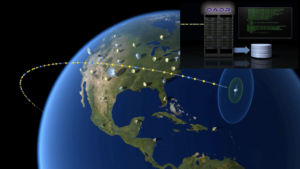
The Commerce Department is seeking information on commercial sources of space situational awareness (SSA) data to augment its own space traffic management capabilities.
The post NOAA seeking information on commercial space situational awareness data appeared first on SpaceNews.
Lynk reveals mobile network contracts
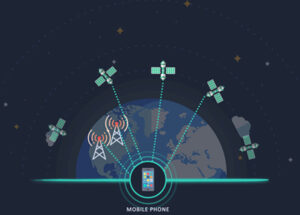
Lynk Global announced contracts Feb. 23 with seven mobile network operators serving Pacific and Caribbean Island nations.
The post Lynk reveals mobile network contracts appeared first on SpaceNews.
Webb’s workhorse: NIRSpec
 Video:
00:01:00
Video:
00:01:00
The NIRSpec instrument is the workhorse near-infrared spectrograph on board the James Webb Space Telescope and is provided by ESA.
NIRSpec will allow scientists to study objects embedded in shrouds of gas and dust, to find out more about how galaxies formed and evolved, and to characterise the atmospheres of exoplanet to determine if water is present.
The primary goal of NIRSpec is to enable large spectroscopic surveys of astronomical objects like stars or distant galaxies. This is made possible by its powerful multi-object spectroscopy mode, which will make use of use of roughly a quarter of a
Caution! Martian wind at work
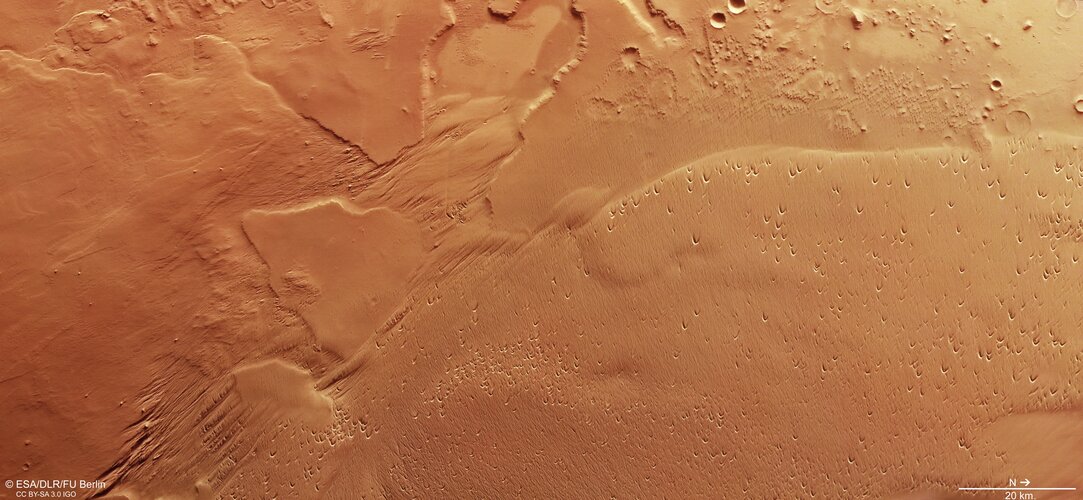
This image from ESA’s Mars Express shows part of possibly the largest single source of dust on Mars: a wind-sculpted feature known as the Medusae Fossae Formation, or MFF.
Northrop Grumman wins $341 million Space Force contract to develop a deep-space tracking radar

The U.S. Space Force awarded Northrop Grumman a $341 million contract to develop a radar site to track active satellites and debris in high orbits.
The post Northrop Grumman wins $341 million Space Force contract to develop a deep-space tracking radar appeared first on SpaceNews.
Tiny probes could sail to outer planets with the help of low-power lasers
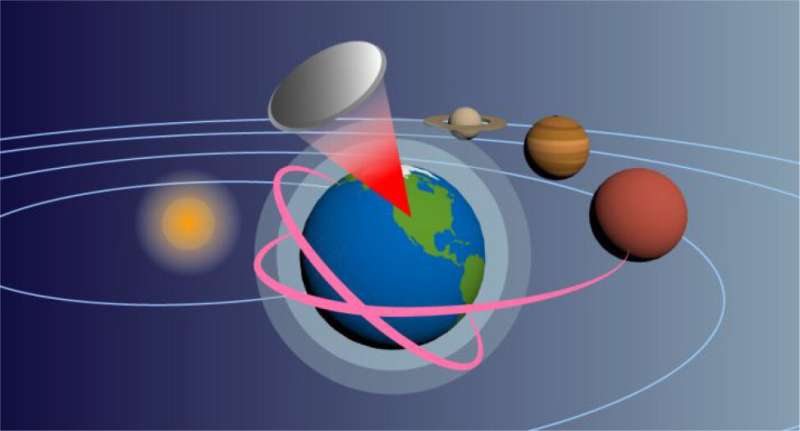
Space travel can be agonizingly slow: For example, the New Horizons probe took almost 10 years to reach Pluto. Traveling to Proxima Centauri b, the closest habitable planet to Earth, would require thousands of years with even the biggest rockets. Now, researchers calculate in ACS' Nano Letters that low-power lasers on Earth could launch and maneuver small probes equipped with silicon or boron nitride sails, propelling them to much faster speeds than rocket engines.
NRO chief warns satellite operators to ‘secure their systems’ as Ukraine crisis unfolds
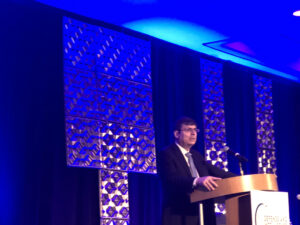
The director of the National Reconnaissance Office Christopher Scolese warned that satellites in space could be targeted by Russia’s military in an effort to disrupt communications and GPS services.
The post NRO chief warns satellite operators to ‘secure their systems’ as Ukraine crisis unfolds appeared first on SpaceNews.
Moon-bound rocket stage still most likely from 2014 Chang’e mission, despite China’s denial
How Software Steers the Return to the Moon

The 1960s ushered in an era of human space exploration that has never been equaled
The post How Software Steers the Return to the Moon appeared first on SpaceNews.
Ukraine crisis challenges International Space Station cooperation
 The crisis over Russia's Ukrainian aggression presents NASA and other space agencies with the most serious diplomatic strain in the 22-year history of the International Space Station partnership, experts said.
Russia is a major partner with the United States, Europe, Japan and Canada in the space station's maintenance and operation.
Russia provides critical cargo and crew transport,
The crisis over Russia's Ukrainian aggression presents NASA and other space agencies with the most serious diplomatic strain in the 22-year history of the International Space Station partnership, experts said.
Russia is a major partner with the United States, Europe, Japan and Canada in the space station's maintenance and operation.
Russia provides critical cargo and crew transport, 


