

NASA inspector general warns astronaut corps may be too small
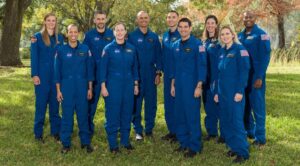
The size of NASA’s astronaut corps may soon fall below the minimum level the agency needs to support space station and Artemis missions and other activities, the agency’s inspector general warns.
Stratolaunch plane flies again as company prepares for hypersonic tests
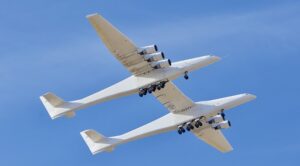
Stratolaunch flew its giant aircraft Jan. 16 for just the third time as company executives promise a higher rate of flight activities this year, including the first flight of a hypersonic test vehicle.
Watch Director General's annual press conference 2022

Watch live: our start-of-year press conference looking ahead at 2022, with ESA Director General Josef Aschbacher and ESA Directors, from 10:00 CET on 18 January.
Data-relay system connects astronauts direct to Europe
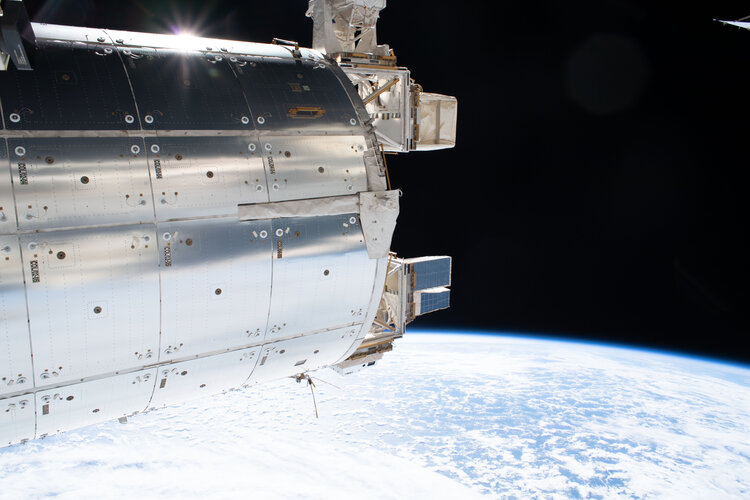
Astronauts on board the International Space Station are connecting straight to Europe at light speed, thanks to the European Data Relay System.
Space science in 360° | Cosmic Kiss
 Video:
00:00:00
Video:
00:00:00
Immerse yourself in 360° of science with ESA astronaut Matthias Maurer as he prepares an experiment to examine how human cells behave in weightlessness.
The Cytoskeleton experiment is a biological study that aims to determine the changing function of RhoGTPases when in vitro cell cultures are exposed to weightlessness. It will run in the Biolab facility of Europe’s Columbus laboratory.
In this video, we see Matthias remove Cytoskeleton cell cultures from the Minus Eighty Lab Freezer ISS (MELFI) and prepare them in the Life Sciences Glovebox (LSG) before installing the experiment in Columbus’s BioLab.
Matthias was launched to the International
Crown aurora borealis
 Video:
00:00:55
Video:
00:00:55
Timelapse video made during ESA astronaut Thomas Pesquet’s second mission to the International Space Station, “Alpha” around 4 November 2021. The camera was setup to take pictures at intervals of two a second, and the pictures are then edited into this video that plays at 25 pictures a second. The video is around 12 times faster than real speed.
Thomas shared this video on social media explaining that the pictures were taken from the docked Crew Dragon spacecraft windows and it was the strongest aurora the crew had seen during their six months ins space.
Over 200 experiments were
China’s first launch of 2022 puts classified Shiyan-13 satellite into orbit
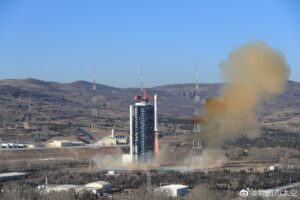
A Long March 2D carried the classified Shiyan-13 test satellite into orbit late Sunday, marking the start of what is planned to be a busy year of launches for China.
Space Station communications infographic
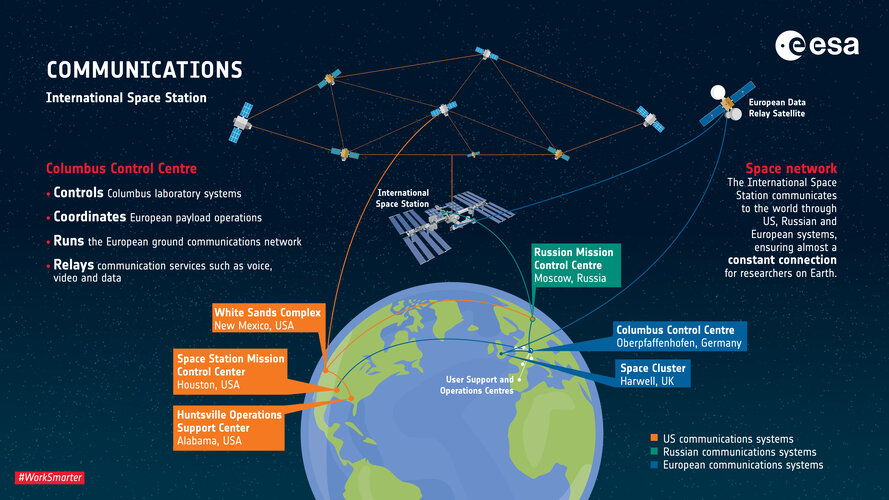 Image:
Space Station communications infographic
Image:
Space Station communications infographic Space Force signals demand for commercial weather data, but will the industry deliver?
Military needs for weather data such as cloud coverage and theater weather imagery currently cannot be met by the commercial industry and likely will require significant new investment.
Industry offers cautious optimism about state of space investment
After a year that saw the rise and potential fall of one tool for space companies to raise money, executives and investors have varying degrees of optimism about the state of the industry heading into 2022.


