

New epoch of miniaturized Cherenkov detectors
 Cherenkov radiation refers to the photon emission from the swift charged particle moves with the velocity greater than the phase velocity of light in the surrounding materials. Ever since its experimental observation by a Soviet physicist P.A. Cherenkov in 1934, Cherenkov radiation has been widely explored and applied in many research fields ranging from cosmology and information, to medical and
 Scientists invent lead-free composite shielding material for neutron and gamma-ray
 Dr. HUO Zhipeng and his student ZHAO Sheng from the Hefei Institutes of physical science (HFIPS) of the Chinese Academy of Sciences recently developed a lead-free neutron and gamma ray composite shielding material that has high shielding properties and is environmentally friendly. Their results were published on Nuclear Materials and Energy.
The composite, modified-gadolinium oxide/boron c
Dr. HUO Zhipeng and his student ZHAO Sheng from the Hefei Institutes of physical science (HFIPS) of the Chinese Academy of Sciences recently developed a lead-free neutron and gamma ray composite shielding material that has high shielding properties and is environmentally friendly. Their results were published on Nuclear Materials and Energy.
The composite, modified-gadolinium oxide/boron c Angara upper stage reenters after failed launch
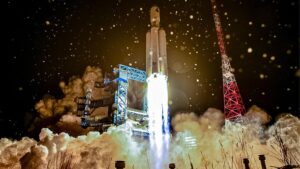
The upper stage of a failed Angara launch harmlessly reentered Jan. 5, capping another setback in the protracted development of that vehicle.
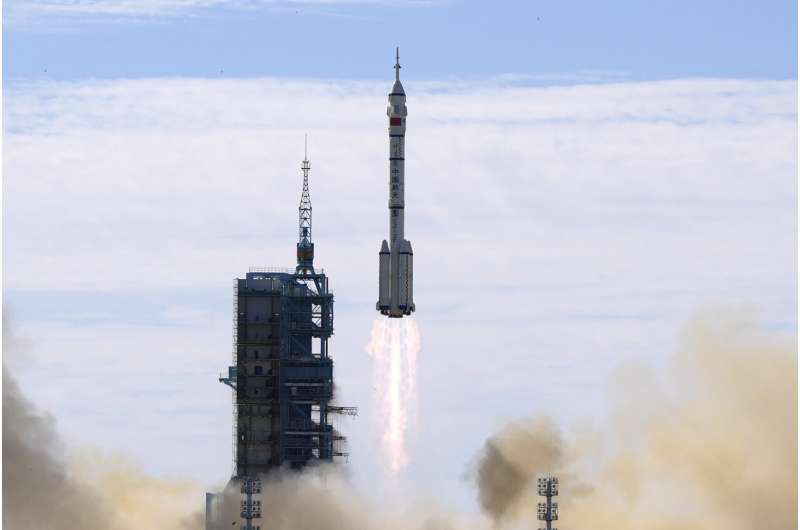
China plans space station completion, many launches in 2022
Leidos signs on as HawkEye 360 investor and strategic partner
HawkEye 360 extended its Series D funding round to $150 million with a $5 million investment from Leidos.
Asteroids, the moon and Mars: Space missions to look forward to in 2022
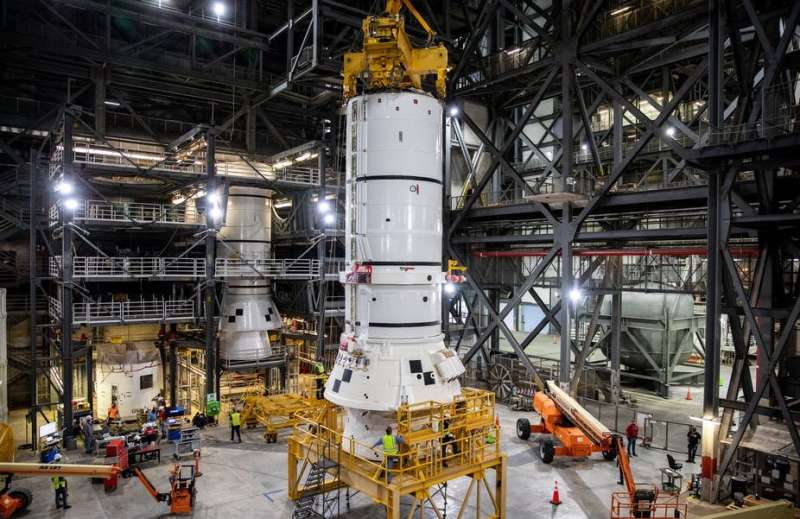
Astronomers ended 2021 on a high with the launch on December 25 of the James Webb Space Telescope, a joint mission between the European Space Agency, Nasa and the Canadian Space Agency. It was a relief to hear that the precision drives that opened up the complex sunshield, which is about the size of a tennis court, worked perfectly.
The telescope is now on the way to its destination, 1.5 million kilometers away from Earth, where it will begin a series of tests once it arrives in late January. If the mission goes to plan, we can expect to start receiving images from the telescope in mid-2022.
But what else lies in store for space science this year? Here are a few missions to watch out for.
Hubble passes 1-billion-second mark
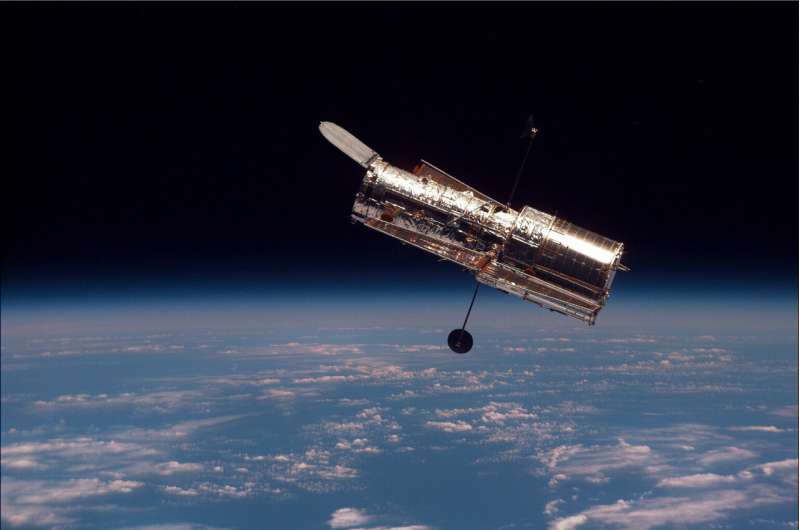
On Jan. 1, 2022, NASA's Hubble Space Telescope officially passed the one-billion second mark.
Hubble was deployed from the Space Shuttle Discovery's cargo bay on April 25, 1990, making it one-billion seconds (over 31 years) since Hubble began operating. For more than three decades, Hubble has provided us with groundbreaking scientific discoveries and iconic images of space.
Hubble's first one-billion seconds included five astronaut servicing missions to replace and repair components of the telescope, and more than 1.5 million scientific observations and counting. We can only imagine what discoveries the next one-billion seconds will bring as new telescopes like the recently launched James Webb Space Telescope and the future Nancy Grace Roman Space Telescope build upon Hubble's discoveries and work together with Hubble to expand our understanding of the universe.
Explore further
Loft Orbital orders more LeoStella satellite buses
Condosat operator Loft Orbital has ordered another batch of small satellite buses from LeoStella after securing undisclosed customers looking to fly payloads in 2023.
Sending tardigrades to the stars
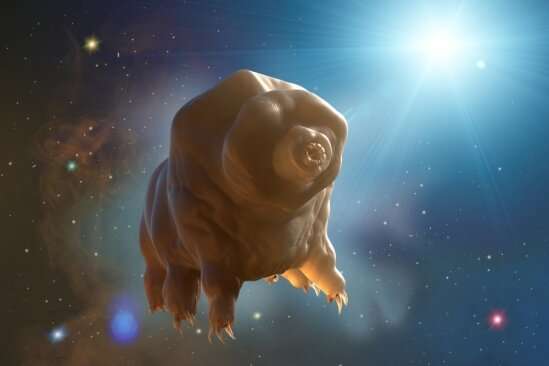
No longer solely in the realm of science fiction, the possibility of interstellar travel has appeared, tantalizingly, on the horizon. Although we may not see it in our lifetimes—at least not some real version of the fictional warp-speeding, hyperdriving, space-folding sort—we are having early conversations of how life could escape the tether of our solar system, using technology that is within reach.
For UC Santa Barbara professors Philip Lubin and Joel Rothman, it's a great time to be alive. Born of a generation that saw breathtaking advances in space exploration, they carry the unbridled optimism and creative spark of the early Space Age, when humans first found they could leave the Earth.
"The Apollo moon voyages were among the most momentous events in my life and contemplating them still blows my mind," said Rothman, a distinguished professor in the Department of Molecular, Cellular and Developmental Biology, and a self-admitted "space geek."
A mere 50 years have passed since that pivotal era, but humanity's knowledge of space and the technology to explore it have improved immensely, enough for Rothman to join experimental cosmologist Lubin in considering what it would take for living beings to embark on a journey across the vast distance separating us from our nearest neighbor in the galaxy.


