SES orders two replacement satellites for broadcast market
SES is underlining its confidence in Europe’s broadcast market with the order of two replacement geostationary (GEO) Ku-band satellites.
Iceye and U.S. Army forge collaborative research pact
Iceye U.S. announced a cooperative research and development agreement with the U.S. Army Space and Missile Defense Technical Center.
NASA's Laser Communications Relay Demonstration: 6 things you need to know
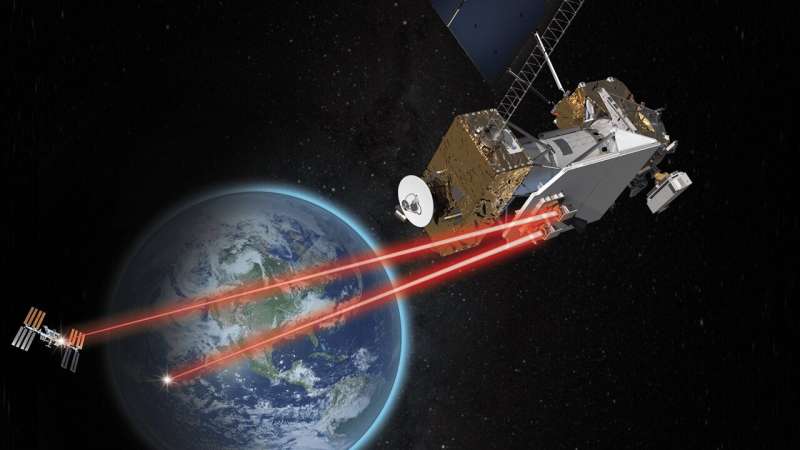
NASA's Laser Communications Relay Demonstration (LCRD) will use laser communications systems to transmit data from space to Earth. Below are six things you need to know about NASA's revolutionary LCRD mission.
1. Laser communications will transform how NASA gets info to and from space
Since the dawn of space exploration, NASA has used radio frequency systems to communicate with astronauts and spacecraft. However, as space missions generate and collect more data, the need for enhanced communications capabilities increases. LCRD leverages the power of laser communications, which uses infrared light rather than radio waves, to encode and transmit information to and from Earth.
Both radio waves and laser infrared light waves are forms of electromagnetic radiation with wavelengths at different points on the spectrum. Missions encode their scientific data onto the electromagnetic signals to send back to Earth.
The infrared light used for laser communications differs from radio waves because it occurs at a much higher frequency, allowing engineers to pack more data into each transmission.
We’ve picked the winners of the 2021 SpaceNews Awards

The SpaceNews Awards are held each year to recognize achievements in space commerce, exploration and stewardship.
Rocket Factory Augsburg lands new customer in build up to first launch
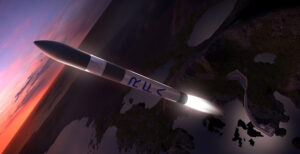
German launch startup Rocket Factory Augsburg has signed a new customer for the first launch of its RFA One rocket next year.
New report calls for U.S. strategy to boost space economy
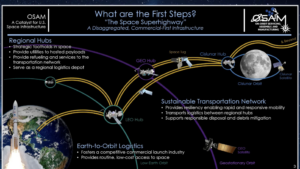
U.S. national security space organizations released a report Nov. 18 proposing ways to boost the nation’s space economy and technology base.
Moon lighting: partial lunar eclipse to be longest since 1440
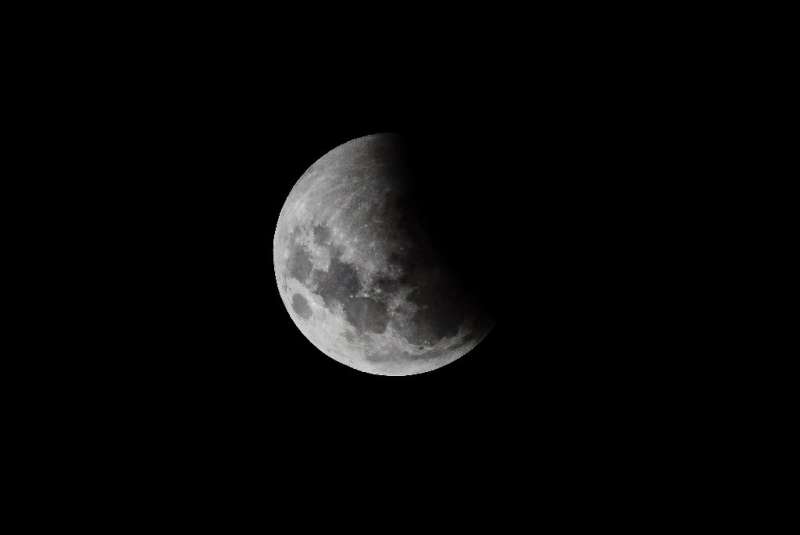
The longest partial lunar eclipse in nearly 600 years, which will bathe the Moon in red, will be visible Thursday and Friday for a big slice of humanity.
The celestial show will see the Moon almost completely cast in shadow as it moves behind the Earth, reddening 99 percent of its face.
The spectacle will be visible for all of North America, as well as parts of South America, Polynesia, Australia and northeast Asia.
Space scientists say sky-watchers in those parts who are blessed with a cloud-free view will see a slight dimming of the Moon from 0602 GMT Friday as it enters Earth's penumbra—the outer shadow.
An hour later it will appear as if someone has taken a giant bite out of the lunar disc as it starts to pass into the umbra—the full shadow.
By 0845 GMT the Moon will appear red, with the most vivid coloring visible at peak eclipse 18 minutes later.
NASA: Space station remains at risk from weapons test debris
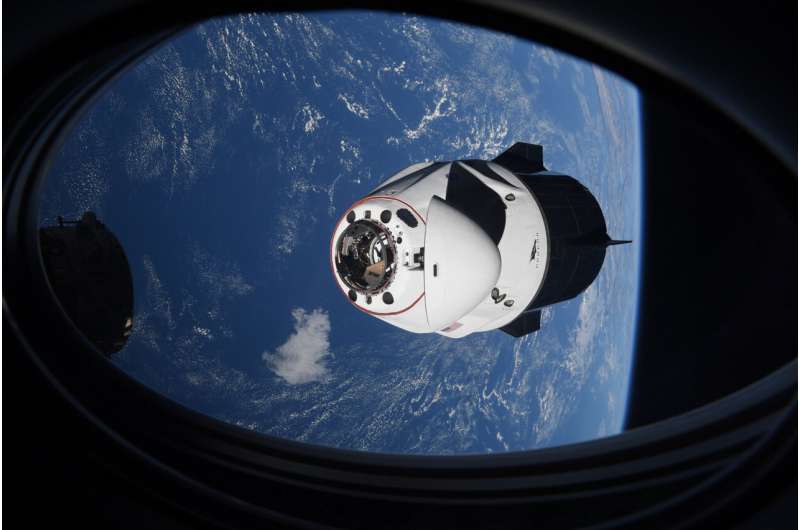
Interest in SPAC mergers declining

While SPAC mergers dominated the space industry for much of the year, one expert sees warning signs of waning interest in this way of taking companies public.
Moonshot: Japan recruits first new astronauts in 13 years
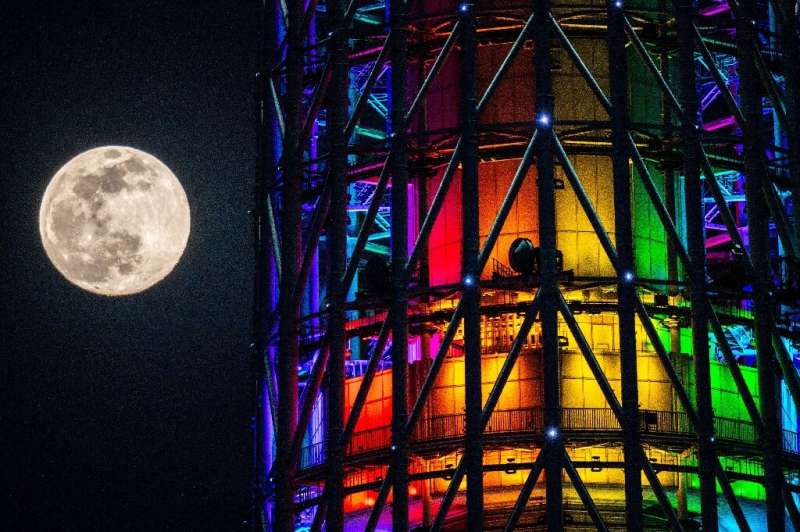
It's one small step for Japan, but one giant opportunity for would-be space cadets: the country is recruiting new astronauts for the first time in over a decade and applicants no longer have to hold a science degree.
Women are strongly encouraged to put themselves forward for the job, the Japan Aerospace Exploration Agency (JAXA) said, as all seven of the nation's current astronauts are men.
Successful applicants, who must be Japanese, will be trained and sent on missions—potentially to the Moon, the Lunar Gateway or the International Space Station.
"We want to establish a (recruiting) system that matches the current time," JAXA's Kazuyoshi Kawasaki said at a media briefing.
"Previously we limited candidates to those with a natural science degree, but many of us agreed to make it not a requirement."
However, written exams will include university-level questions on science, technology, engineering and maths, with the applicants' English ability also tested.
JAXA said it will accept applications between December 20 and March 4—the first time it has offered positions for rookie astronauts in 13 years.