

Virgin Orbit to go public in SPAC merger

Small launch vehicle developer Virgin Orbit will go public through a merger with a special-purpose acquisition company (SPAC) in a deal that includes an investment by Boeing, the company announced Aug. 23.
Millennium Space in an experiment de-orbited a satellite in eight months

Millennium Space Systems announced Aug. 23 it successfully demonstrated the use of a deployable tether to de-orbit a satellite after it completes its mission.
On National Security | In the new space era, a changing role for the U.S. government

The pace of technological innovation in the space business has long been dictated by government-funded programs of record. But as the private sector increasingly drives innovation, government buyers are trying to figure out their role in the new space era.
We're launching Australia's first scratch-built satellite, and it's a giant leap toward the moon

On August 28, a SpaceX rocket will blast off from Cape Canaveral in Florida, carrying supplies bound for the International Space Station. But also on board will be a small satellite that represents a giant leap into space for our research program here in Western Australia.
Our satellite, called Binar-1 after the Noongar word for "fireball," was designed and built from scratch by our team at Curtin University's Space Science and Technology Center.
We chose this name for two reasons: to acknowledge the Wadjuk people of the Noongar Nation, and to recognize the relationship between our satellite program and Curtin's Desert Fireball Network, which has successfully searched for meteorites in the Australian desert.
Binar-1 is a CubeSat—a type of small satellite made from 10-centimeter cube-shaped modules. Binar-1 consists of just one such module, meaning it's technically a 1U CubeSat.
Its main objective is to prove the technology works in space, thereby taking a first step towards future missions in which we hope ultimately to send CubeSats to the moon.
Global space economy swells in spite of the pandemic

The overall space economy expanded 4.4 percent to $447 billion in 2020 with more nations participating than ever before, according to the Space Foundation’s updated Space Report.
Lamborn: The fight to keep U.S. Space Command in Colorado is not over

Rep. Doug Lamborn, a Republican who represents Colorado Springs, told SpaceNews he expects the fight to continue into next year pending ongoing reviews by the Defense Department’s inspector general and the Government Accountability Office.
Astronaut's undisclosed minor medical issue delays spacewalk
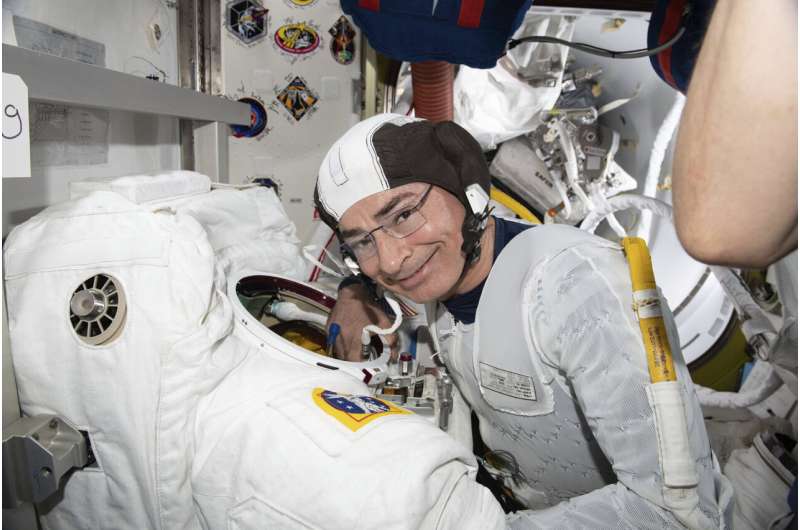
NASA is delaying a spacewalk at the International Space Station this week because of an undisclosed medical issue involving one of its astronauts.
NASA Administrator highlights contributions of Colorado industry and academia
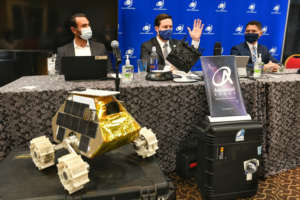
Advanced Space was one of three Colorado organizations NASA Administrator Bill Nelson introduced during a press briefing at the 36th Space Symposium with genuine enthusiasm.
Analysts: Space SPACs can be a steal or a shot in the dark

The SPAC trend in the space industry does not appear to be letting up, says a new report by Avascent and Jefferies, but analysts caution that these deals, while attractive for space companies, can be risky for investors.
ispace unveils new larger lunar lander
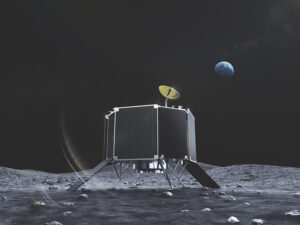
The Tokyo-based ispace unveiled the design of the lander at the 36th Space Symposium Aug. 23. The lander, being developed by the company’s U.S. office in Denver, will fly as soon as 2024 on the company’s third mission to the moon.


