

Radiation-detecting optical fibers installed on the International Space Station
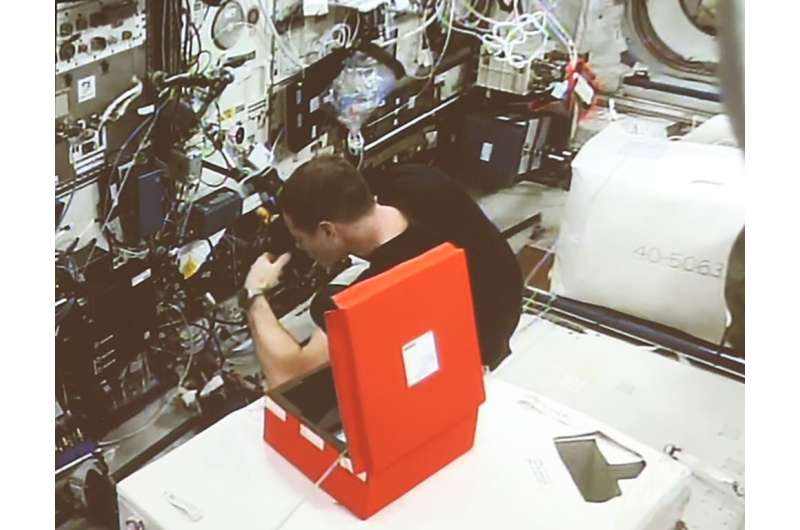
In a spacecraft, in order to protect both crew and electronics from radiation, it is mandatory to invest in effective radiation monitoring systems. The International Space Station (ISS), just like the Large Hadron Collider at CERN, is a complex radiation environment that requires bespoke dosimetry devices. Optical-fiber-based technologies can provide both distributed and point radiation dose measurements with high precision.
On 18 August, ESA astronaut Thomas Pesquet activated the Lumina experiment inside the ISS as part of the ALPHA mission. Developed under the coordination of the French Space Agency, CNES, and with the involvement of CERN, the Laboratoire Hubert Curien at the Université Jean-Monnet-Saint-Étienne, and iXblue, this project uses two several-kilometer-long optical fibers as active dosimeters to measure ionizing radiation in the ISS with very high sensitivity.
Space Force to establish new command in Colorado focused on training and education

The U.S. Space Force on Aug. 23 will establish the Space Training and Readiness Command at Peterson Space Force Base in Colorado Springs.
Op-ed | Private industry spacesuit advancements are the solution to OIG report findings
The recent Office of Inspector General report that concluded NASA's spacesuit program is out of sync with with a 2024 lunar landing excluded any consideration of the substantial privately led work that has already been accomplished by industry.
Shareholders approve Rocket Lab SPAC deal
Shareholders of a special-purpose acquisition company (SPAC) voted Aug. 20 to merge with Rocket Lab, giving the small launch vehicle and spacecraft developer an infusion of cash.
Here comes the sun: Planetary scientists find evidence of solar-driven change on the moon
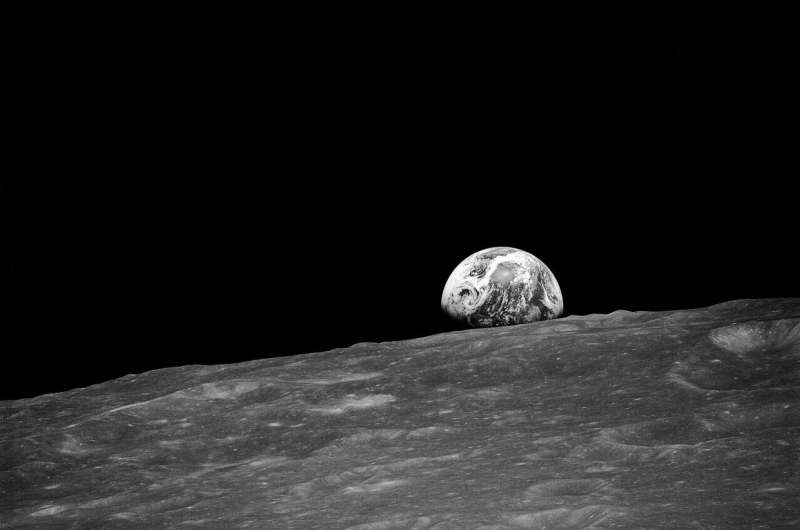
Tiny iron nanoparticles unlike any found naturally on Earth are nearly everywhere on the moon—and scientists are trying to understand why. A new study led by Northern Arizona University doctoral candidate Christian J. Tai Udovicic, in collaboration with associate professor Christopher Edwards, both of NAU's Department of Astronomy and Planetary Science, uncovered important clues to help understand the surprisingly active lunar surface. In an article recently published in Geophysical Research Letters, the scientists found that solar radiation could be a more important source of lunar iron nanoparticles than previously thought.
Asteroid impacts and solar radiation affect the moon in unique ways because it lacks the protective magnetic field and atmosphere that protect us here on Earth. Both asteroids and solar radiation break down lunar rocks and soil, forming iron nanoparticles (some smaller, some larger) that are detectable from instruments on satellites orbiting the moon. The study used data from National Aeronautics and Space Administration (NASA) and Japan Aerospace Exploration Agency (JAXA) spacecraft to understand how quickly iron nanoparticles form on the moon over time.
"We have thought for a long time that the solar wind has a small effect on lunar surface evolution, when in fact it may be the most important process producing iron nanoparticles," Tai Udovicic said.
Op-ed | Unlocking New Economic Frontiers in Space
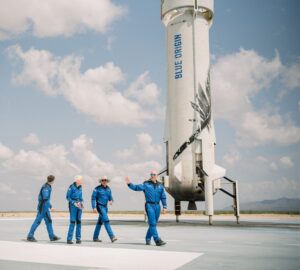
More than space tourists, Jeff Bezos and Richard Branson are leading the way to commercial and public utilization of space previously only imagined in science fiction.
Op-ed | Space tourism’s environmental price tag

There’s no such thing as a free launch — especially when it comes to suborbital joy rides.
China's Mars rover soldiers on after completing program
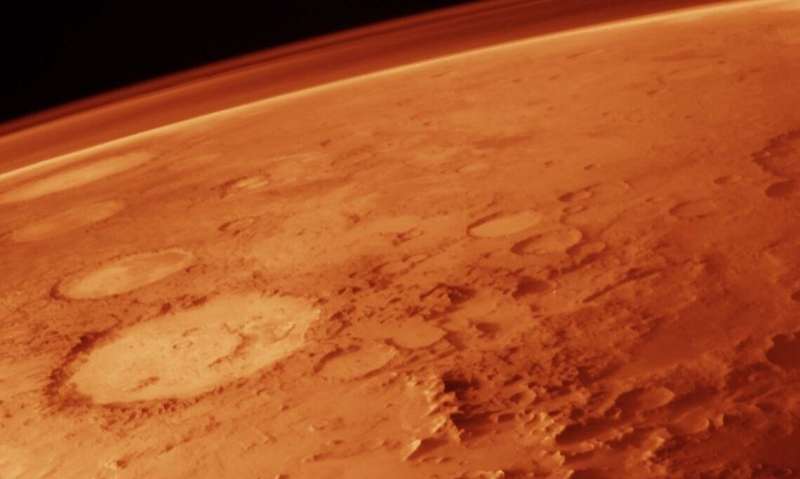
China's Zhurong Mars rover is soldiering on after completing its initial program to explore the red planet and search for frozen water that could provide clues as to whether it once supported life.
China's National Space Administration said on its website Friday that Zhurong completed its 90-day program on Aug. 15 and was in excellent technical condition and fully charged.
It said it would continue to explore the area known as Utopia Planitia where it landed on May 14. Zhurong has been consistently sending back photos and data via the Tianwen-1 orbiter that crosses over it once a day.
After the United States, China is the second country to land and sustainably operate a spacecraft on Mars, where days are 40 minutes longer than on Earth.
At 1.85 meters (6 feet) in height, Zhurong is significantly smaller than the American Perseverance rover, which is exploring the planet with a tiny helicopter. NASA expects its rover to collect its first sample in July for return to Earth as early as 2031.
Concurrently, China is assembling its permanent space station, with three astronauts now aboard the Tianhe, or Heavenly Harmony, core that was put into orbit on April 29.
A technique to predict radiation risk during ISS Missions
 Astronauts traveling to the Moon, Mars, and other future deep space destinations will likely make new and amazing discoveries. Undertaking these exploration missions will not be possible without increased risk to crew members from exposure to the space environment. To reduce risks of the hazards of spaceflight and protect astronauts from space radiation, NASA is using the International Space Sta
 Planetary scientists find evidence of solar-driven change on the Moon
 Tiny iron nanoparticles unlike any found naturally on Earth are nearly everywhere on the Moon-and scientists are trying to understand why. A new study led by Northern Arizona University doctoral candidate Christian J. Tai Udovicic, in collaboration with associate professor Christopher Edwards, both of NAU's Department of Astronomy and Planetary Science, uncovered important clues to help understa


