

Thailand moving to enact Space Activities Act

The legislation aims to set up a National Space Policy Committee, chaired by Thailand's prime minister, to draw up the nation's space policies.
Forecast perfect for 'mythic' Perseid meteor spectacle
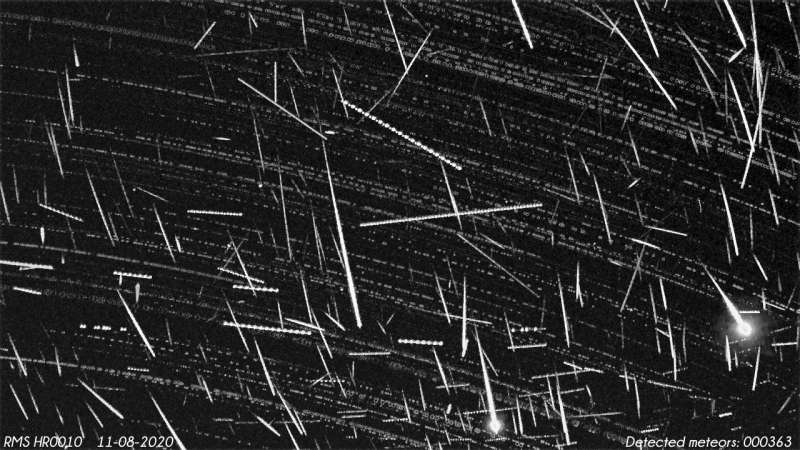
The Perseid meteor shower peaks Aug. 12 to 13 and the stars are aligning for a really big show, according to Western's Denis Vida.
Sunday, Aug. 8, marks the arrival of a new moon, so the sky will be relatively dark and forecasts to be ideal for a viewing of the annual meteor shower on Wednesday or Thursday night.
A new moon is when the sun and moon are close together as seen from Earth, so both are not visible during the night.
"If you happen to find yourself outside of the city or perhaps on a beach on Wednesday or Thursday night, look up! Every couple of minutes or so you will see a bright meteor zipping across the sky," said Vida, a postdoctoral associate in Western's department of physics and astronomy.
All of the meteors are coming from the same direction—a specific point in the constellation of Perseus.
University of Pardubice

Additional Info
- Organisation Website Company Website
- Recruitment Contact Office of International Affairs and Development
- Recruitment Contact email
Gravity assists: nature balances her books

On Earth, fuel is a limited, precious resource. In space, we trade energy freely with the planets.
Accion to supply thrusters for Xplore ESPA-class satellite
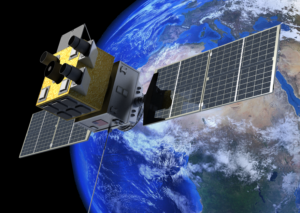
Accion Systems plans to supply miniature ion thrusters for Xplore Inc.’s 150-kilogram LEO Xcraft satellite, under an agreement announced Aug. 10.
Rocket Lab to launch three sets of BlackSky satellites

Rocket Lab will conduct three launches of satellites for Earth observation company BlackSky in about one month, the fastest launch cadence the company had demonstrated to date.
Light pollution and spotting Perseid meteors
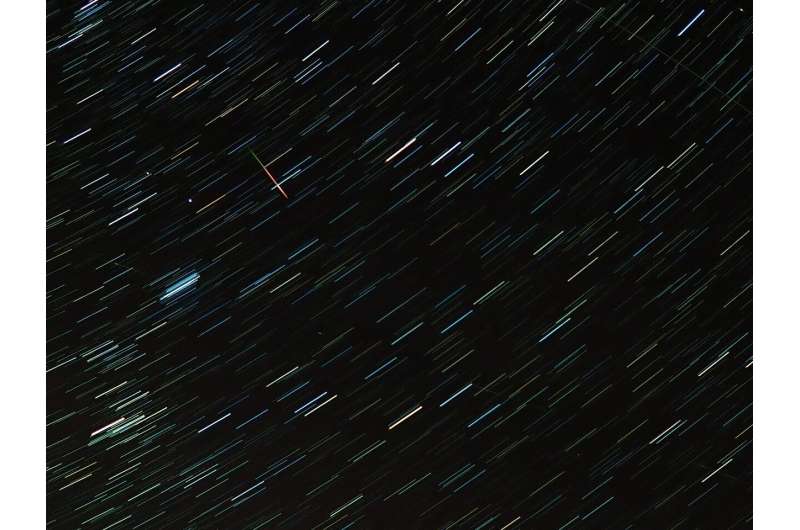
Many Perseid-related news stories and social media posts state that the maximum rate is about 100 meteors per hour, which is a lot. So, folks get excited and go out on the peak night, braving mosquitos and other nightly hazards. But they are often disappointed; we routinely hear, "I went out and only saw a few meteors. Not even 20, much less 100!" And they would be right. The problem is that the 100 per hour is a theoretical number used by meteor scientists and does not convey what people are actually going to see.
In the 1980s, meteor researchers were searching for a way to compare the meteor shower rates observed by various individuals and groups across the globe. People were reporting the rates, but the differences in sky conditions, radiant altitude and observer eyesight made getting a comprehensive view of shower activity difficult.
So, the meteor researchers put their heads together and came up with the concept of a ZHR, or Zenithal Hourly Rate. The ZHR is what you get after you correct the observed rates for the sky conditions, the altitude of the radiant above the horizon and observer biases.
BepiColombo skims past Venus
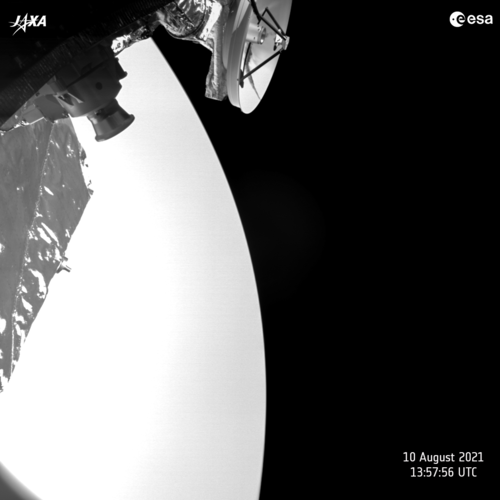 Image:
BepiColombo skims past Venus
Image:
BepiColombo skims past Venus Space Olympics (full video)
 Video:
00:09:41
Video:
00:09:41
The International Space Station Expedition 65 crew recorded themselves on a day off after a long week of work having some weightless fun. From Earth orbit, 400 km above our planet, the crew present the very first Space Olympics.
ESA astronaut Thomas Pesquet shared this video on social media with the caption:
“The first ever Space Olympics ! A Saturday afternoon on the International Space Station. Four disciplines. Rules that evolved as we played. Seven athletes. Four nations. Two teams. Crew cohesion and morale boosted like never before. The first Space Olympics saw Team Crew Dragon and Team Soyuz
Lockheed Martin takes aim at satellite servicing market

Lockheed Martin plans to launch two cubesats later this year to demonstrate how small satellites can service other satellites in orbit.


