

ESA’s digital celebration of space safety and Asteroid Day
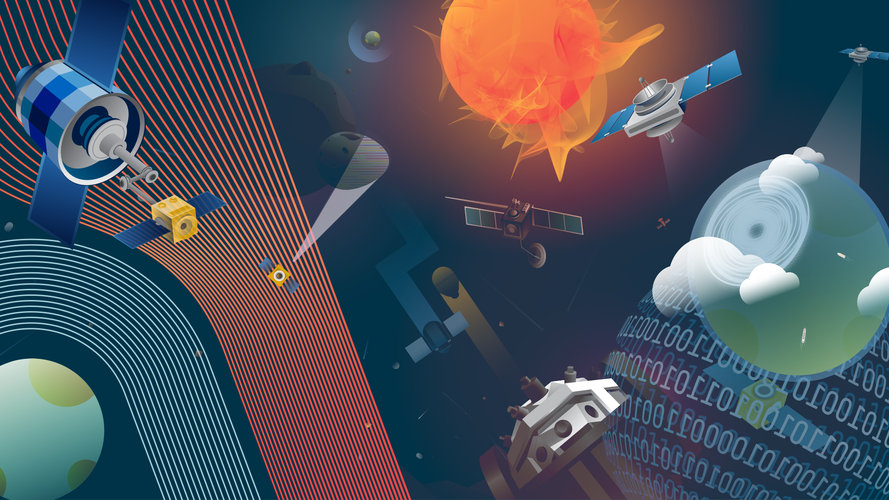
Register now to join us on 28 June, 18:00-20:00 CEST - seats limited.
ESA helps Europe boost secure connectivity

As today’s world becomes increasingly connected, ESA is partnering with the European Commission to keep communications secure.
NASA soliciting proposals for two private astronaut missions
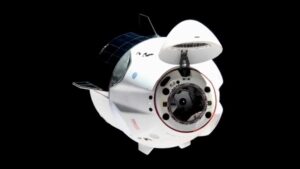
WASHINGTON — NASA announced June 11 that it is requesting proposals for two private astronaut missions to the International Space Station that would fly between the fall of 2022 and the end of 2023.
NASA said it is seeking proposals from companies who want to fly private astronauts to the space station.
Image: Hubble sees a spiral in good company
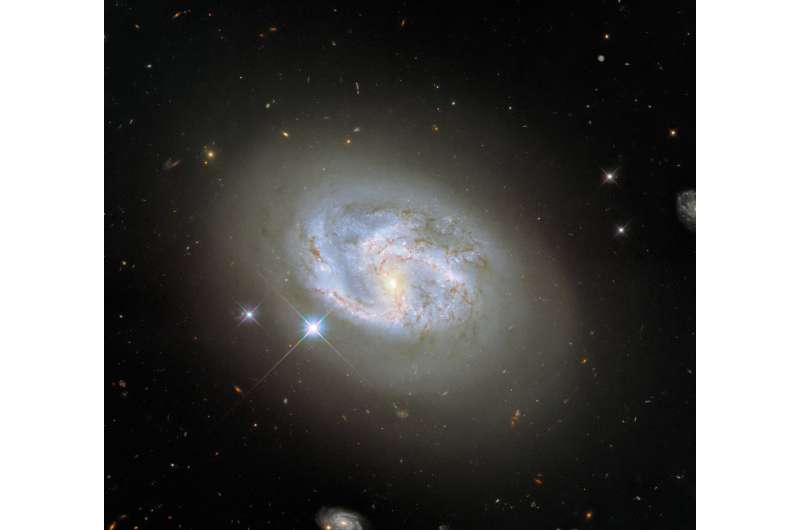
This image, taken with Hubble's Wide Field Camera 3, features the spiral galaxy NGC 4680. Two other galaxies, at the far right and bottom center of the image, flank NGC 4680. NGC 4680 enjoyed a wave of attention in 1997, as it played host to a supernova explosion known as SN 1997bp. Australian amateur astronomer Robert Evans identified the supernova and has identified an extraordinary 42 supernova explosions.
NGC 4680 is actually a rather tricky galaxy to classify. It is sometimes referred to as a spiral galaxy, but it is also sometimes classified as a lenticular galaxy. Lenticular galaxies fall somewhere in between spiral galaxies and elliptical galaxies. While NGC 4680 does have distinguishable spiral arms, they are not clearly defined, and the tip of one arm appears very diffuse.
Galaxies are not static, and their morphologies (and therefore their classifications) vary throughout their lifetimes. Spiral galaxies are thought to evolve into elliptical galaxies, most likely by merging with one another, causing them to lose their distinctive spiral structures.
Juice moves into Large Space Simulator
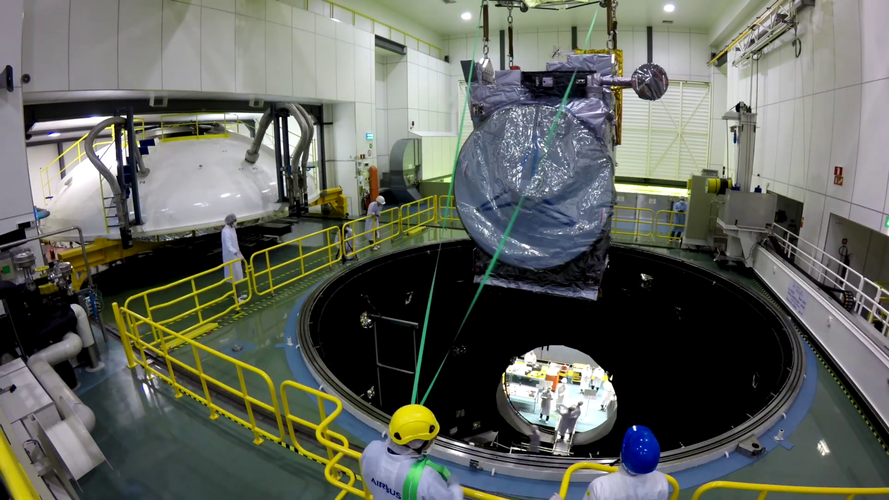
The Jupiter Icy Moons Explorer has moved into the ‘Large Space Simulator’ at ESA’s test centre, ready for grueling environmental tests at a range of temperatures.
Juice moves into the Large Space Simulator
Video:
00:00:59
The Jupiter Icy Moons Explorer (Juice) moved into the Large Space Simulator at ESTEC end May, in a two-day operation. During a month-long test campaign the spacecraft will be subject to extreme temperature cycles under vacuum to replicate the heating and cooling that the spacecraft will experience on its way to Jupiter. The Large Space Simulator is Europe's single largest vacuum chamber standing 15 m high and 10 m wide.
Once in the Jovian system Juice will make detailed observations of Jupiter and its three large ocean-bearing moons – Ganymede, Callisto and Europa – with a suite of
Op-ed | Making space for ESG
SpaceNews recently highlighted the growing recognition that companies can use space-based data and services to demonstrate their implementation of the environmental component of Environmental, Social, Governance (ESG) principles.
It is fantastic to see the space industry supporting ESG objectives by providing data and monitoring for Earth-based environmental sustainability efforts.
NASA approves development of asteroid-hunting Near-Earth Object Surveyor space telescope
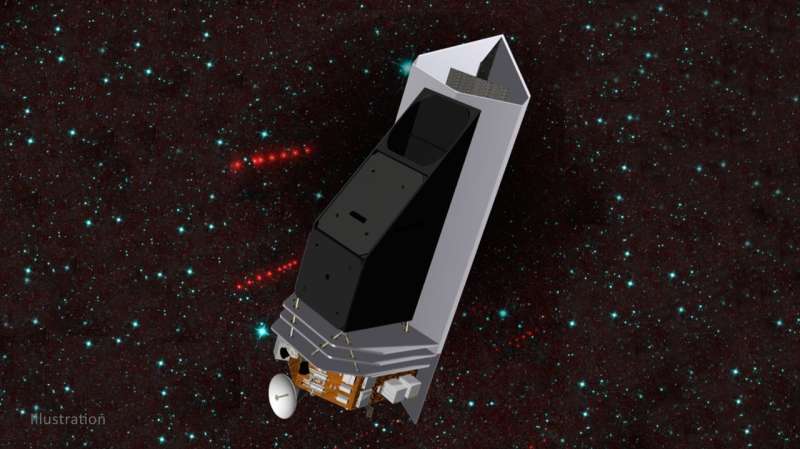
NASA has approved the Near-Earth Object Surveyor space telescope (NEO Surveyor) to move to the next phase of mission development after a successful mission review, authorizing the mission to move forward into Preliminary Design (known as Key Decision Point-B). The infrared space telescope is designed to help advance NASA's planetary defense efforts by expediting our ability to discover and characterize most of the potentially hazardous asteroids and comets that come within 30 million miles of Earth's orbit, collectively known as near-earth objects, or NEOs.
"NEO Surveyor will have the capability to rapidly accelerate the rate at which NASA is able to discover asteroids and comets that could pose a hazard to the Earth, and it is being designed to discover 90 percent of asteroids 140 meters in size or larger within a decade of being launched," said Mike Kelley, NEO Surveyor program scientist at NASA Headquarters.
What mission could detect oceans at Uranus' moons?
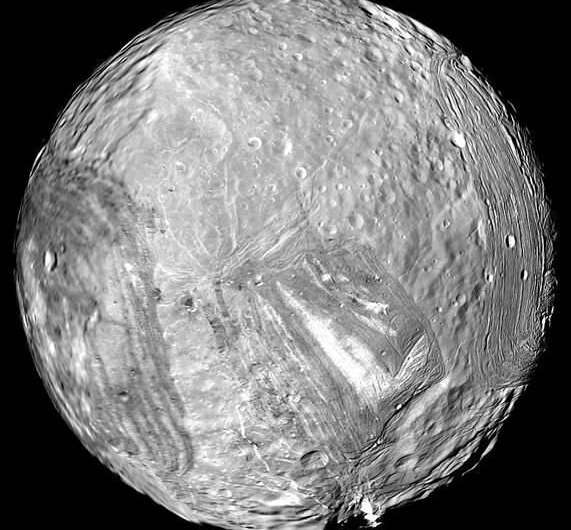
Exploration of ocean worlds has become a hot topic of late, primarily due to their role as a potential harbor for alien life. Moons that have confirmed subsurface oceans garner much of the attention, such as Enceladus and Europa. But they may not be the only ones. Uranus' larger moons—Miranda, Ariel and Umbriel could potentially also have subsurface oceans even farther out into the solar system. We just haven't sent any instruments close enough to be able to check. Now, a team led by Dr. Corey Cochrane at NASA's Jet Propulsion laboratory has done some preliminary work to show that a relatively simple flyby of the Uranian system with an averagely sensitive magnetometer could provide the data needed to determine if those larger moons harbor subsurface oceans. This work is another step down the path of expanding what we think of as habitable environments in the solar system.
Hanwha, KAI and LIG Nex1 to lead South Korea’s private-sector-driven satellite development

SEOUL, South Korea — South Korea has taken yet another step toward having a domestic satellite industry that is driven by the private sector.
Korea Advanced Institute of Science and Technology (KAIST), a state-funded university that has developed several satellites, has agreed to share its spacecraft-manufacturing technologies and know-how with three major South Korean aerospace companies.


