

New research to provide safer and more accurate space weather predictions
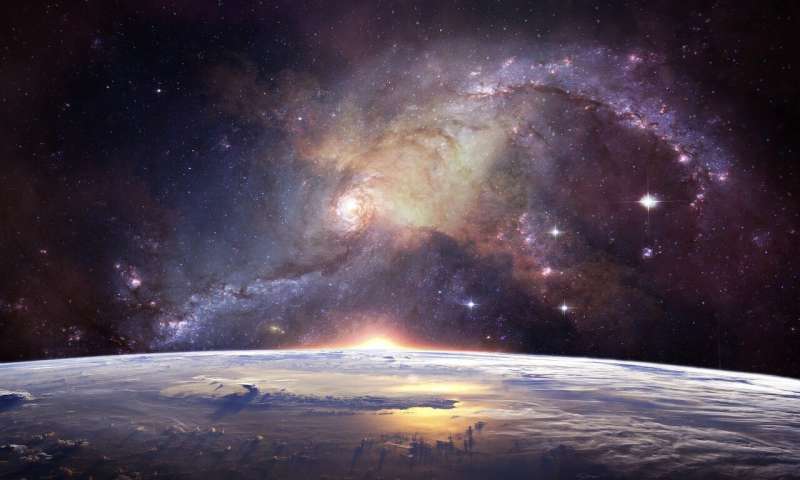
A team of space weather experts from Northumbria University has been awarded more than £400,000 to explore how to better predict the conditions in near-Earth space.
The environment in the radiation belts 60,000km above the Earth can be highly dangerous—both to human life and to technology such as satellites launched into orbit.
However, the method currently used to predict when and where periods of high radiation might occur are based on average measurements, meaning scientists are unable to accurately forecast particularly dangerous events.
Professor Clare Watt, a space plasma physicist from Northumbria's Department of Mathematics, Physics and Electrical Engineering, is leading a new project which aims to find a way of forecasting space weather more accurately—something which would have huge economic benefits.
Funded by the Science and Technology Facilities Council (STFC), the project will combine spacecraft observations and samples of the atmosphere at different positions in near-Earth space, with numerical models which use that data to predict dangerous weather conditions.
Speaking about the research, Professor Watt said: "The near-Earth environment is so variable because our Sun is a magnetically variable star affecting both electromagnetic waves and high-energy particles in the area of space close to Earth.
Pacific readies for 'Super Blood Moon' celestial show
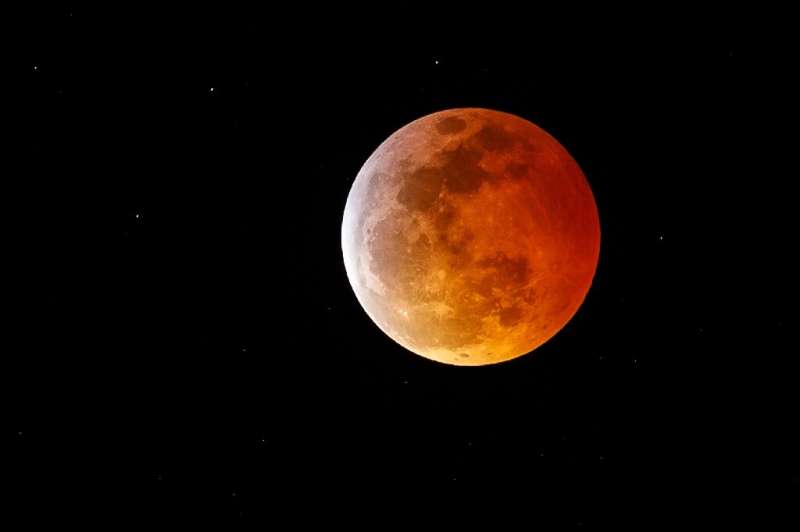
Stargazers across the Pacific Rim can cast their eyes skyward on Wednesday night and behold a "Super Blood Moon", as the heavens align to bring a rare celestial twin treat.
The first total lunar eclipse in two years is happening at the same time as the moon is closest to Earth, in what astronomers say will be a once-in-a-decade show.
If the skies are clear, anyone living between Australia and the central United States will be able to see an enormous, bright, orangey-red moon.
The main event will be between 1111-1125 GMT—late evening in Sydney and pre-dawn in Los Angeles—when the moon will be entirely in the Earth's shadow.
The moon will darken and turn red—a result of sunlight refracting off the Earth's rim onto the lunar surface—basking our satellite in a sunrise- or sunset-tinged glow.
Why the sun's atmosphere is hundreds of times hotter than its surface

The visible surface of the sun, or the photosphere, is around 6,000°C. But a few thousand kilometers above it—a small distance when we consider the size of the sun—the solar atmosphere, also called the corona, is hundreds of times hotter, reaching a million degrees celsius or higher.
This spike in temperature, despite the increased distance from the sun's main energy source, has been observed in most stars, and represents a fundamental puzzle that astrophysicists have mulled over for decades.
In 1942, the Swedish scientist Hannes Alfvén proposed an explanation. He theorized that magnetized waves of plasma could carry huge amounts of energy along the sun's magnetic field from its interior to the corona, bypassing the photosphere before exploding with heat in the sun's upper atmosphere.
The theory had been tentatively accepted—but we still needed proof, in the form of empirical observation, that these waves existed. Our recent study has finally achieved this, validating Alfvén's 80 year-old theory and taking us a step closer to harnessing this high-energy phenomenon here on Earth.
Telesat unlikely to get a C-band windfall for Lightspeed network
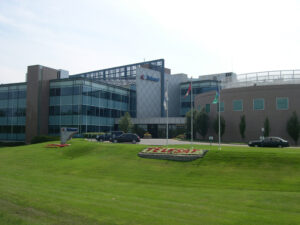
TAMPA, Fla. — Canada’s decision to hold a public auction of C-band spectrum means it is unlikely to be a major funding source for Telesat’s $5 billion Lightspeed satellite constellation.
Telesat had proposed running the auction itself, much like satellite operators did for selling similar frequencies in the United States — before the Federal Communications Commission also opted for a publicly run process.
Air Force nominee vows support for Space Force, will review current plans
WASHINGTON — President Biden’s nominee to be secretary of the Air Force Frank Kendall told lawmakers May 25 he will ensure the Space Force gets the necessary resources to continue to stand up units and acquire new systems.
PUNCH mission passes important milestone
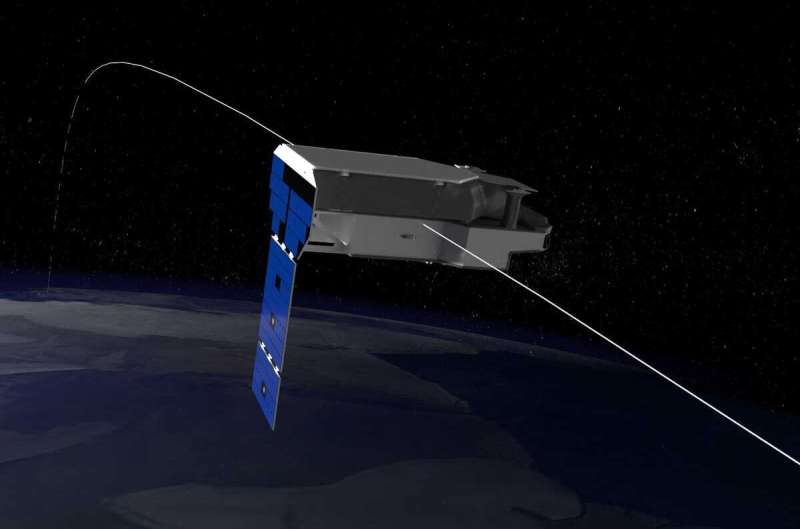
On May 20, 2021, the Polarimeter to UNify the Corona and Heliosphere (PUNCH) mission achieved an important milestone, passing NASA's Preliminary Design Review (PDR) of its spacecraft and payload experiments.
NOAA adopts portfolio approach to Earth-observation mission
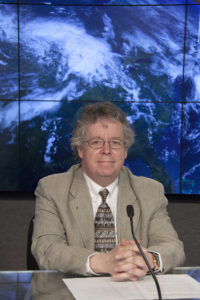
SAN FRANCISCO – At the direction of the Biden Administration, the National Oceanic and Atmospheric Administration’s National Environmental Satellite, Data and Information Service (NESDIS) is adopting a portfolio approach.
“For us that means not just launching one satellite at a time and building that satellite really well, but seeing how all the systems work together,” Stephen Volz, Assistant Administrator for NOAA NESDIS, said May 25 during a Space Foundation webinar.
Pacific sees a 'Blood Moon' rising
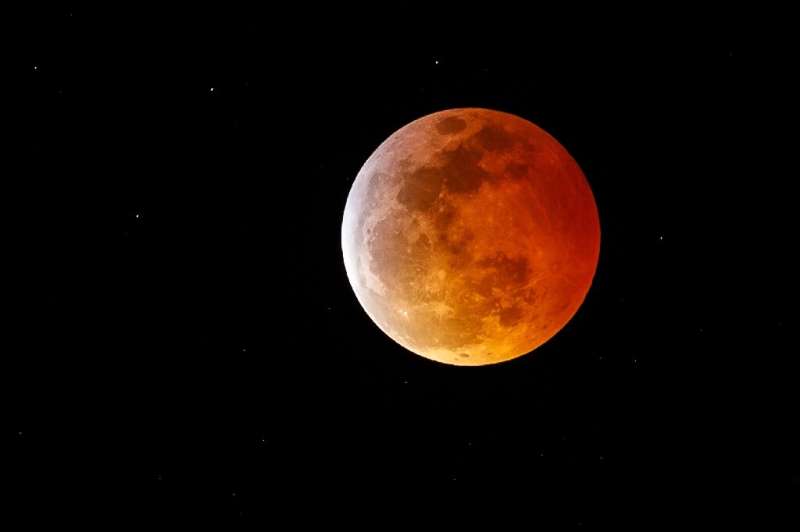
Stargazers across the Pacific Rim will cast their eyes skyward on Wednesday night to witness a rare "Super Blood Moon", as the heavens align to bring an extra-spectacular lunar eclipse.
The first total lunar eclipse in two years will happen at the same time as the Moon is closest to Earth, in what astronomers say will be a once-in-a-decade show.
If the skies are clear, anyone living in the Pacific between Australia and the central United States will be able to see an enormous, bright, orangey-red Moon.
The main event will be between 1111-1125 GMT—late evening in Sydney and pre-dawn in Los Angeles—when the Moon will be entirely in the Earth's shadow.
The Moon will darken and turn red—a result of sunlight refracting off the Earth's rim onto the lunar surface—basking our satellite in a sunrise- or sunset-tinged glow.
Live now: Lunch with the Moon

Live now: Lunch with the Moon
Live now: Lunch with the Moon
AIAA and Space ISAC team up to defend space from cyber attack
 The American Institute of Aeronautics and Astronautics (AIAA) and the Space Information Sharing and Analysis Center (Space ISAC) have entered into a Memorandum of Agreement (MOU) enabling the two organizations to collaborate on aerospace and space cybersecurity endeavors. The two organizations will cooperate to build the knowledge foundations of space cybersecurity. The Space ISAC brings cyberse


