

Astronauts' mental health risks tested in the Antarctic
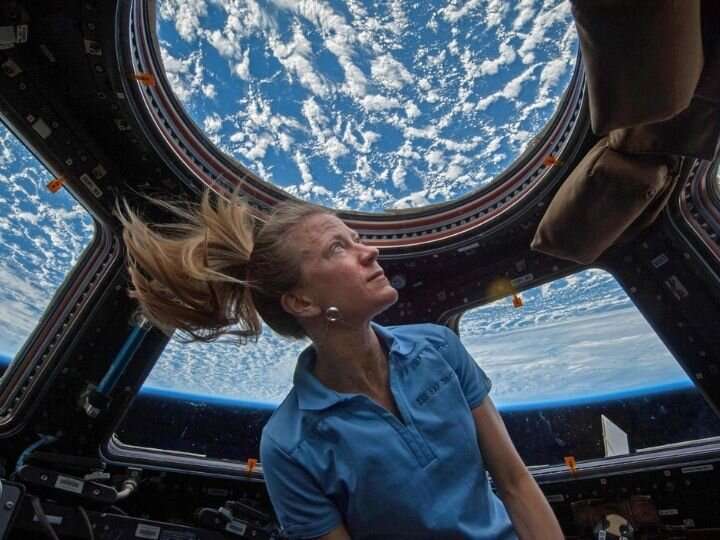
Astronauts who spend extended time in space face stressors such as isolation, confinement, lack of privacy, altered light-dark cycles, monotony and separation from family. Interestingly, so do people who work at international research stations in Antarctica, where the extreme environment is characterized by numerous stressors that mirror those present during long-duration space exploration.
To better understand the psychological hurdles faced by astronauts, University of Houston professor of psychology Candice Alfano and her team developed the Mental Health Checklist (MHCL), a self-reporting instrument for detecting mental health changes in isolated, confined, extreme (ICE) environments. The team used the MHCL to study psychological changes at two Antarctic stations. The findings are published in Acta Astronautica.
"We observed significant changes in psychological functioning, but patterns of change for specific aspects of mental health differed. The most marked alterations were observed for positive emotions such that we saw continuous declines from the start to the end of the mission, without evidence of a 'bounce-back effect' as participants were preparing to return home," reports Alfano.
Noosphere Ventures aims to build an integrated space powerhouse: Q&A with managing partner Max Polyakov
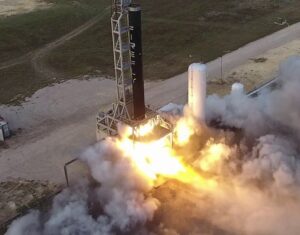
Ukrainian entrepreneur Max Polyakov, with his Silicon Valley-based investment vehicle Noosphere Ventures Partners, is on a mission to build out a vertically integrated space business.
A year after Noosphere founded satellite imagery venture Earth Observation Data Analytics (EOSDA) in 2016, Polyakov got into the launch business by snapping up Firefly Aerospace out of bankruptcy.
Congested orbits a top concern for U.S. Space Command

WASHINGTON — The rapidly growing number of satellites orbiting the Earth is causing apprehension, the commander of U.S. Space Command said April 20.
Gen. James Dickinson told lawmakers on Capitol Hill that congestion in space mostly fueled by commercial activity could create safety problems if it’s not managed.
NASA completes launch readiness review for Crew-2 mission
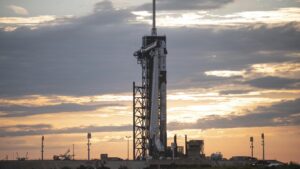
WASHINGTON — The next commercial crew mission to the International Space Station passed its final review before its scheduled April 22 launch, with weather the only major issue.
At an April 20 briefing, NASA said the Crew-2 mission passed its launch readiness review, the final major review before launch.
NASA clears first reused SpaceX Crew Dragon capsule for astronaut launch
 SpaceX and NASA plan to send four astronauts to the International Space Station on Thursday from Florida aboard the first reused Crew Dragon capsule to carry people.
Liftoff of the flight-proven spacecraft, Endeavour, and Falcon 9 rocket is planned for 6:11 a.m. EDT from Complex 39 at Kennedy Space Center. The space agency declared the mission "go for launch" after a launch readiness re
SpaceX and NASA plan to send four astronauts to the International Space Station on Thursday from Florida aboard the first reused Crew Dragon capsule to carry people.
Liftoff of the flight-proven spacecraft, Endeavour, and Falcon 9 rocket is planned for 6:11 a.m. EDT from Complex 39 at Kennedy Space Center. The space agency declared the mission "go for launch" after a launch readiness re New warp research dashes light speed travel but reveals stranger possibilities
 In 1994, physicist Miguel Alcubierre proposed a radical technology that would allow faster than light travel: the warp drive, a hypothetical way to skirt around the universe's ultimate speed limit by bending the fabric of reality.
It was an intriguing idea - even NASA has been researching it at the Eagleworks laboratory - but Alcubierre's proposal contained problems that seemed insurmounta
In 1994, physicist Miguel Alcubierre proposed a radical technology that would allow faster than light travel: the warp drive, a hypothetical way to skirt around the universe's ultimate speed limit by bending the fabric of reality.
It was an intriguing idea - even NASA has been researching it at the Eagleworks laboratory - but Alcubierre's proposal contained problems that seemed insurmounta Space physicist explains why a helicopter flew on Mars is a big deal
 Yesterday at 9pm Australian Eastern standard time, the Ingenuity helicopter - which landed on Mars with the Perseverance rover in February - took off from the Martian surface. More importantly, it hovered for about 30 seconds, three metres above the surface and came right back down again.
It may not sound like a huge feat, but it is. Ingenuity's flight is the first powered flight of an air
Yesterday at 9pm Australian Eastern standard time, the Ingenuity helicopter - which landed on Mars with the Perseverance rover in February - took off from the Martian surface. More importantly, it hovered for about 30 seconds, three metres above the surface and came right back down again.
It may not sound like a huge feat, but it is. Ingenuity's flight is the first powered flight of an air Open Source on Mars: Community powers NASA's Ingenuity Helicopter
 The Ingenuity Mars Helicopter departed Earth for its 293 million mile trip to Mars aboard the Perseverance Rover last July. However, Ingenuity's most important journey was only about 10 feet. That's the altitude the small helicopter hovered just above the surface of Mars, marking a major milestone for humanity: the launch was the first powered flight on another planet and proof that it's possibl
 American Pacific invests in Frontier Aerospace
 American Pacific Corporation, a leading manufacturer of propulsion related materials for the Aerospace, Space and Defense industries, announced today that it has made a minority investment in Frontier Aerospace, a leader in the space propulsion industry. Terms of the transaction were not disclosed.
Frontier Aerospace marks American Pacific's first investment since being acquired by AE Indu
American Pacific Corporation, a leading manufacturer of propulsion related materials for the Aerospace, Space and Defense industries, announced today that it has made a minority investment in Frontier Aerospace, a leader in the space propulsion industry. Terms of the transaction were not disclosed.
Frontier Aerospace marks American Pacific's first investment since being acquired by AE Indu NASA Removes Rocket Core Stage for Artemis Moon Mission from Stennis Test Stand
 Crews at NASA's Stennis Space Center near Bay St. Louis, Mississippi, worked April 19-20 to remove the first flight core stage of the agency's Space Launch System rocket from the B-2 Test Stand in preparation for its transport to Kennedy Space Center in Florida. Operations required crews to lift the core stage from its vertical placement in the stand and lower it to a horizontal position on the


