

Winners presented with ESA-EGU Excellence award
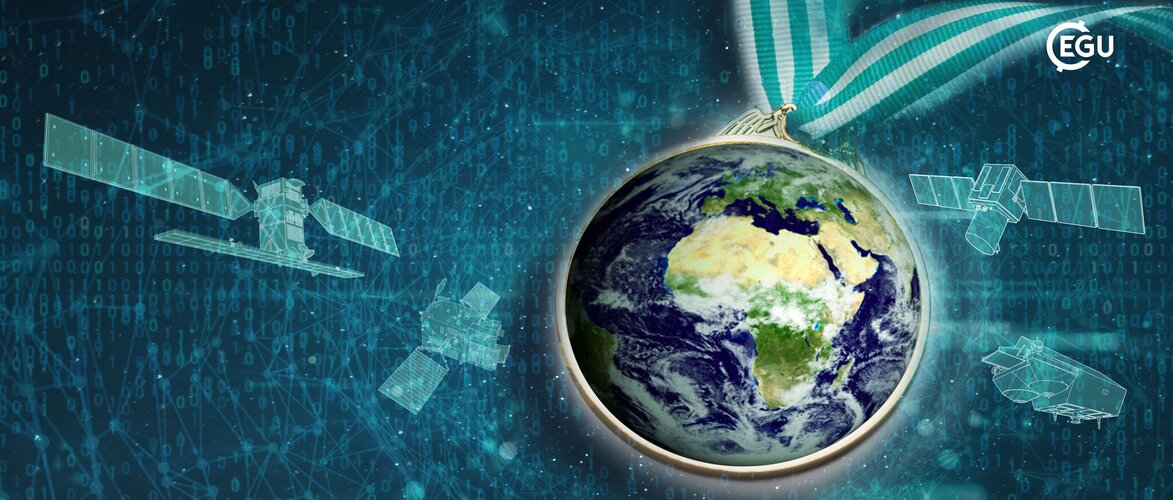
The winners of the first ESA-EGU Excellence Award were awarded their prizes earlier today at the virtual EGU General Assembly ceremony, attended by ESA’s Director General, Josef Aschbacher and ESA’s Acting Director of Earth Observation Programmes, Toni Tolker-Nielsen.
NRO to sign deals with commercial providers of satellite radar imagery

WASHINGTON — The National Reconnaissance Office plans to sign new deals with commercial providers of satellite radar imagery as the agency looks to better understand the capabilities of the private sector, a senior NRO official told SpaceNews.
Amazon contracts nine Atlas 5 missions for Kuiper broadband satellites
TAMPA, Fla. — Amazon has ordered nine Atlas 5 rockets from United Launch Alliance to help place its 3,236-strong Project Kuiper broadband constellation.
The U.S. internet retailing giant declined to disclose a time frame for its deal with ULA, a joint venture between Boeing and Lockheed Martin known more for its government missions than commercial space.
Why flying a helicopter on Mars is a big deal
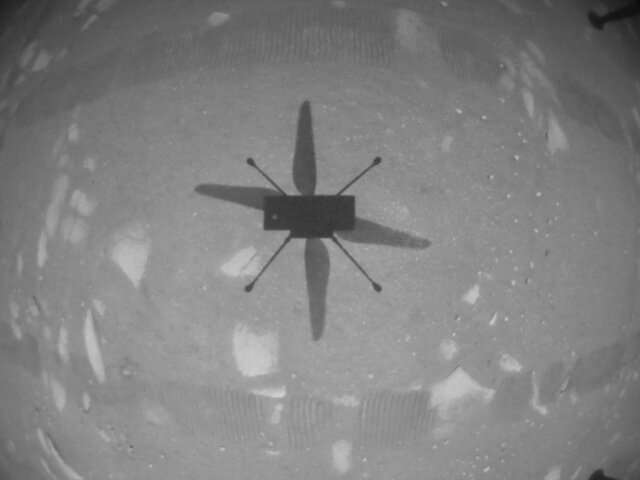
NASA conducted its first flight on another planet early Monday morning, a short hop for a small chopper named Ingenuity which demonstrated technology that could prove critical to the future of space exploration.
The four-pound vehicle ascended to about 10 feet above the surface of the red planet for about 40 seconds, before descending back to the ground.
The helicopter arrived on Mars along with the Perseverance rover on Feb.
Key things to know about NASA's Ingenuity Mars Helicopter
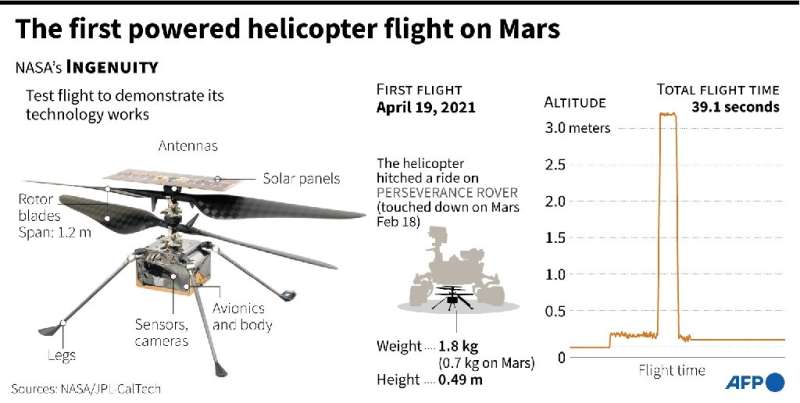
NASA has made history by successfully flying the mini helicopter Ingenuity on Mars, the first powered flight on another planet.
Here are some key things to know.
Proof of concept
The rotorcraft's first flight lasted 39.1 seconds as Ingenuity lifted itself to a height of 10 feet (three meters) and then returned to the Martian surface.
While it does have the capacity to fly for 90 seconds and cover a distance of up to 980 feet (300 meters), its test runs are intentionally of limited scope as they are meant to prove only that the technology works.
Ingenuity is not gathering scientific data about Mars or aiding in the search for past microbial life.
Previous technology demonstrations include the Mars Pathfinder rover, Sojourner, which was the first ever rover to explore another planet in 1997.
It is hoped that one day, future aircraft can help revolutionize exploration of celestial bodies by going further and faster than rovers, and reaching areas hard to access by land.
U.S. Army approves plans for a future ‘tactical space layer’
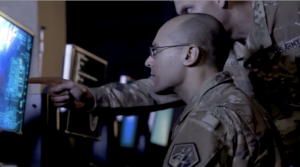
WASHINGTON — U.S. Army leaders have signed off on plans to explore the use of satellites in low Earth orbit to give soldiers dedicated surveillance, navigation and imaging capabilities.
The Army’s effort is called “tactical space layer” and is led by the U.S.
Ingenuity success opens door for future Mars helicopter missions
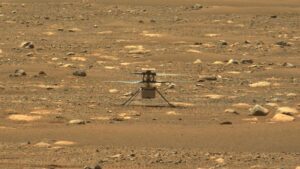
WASHINGTON — The successful flight of NASA’s Ingenuity helicopter on Mars paves the way for its use on future missions, agency officials said, but exactly when and how remain to be determined.
At a press conference April 19, project officials said Ingenuity’s first flight, also the first powered flight by an aircraft on another world, opened the door to using similar vehicles in future exploration of the planet.
SpaceX set to take four astronauts to ISS Thursday
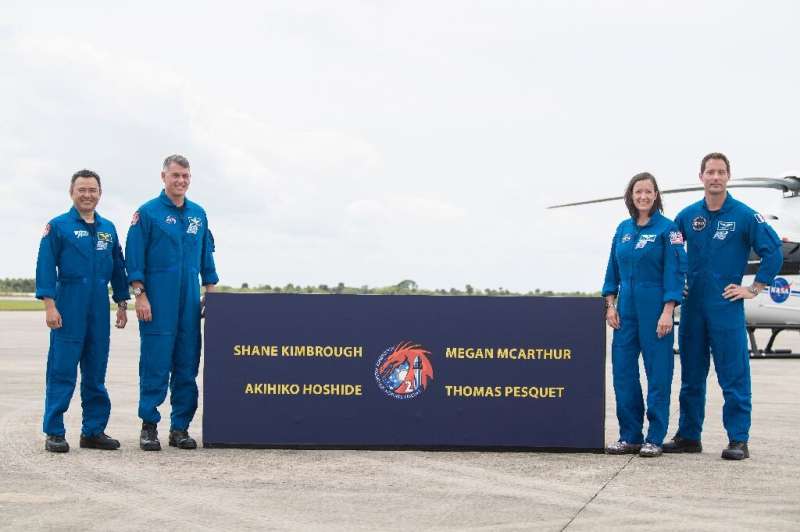
SpaceX is preparing to carry four astronauts to a crowded International Space Station on Thursday, in the second routine mission since the United States resumed crewed space flight, and the first with a European.
Liftoff is planned for 6:11 am Eastern Time (1011 GMT) on April 22, from NASA's Kennedy Space Center in Florida.
The mission, called Crew-2, involves US astronauts Shane Kimbrough and Megan McArthur, along with the Japan Aerospace Exploration Agency (JAXA)'s Akihiko Hoshide, and the European Space Agency (ESA)'s Thomas Pesquet.
ESA and FAO unite to tackle food security and more

With ESA positioned as a world-class provider of Earth observation data and the United Nations Food and Agriculture Organization (FAO) leading international efforts to defeat hunger, the two organisations have teamed up to exploit their particular fields of expertise to better address major global issues such as food security, and to take further advantage of the digital transformation in agriculture.
Time to Act
 Video:
00:12:38
Video:
00:12:38
The launch of Sputnik, humankind’s first satellite, in 1957 marked the dawn of a new era for the people of the 'Pale Blue Dot'.
Decades later, our planet is now surrounded by spacecraft carrying out extraordinary work to study our changing climate, save lives following disasters, deliver global communication and navigation services and help us answer important scientific questions.
But these satellites are at risk. Accidental collisions between objects in space can produce huge clouds of fast-moving debris. These clouds can spread and damage additional satellites with cascading effect, eventually making the most useful orbits around Earth no longer


