

Innovative Sound-Based System Enhances Wind Measurement on Mars
 Mars presents a challenging environment for measuring wind speeds due to its extreme temperatures, thin atmosphere, and dusty terrain. Traditional methods, such as gauging the cooling rate of heated materials or using cameras to observe "tell-tales" swayed by the wind, have provided valuable data on Martian weather. However, as plans to send astronauts to the red planet progress, there is a grow

Maria Demaree, Lockheed Martin – Leading Women in Space


SpaceX launches second pair of Maxar WorldView Legion imaging satellites


China could develop dual relay satellite system for Earth-moon communications to reduce geopolitical risks


Satellites are making the night sky brighter—as a launch site, NZ has a duty to combat light pollution

New Zealand's space sector has been developing rapidly since the first rocket lifted off in 2017. It now contributes about NZ$1.7 billion in revenue, with plans to grow to $10 billion by 2030.
Last year, New Zealand hosted seven rocket launches, all by the US-listed but local company Rocket Lab. It was in response to Rocket Lab's initial proposal for a launch site that New Zealand developed a regulatory system from scratch in less than two years to meet obligations under international law.
All launch nations have to register every object they send into space, and continue to supervise those objects to ensure no damage or loss occurs to another country's objects or activities. They also have a responsibility to compensate for any harm.
As well, countries must prevent contamination of outer space and Earth's environment, and ensure space activity does not interfere with other countries' rights to free access and participation.
Russian nukes in space: Why a Cold War response will only make it worse


International astronomy group joins calls for a lunar clock to keep time on the moon
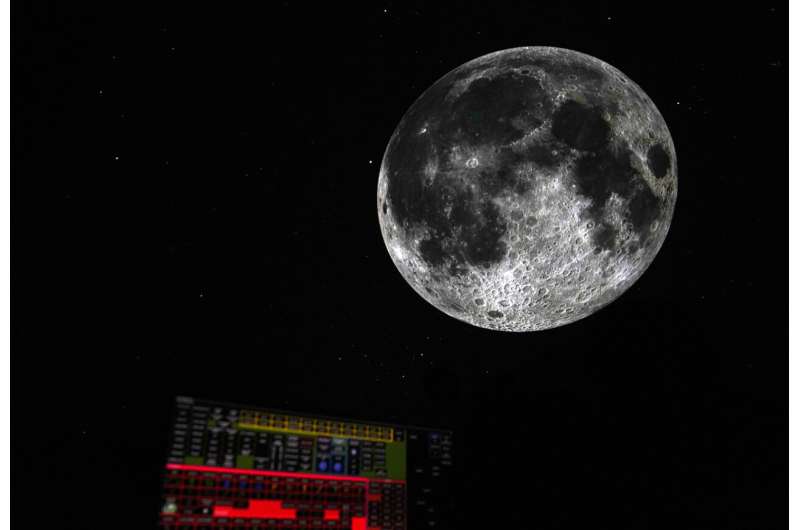
Time moves a tad faster on the moon. Now an international group of astronomers has joined calls to give the moon its own clock so that future space missions can keep track of minutes on the celestial body.
The International Astronomical Union voted Thursday encouraging space organizations across the globe to collaborate on a timekeeping standard for the moon, where one day lasts 29.5 Earth days.
"That's the crux of our resolution: to work together to establish this standard time," U.S. Naval Observatory's Susan Stewart said this week at the group's conference in Cape Town, South Africa.
August's supermoon kicks off four months of lunar spectacles. Here's how to watch

The first of four supermoons this year rises next week, providing tantalizing views of Earth's constant companion.
Stargazers can catch the first act Monday as the full moon inches a little closer than usual, making it appear slightly bigger and brighter in the night sky.
"I like to think of the supermoon as a good excuse to start looking at the moon more regularly," said Noah Petro, project scientist for NASA's Lunar Reconnaissance Orbiter.
August's supermoon kicks off a string of lunar spectacles. September's supermoon will coincide with a partial lunar eclipse.


