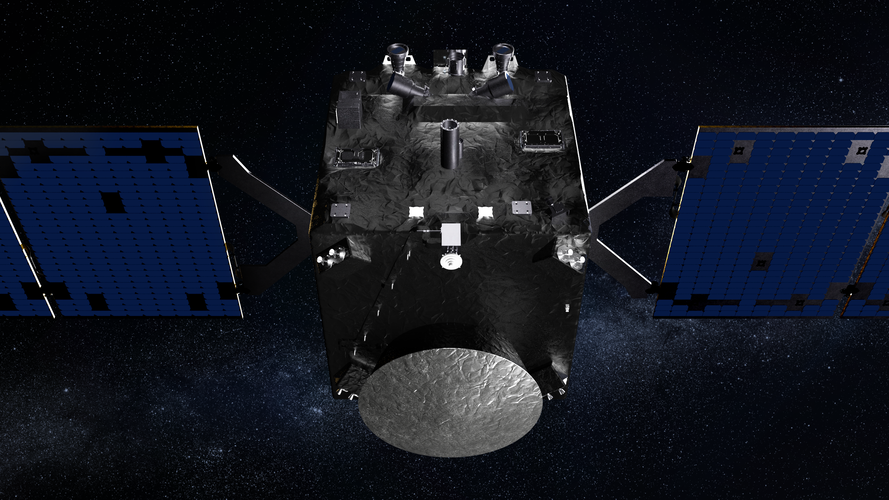

HawkEye 360's Pathfinder constellation complete five years of Advanced RF Detection
 Five years ago, HawkEye 360 Inc., a trailblazer in space-based radio frequency (RF) data and analytics, embarked on an ambitious journey with the launch of its Pathfinder satellite cluster. On December 3, 2018, the three Pathfinder satellites were successfully launched aboard a SpaceX Falcon 9 rocket from Vandenberg Air Force Base in California, marking a significant milestone in commercial spac
 SDA's Tranche 0 satellites enable first ever Link 16 space to ground transmission
 The Space Development Agency (SDA), a key player in the United States Department of Defense's strategic initiatives, recently announced a significant milestone in space communication technology. In a series of demonstrations held from November 21-27, 2023, the SDA successfully executed the first-ever network entry using the Link 16 system from low Earth orbit (LEO) to a series of terrestrial rec
 All-in-one YPSat, Ariane 6 bound
 Image:
All-in-one YPSat, Ariane 6 bound
Image:
All-in-one YPSat, Ariane 6 bound Themis ground and flight models
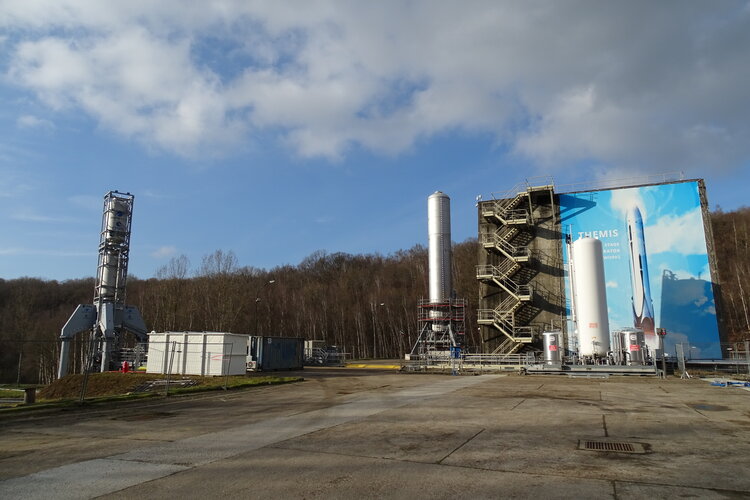 Image:
Themis ground and flight models
Image:
Themis ground and flight models Capella to use SpaceX for two Acadia satellite launches


China launches internet technology test satellite from sea barge


OSIRIS-REx parachute deployment affected by wiring error


Tracking human emissions from space
 Video:
00:11:52
Video:
00:11:52
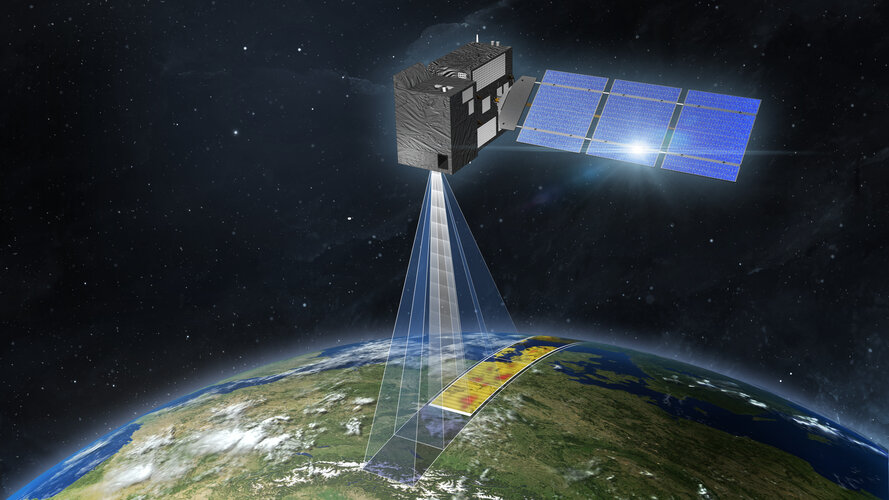
The Copernicus Anthropogenic Carbon Dioxide Monitoring (CO2M) mission will be the first satellite mission to measure how much carbon dioxide is released into the atmosphere through human activity.
CO2M isn't just a mission; it's a crucial step in our commitment to understanding and mitigating climate change. It will offer unprecedented precision in monitoring carbon dioxide emissions from the combustion of fossil fuel at national and regional scales.
Its data will provide the EU with a unique and independent source of information to assess the effectiveness of policy measures and to track their impact towards decarbonising Europe ahead of the
Understanding climate tipping points

As the planet warms, many parts of the Earth system are undergoing large-scale changes. Ice sheets are shrinking, sea levels are rising and coral reefs are dying off.
While climate records are being continuously broken, the cumulative impact of these changes could also cause fundamental parts of the Earth system to change dramatically. These ‘tipping points’ of climate change are critical thresholds in that, if exceeded, can lead to irreversible consequences.
Galileo Second Generation satellites take shape

To make the future of Galileo a reality, ESA and European industry are hard at work developing ultra-precise atomic clocks, system testbeds, ground mission and ground control segments and, of course, the satellites. Airbus Defence and Space, who is building six of the Galileo Second Generation constellation satellites, presented their first flight model structure to the programme’s stakeholders last week.