Lunar astronauts will need easy walking trails around the moon's south pole
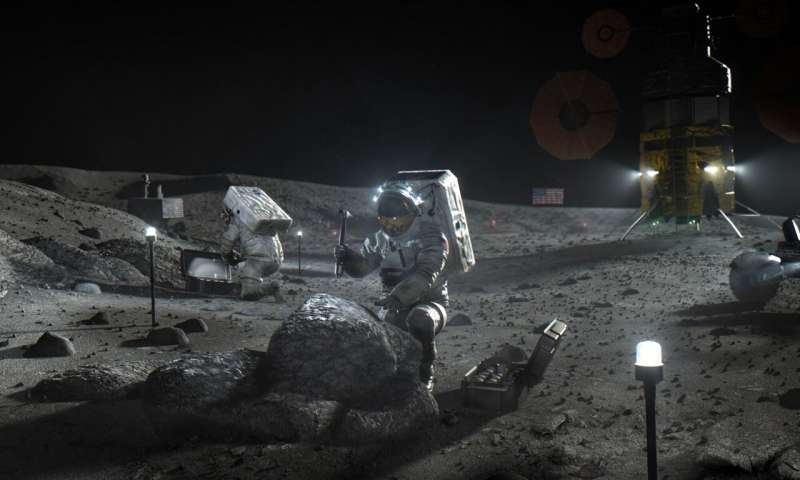
Before this decade is out, NASA plans to return astronauts to the moon for the first time since the Apollo Era and build the necessary infrastructure to keep sending them back. And they will hardly be alone. Alongside NASA's Artemis Program, the European Space Agency also plans to send astronauts to the moon and establish a permanent habitat there (the Moon Village), while China and Russia are working toward creating the International Lunar Research Station (ILRS). Numerous commercial space companies will also be there to provide crew transportation, cargo, and logistical services.
All of this will happen in the moon's southern polar region, a topographically complex region characterized by craters, permanently shadowed regions (PSRs), and undulating slopes. This terrain could prove difficult for crews conducting extravehicular activities (EVAs) away from landing sites and habitats.
In a recent study, an international team of researchers used data from NASA's Lunar Reconnaissance Orbiter (LRO) to create a detailed atlas of the region that accounts for all the traverses and descents.
Engineers improve NASA lidar tech for exploration
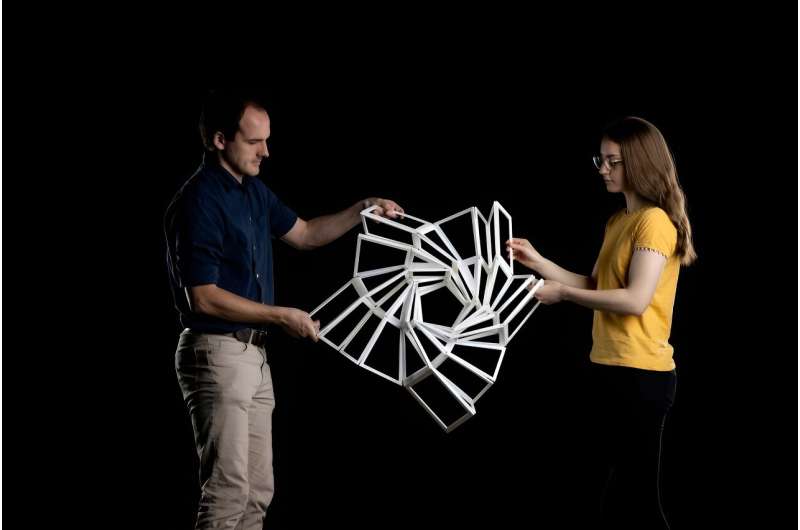
Lidar technology improvements will help NASA scientists and explorers with remote sensing and surveying, mapping, 3D-image scanning, hazard detection and avoidance, and navigation.
Like a sonar using light instead of sound, lidar technology increasingly helps NASA scientists and explorers with remote sensing and surveying, mapping, 3D-image scanning, hazard detection and avoidance, and navigation.
Cutting edge innovations by NASA researchers seek to refine lidars into smaller, lighter, more versatile tools for exploration.
Nighttime rehearsal for Ariane 6 toward first flight
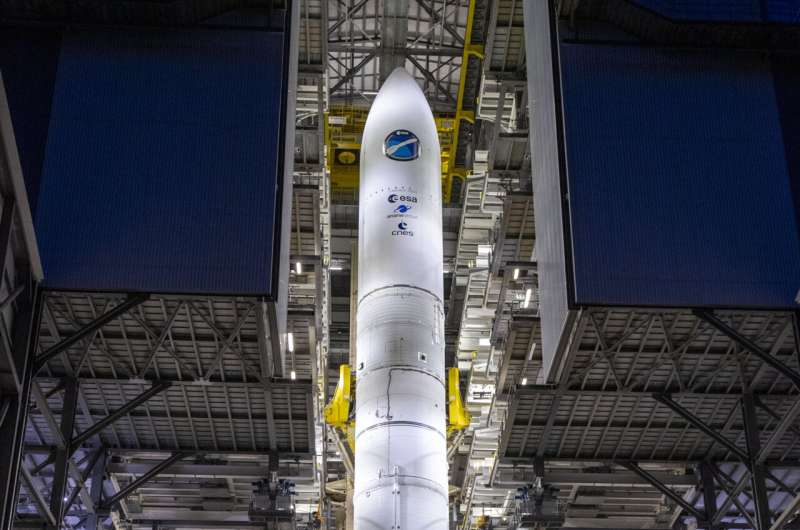
Yesterday, a team of CNES, ESA, Arianespace and ArianeGroup personnel at Europe's Spaceport in Kourou, French Guiana, completed a full-scale wet rehearsal of the new Ariane 6 rocket that was fueled and then drained of its fuel. The test lasted over 30 hours with three teams working in shifts of 10 hours each.
The goal was to increase the robustness of the launch system and to test emergency safety procedures with an interruption of the countdown from simulated anomalies.
The wet rehearsal—called combined test loading, abbreviated to CTLO2.1—is the third time the Ariane 6 ground teams have practiced a full launch countdown, after a first rehearsal on 18 July and a first ignition of the main engine on 5 September. Yesterday's test concentrated on system robustness and how well Ariane 6 and the teams handle situations at the edge of the operational parameters.
This time, the operations were performed at night to test operations in cooler ambient temperatures, while the July and September tests were run in daylight.
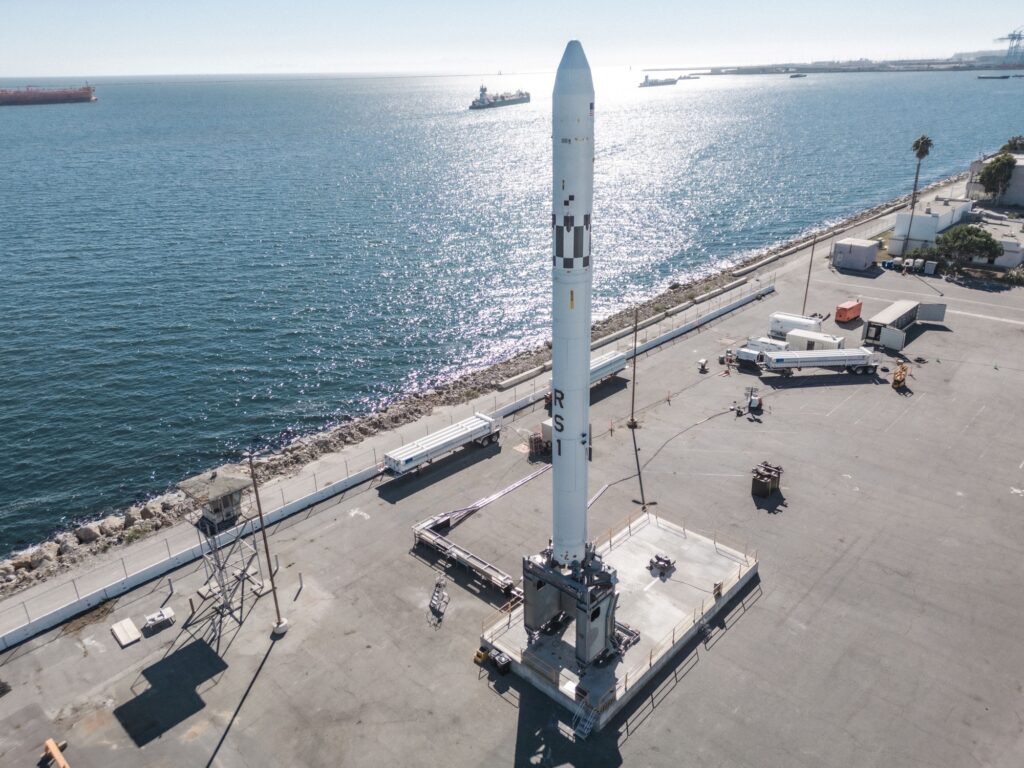
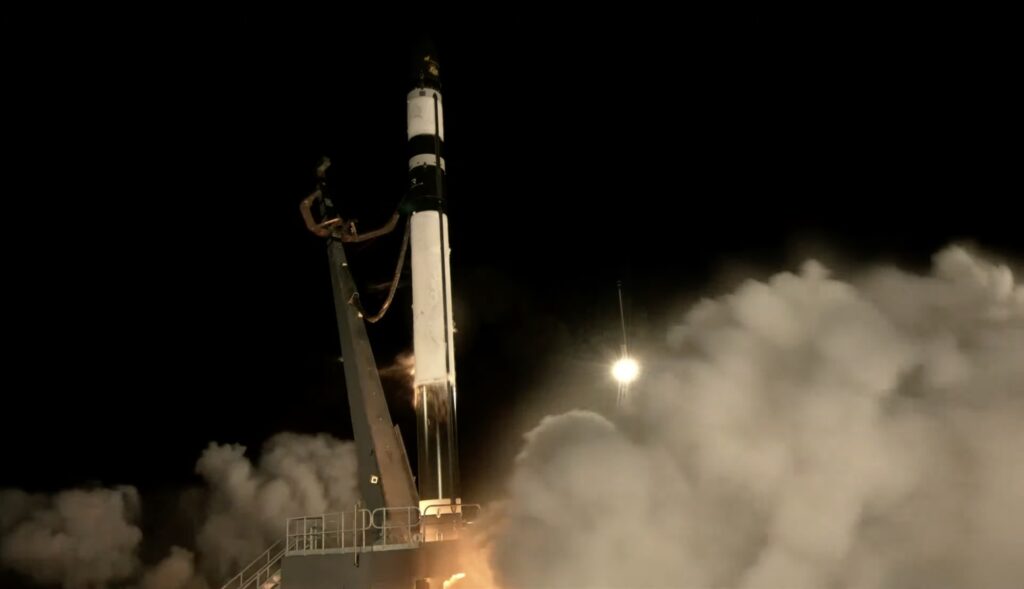
Rocket Lab projects Electron return to flight in fourth quarter
Terran Orbital hosting town hall meeting to revive flagging shares


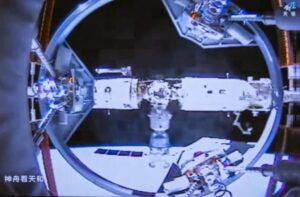
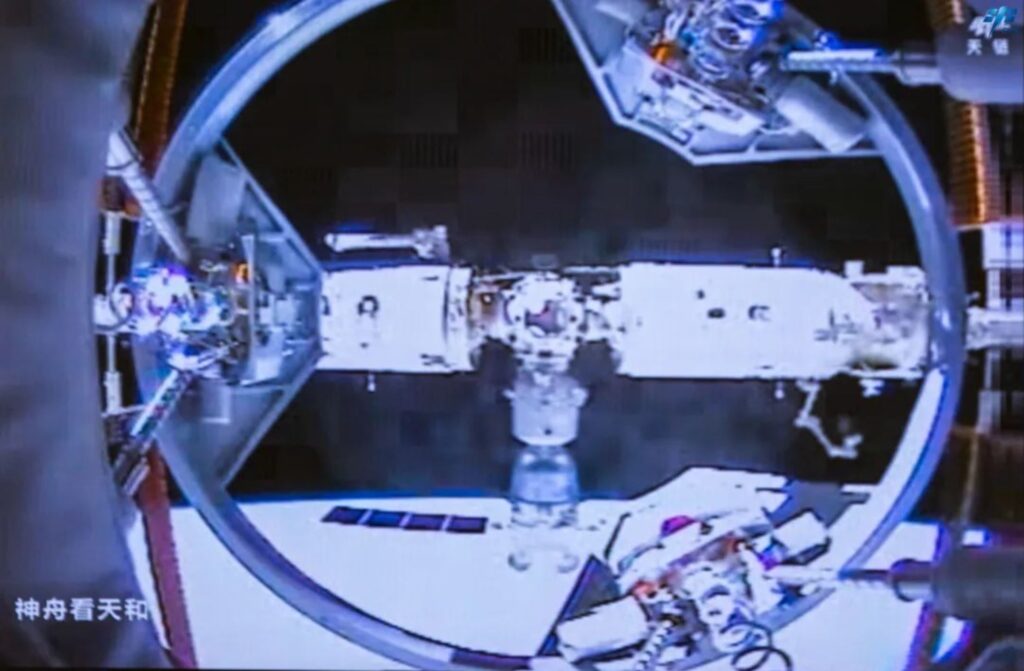
China launches new mission to space station
 China sent a fresh crew to its Tiangong space station on Thursday, in the latest mission for a growing space programme that plans to send people to the Moon by 2030.
The Shenzhou-17 blasted off from the Jiuquan launch site in northwest China at 11:14 am (0314 GMT), carrying a three-astronaut team with the youngest average age since the space station's construction.
At a farewell ceremony
China sent a fresh crew to its Tiangong space station on Thursday, in the latest mission for a growing space programme that plans to send people to the Moon by 2030.
The Shenzhou-17 blasted off from the Jiuquan launch site in northwest China at 11:14 am (0314 GMT), carrying a three-astronaut team with the youngest average age since the space station's construction.
At a farewell ceremony Cosmonauts to install equipment, check coolant leak on ISS during spacewalk
 Russian cosmonauts Oleg Kononenko and Nikolai Chub are scheduled to complete a spacewalk from the International Space Station Wednesday, according to NASA.
The cosmonauts are scheduled to begin their spacewalk. which is expected to last about 7 hours, at 1:55 p.m. EDT.
While on their spacewalk the cosmonauts will investigate a radiator leak on the Nauka multipurpose laboratory mo
Russian cosmonauts Oleg Kononenko and Nikolai Chub are scheduled to complete a spacewalk from the International Space Station Wednesday, according to NASA.
The cosmonauts are scheduled to begin their spacewalk. which is expected to last about 7 hours, at 1:55 p.m. EDT.
While on their spacewalk the cosmonauts will investigate a radiator leak on the Nauka multipurpose laboratory mo Six trends to watch in commercial Earth observation

With a multitude of opportunities for start-ups, established companies and investors, commercial Earth observation is a vibrant sector with fast-moving innovations in technology, datasets and downstream applications. ESA is a key driving force for the development of European Earth observation and provides impetus through its many programmes and initiatives.
To set the scene ahead of ESA’s Earth Observation Commercialisation Forum next week, here is some need-to-know background information on the evolution and state of play of the Earth observation industry.
Shenzhou-17 crew arrives at Tiangong space station