

Russia to launch lunar mission Friday, first in nearly 50 years
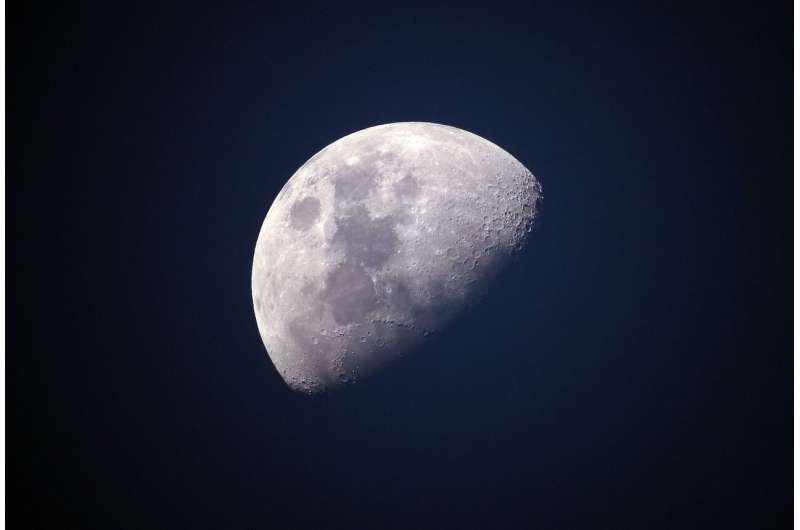
Russia said Monday it plans to launch a lunar lander this week after multiple delays, hoping to return to the moon for the first time in nearly fifty years.
The launch, which is scheduled for the early hours of Friday, comes as Russia's Ukraine offensive stretches into a second year, sparking huge tensions with the West.
With the Luna-25 lander, Russia's first since 1976, Moscow is keen to restart and build upon a pioneering Soviet-era lunar program.
The Russian space agency said that a Soyuz rocket had been assembled at the Vostochny cosmodrome in the Russian Far East for the launch of the Luna-25.
"The launch is on August 11," Roscosmos said in a statement.
"The Luna-25 will have to practice soft landing, take and analyze soil samples and conduct long-term scientific research," the statement added.
The four-legged lander, which weighs around 800 kilograms, is expected to touch down in the region of the lunar south pole. By contrast, most moon landings occur near the lunar equator.
The launch is the first mission of Moscow's new lunar program and comes as Russia looks to strengthen cooperation in space with China amid ruptured ties with the West.
Amazon moves Project Kuiper prototypes from Vulcan to Atlas 5

Amazon plans to deploy its first pair of Project Kuiper prototypes this fall on an Atlas 5 from United Launch Alliance, the internet giant said Aug.
NanoAvionics completes LEO satellite for studying black holes

NanoAvionics is preparing to ship a nanosatellite slated to launch this fall to study black holes and neutron stars from low Earth orbit, the Lithuanian manufacturer announced Aug.
Lockheed Martin’s data-transport satellite clears design review

A communications satellite designed by Lockheed Martin for the Space Development Agency passed a critical design review, the company announced Aug.
Boeing's 1st astronaut flight bumped into next year, more repairs needed
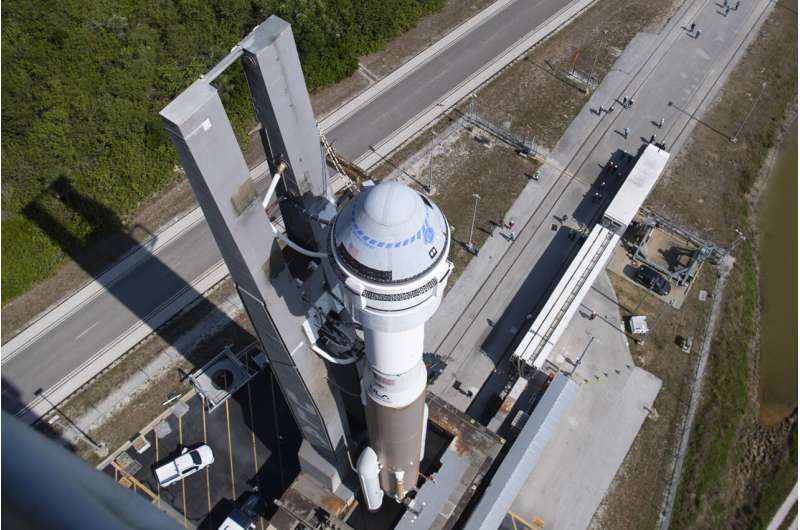
Already running years behind, Boeing's first astronaut flight is now off until at least next March.
Problems with the parachute lines and flammable tape surfaced during final reviews in late spring, ahead of what should have been a July launch for the Starliner capsule.
NASA's deep space communications to get a laser boost
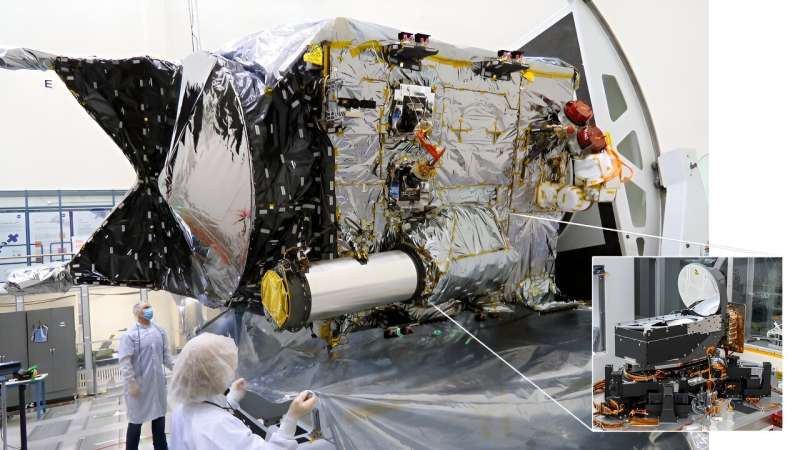
Set to launch this fall, NASA's Deep Space Optical Communications (DSOC) project will test how lasers could speed up data transmission far beyond the capacity of current radio frequency systems used in space. Known as a technology demonstration, DSOC may pave the way for broadband communications that will help support humanity's next giant leap: when NASA sends astronauts to Mars.
A banner year for the Perseid meteor shower

The Perseid meteor shower, a celestial event eagerly awaited by millions of skywatchers around the world, is about to make its annual return to the night sky. The shower is predicted to reach its peak before dawn on Sunday, August 13, but viewers should plan to start looking for meteors already at nightfall on Saturday, August 12. In a dark site away from light pollution, at the peak of the shower, observers might see one meteor per minute.
"Conditions this year couldn't be more perfect," says Diana Hannikainen, Sky & Telescope's Observing Editor. "The waning crescent moon, which is only 8% illuminated, rises in the wee hours of the morning on August 13 and won't interfere with viewing.
Solestial to supply solar arrays for Atomos space tugs

Solestial announced plans earlier this month to supply solar arrays for space tugs developed by Denver startup Atomos Space.
The post Solestial to supply solar arrays for Atomos space tugs appeared first on SpaceNews.
Pale Blue to supply thrusters for Yonsei University cubesats

Japanese startup Pale Blue announced a contract Aug. 7 to supply water vapor thrusters for South Korea’s Yonsei University.
The post Pale Blue to supply thrusters for Yonsei University cubesats appeared first on SpaceNews.
First Starliner crewed flight delayed to 2024

Boeing has delayed the first flight of its CST-100 Starliner commercial crew vehicle with astronauts on board to no earlier than March 2024 as the company continues to work on issues with the spacecraft’s parachutes and wiring.


