

Space colonies: How artificial photosynthesis may be key to sustained life beyond Earth
Life on Earth owes its existence to photosynthesis—a process which is 2.3 billion years old. This immensely fascinating (and still not fully understood) reaction enables plants and other organisms to harvest sunlight, water and carbon dioxide while converting them into oxygen and energy in the form of sugar.
Photosynthesis is such an integral part of Earth's functioning that we pretty much take it for granted. But as we look beyond our own planet for places to explore and settle on, it is obvious how rare and valuable the process is.
As my colleagues and I have investigated in a new paper, published in Nature Communications, recent advances in making artificial photosynthesis may well be key to surviving and thriving away from Earth.
The human need for oxygen makes space travel tricky. Fuel constraints limit the amount of oxygen we can carry with us, particularly if we want to do long-haul journeys to the moon and Mars. A one-way trip to Mars usually takes on the order of two years, meaning we can't easily send supplies of resources from Earth.
Vulcan performs static-fire test

United Launch Alliance carried out a static-fire test of its Vulcan Centaur rocket June 7, one of the final milestones before the vehicle’s first launch.
Nuview reveals backers including actor Leonardo DiCaprio

Nuview plans to launch, a Space Proof of Concept Satellite called Mr. Spoc, in a little more than two years.
Space Command seeks more efficient use of space-tracking and missile sensors

In its new role overseeing the nation’s network of missile-defense sensors, U.S.
25 years of Copernicus
 Video:
00:05:05
Video:
00:05:05
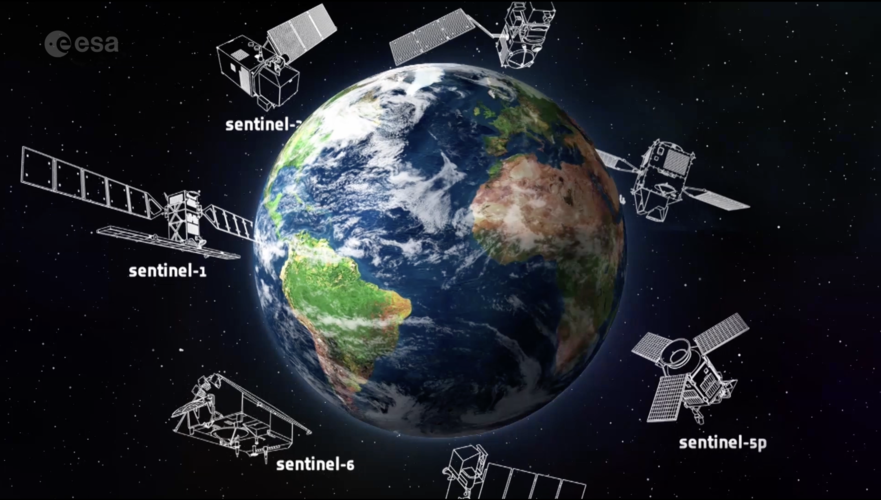
25 years ago, Copernicus set out to transform the way we see our planet. It is the largest environmental monitoring programme in the world. Learn more about the Copernicus programme and the Sentinel satellite missions developed by ESA.
Albedo expands staff and facilities

Albedo also announced the opening June 8 of a Broomfield facility large enough to build three to four satellites simultaneously.
The post Albedo expands staff and facilities appeared first on SpaceNews.
NASA concerned Starship problems will delay Artemis 3

NASA has growing concerns that the lunar lander version of SpaceX’s Starship vehicle will not be ready in time for the Artemis 3 mission in late 2025, given the amount of work needed to get the vehicle ready.
Cheops explores mysterious warm mini-Neptunes
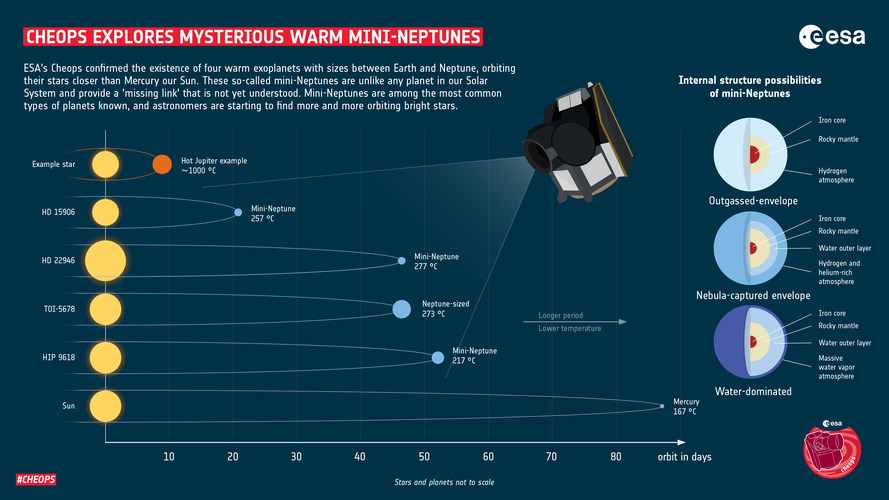 Image:
ESA’s exoplanet mission Cheops confirmed the existence of four warm exoplanets orbiting four stars in our Milky Way. These exoplanets have sizes between Earth and Neptune and orbit their stars closer than Mercury our Sun.
These so-called mini-Neptunes are unlike any planet in our Solar System and provide a ‘missing link’ between Earth-like and Neptune-like planets that is not yet understood. Mini-Neptunes are among the most common types of exoplanets known, and astronomers are starting to find more and more orbiting bright stars.
Mini-Neptunes are mysterious objects. They are smaller, cooler, and more difficult to find than the so-called hot
African space tech? Don't rule it out, says Nigeria's startup king
 Iyinoluwa Aboyeji might not have the personal wealth of Elon Musk or Mark Zuckerberg, but his level of success as an African entrepreneur bears comparison with any Silicon Valley tech titan.
While still in his twenties, the Nigerian co-founded two "unicorns", an industry term for companies that achieve a valuation of more than $1 billion.
By most counts, Africa has produced only seven un
Iyinoluwa Aboyeji might not have the personal wealth of Elon Musk or Mark Zuckerberg, but his level of success as an African entrepreneur bears comparison with any Silicon Valley tech titan.
While still in his twenties, the Nigerian co-founded two "unicorns", an industry term for companies that achieve a valuation of more than $1 billion.
By most counts, Africa has produced only seven un How activity in outer space will affect regional inequalities in the future
 Science fiction has always been a tool for processing life on Earth. Norwegian sci-fi expert Karl Kristian Swane Bambini has said that the space-bound genre is well placed to "interrogate and reimagine real-world economic disparities".
He gives the examples of, among other things, the 2013 blockbuster Elysium, wherein healthcare is only accessible off-world, to people with spaceships, and
Science fiction has always been a tool for processing life on Earth. Norwegian sci-fi expert Karl Kristian Swane Bambini has said that the space-bound genre is well placed to "interrogate and reimagine real-world economic disparities".
He gives the examples of, among other things, the 2013 blockbuster Elysium, wherein healthcare is only accessible off-world, to people with spaceships, and 


