

The Making of Juice – Episode 10
 Video:
00:12:07
Video:
00:12:07
The Making of Juice series takes the viewer behind the scenes of the European space industry, space technology and planetary science communities around ESA’s Jupiter Icy Moons Explorer (Juice) mission.
Juice has a state-of-the-art science payload comprising remote sensing, geophysical and in situ instruments. This episode focuses on the in situ instruments, which will study the particle, magnetic, radio and plasma environment in the Jupiter system.
A magnetometer (J-MAG) equipped with sensors will characterise the Jovian magnetic field and its interaction with that of Ganymede, and will study the subsurface oceans of the icy moon. The Particle Environment Package
ESA–EGU 2023 Excellence Award winners
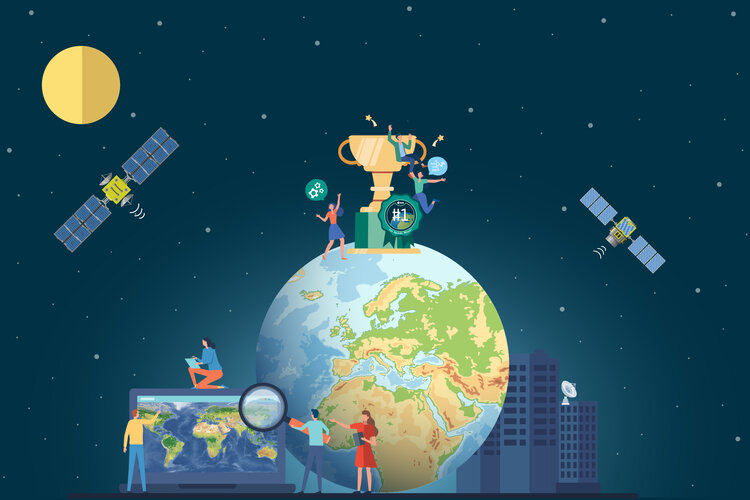
Honouring individual scientists and teams of scientists that have contributed to the innovative use of Earth observation data, ESA and the European Geosciences Union (EGU) are happy to announce the winners of this year’s prestigious Excellence Award.
Maxar unveils 30-centimeter global basemap

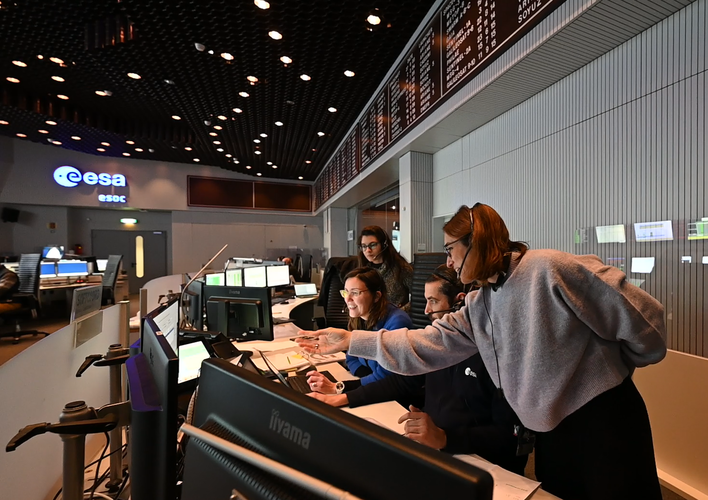
Maxar Technologies unveiled an updated version March 28 of its popular global basemap.
The post Maxar unveils 30-centimeter global basemap appeared first on SpaceNews.
Uncrewed Russian spacecraft that leaked coolant lands safely
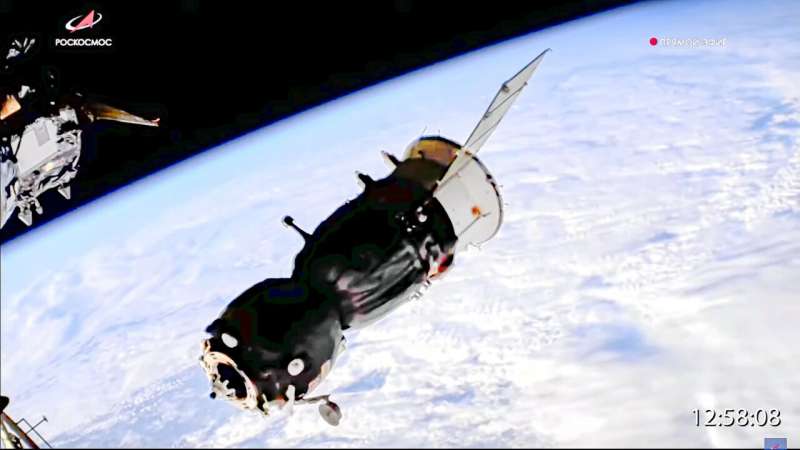
A Russian space capsule safely returned to Earth without a crew Tuesday, months after it suffered a coolant leak in orbit.
The Soyuz MS-22 leaked coolant in December while attached to the International Space Station. Russian space officials blamed the leak on a tiny meteoroid that punctured the craft's external radiator. They launched an empty replacement capsule last month to serve as a lifeboat for the crew.
The damaged capsule safely landed Tuesday under a striped parachute in the steppes of Kazakhstan, touching down as scheduled at 5:45 p.m.
Proba-3 complete: Formation-flying satellites fully integrated and ready for testing
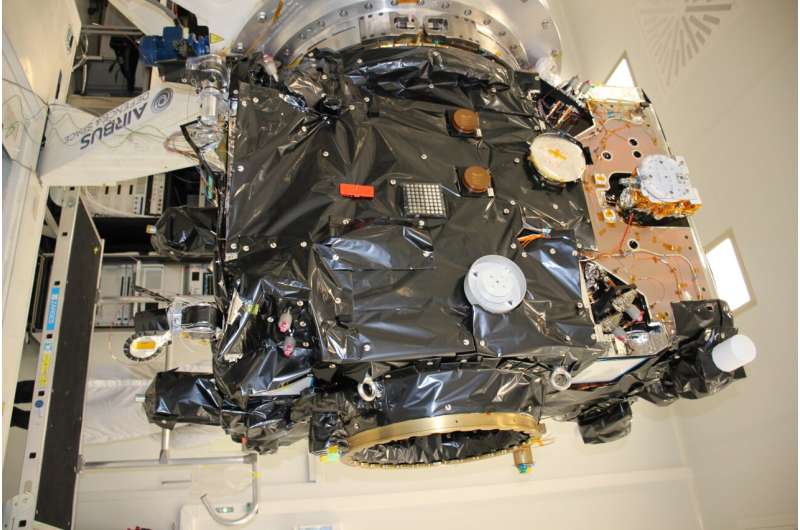
The two spacecraft forming ESA's Proba-3 mission for precise formation flying in orbit are now complete. All the instruments and sensors allowing them to maneuver to millimeter scale precision relative to one another have been integrated aboard, and the pair are fully wrapped in multi-layer insulation—ready to be tested in simulated space conditions.
Brightest gamma-ray burst illuminates our galaxy as never before
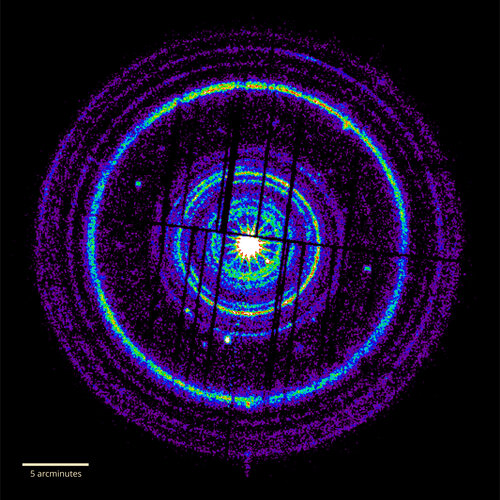
ESA space telescopes have observed the brightest gamma-ray burst ever seen. Data from this rare event could become instrumental in understanding the details of the colossal explosions that create gamma-ray bursts (GRBs).
Flight simulations: putting Juice under pressure
 Video:
00:58:00
Video:
00:58:00
Sat in a windowless office beneath ESA’s Main Control Room in Darmstadt, Germany, two Simulations Officers have complete control over the Juice spacecraft and ESA’s deep space ground stations across the globe – and they take full advantage.
These aren’t the real 35-metre antennas or the actual spacecraft (currently in Kourou, French Guiana), but a complex simulator. For teams that will fly the mission for real, it all looks, feels and behaves just like the real thing. The ‘problem’ for them is, it keeps going wrong.
Down in the simulations bunker, the Officers are revelling in their dastardly plan

Air Force Secretary: ‘Haven’t made a decision on U.S. Space Command’


