

Dhruva and Kineis to offer satellite-based services
 India-based full-stack space-engineering solutions provider Dhruva Space and France-based satellite operator and global connectivity provider Kineis have inked a Memorandum of Agreement (MoA), marking a partnership where both companies will collaborate to establish space and ground infrastructure to scale the diversity and impact of satellite-based solutions.
With 9 satellites in orbit, Ki
India-based full-stack space-engineering solutions provider Dhruva Space and France-based satellite operator and global connectivity provider Kineis have inked a Memorandum of Agreement (MoA), marking a partnership where both companies will collaborate to establish space and ground infrastructure to scale the diversity and impact of satellite-based solutions.
With 9 satellites in orbit, Ki Comtech validates 5G connection over satellite
 Comtech has announced in collaboration with three global technology leaders: Cloud Signals, Hellas Sat, and a leading Mobile Network Operator (MNO), that the companies successfully tested and validated 5G connectivity over a satellite network in Greece.
During the demonstration, a commercial 5G node was connected to the leading MNO's 5G testbed network and relayed over a satellite link pro
Comtech has announced in collaboration with three global technology leaders: Cloud Signals, Hellas Sat, and a leading Mobile Network Operator (MNO), that the companies successfully tested and validated 5G connectivity over a satellite network in Greece.
During the demonstration, a commercial 5G node was connected to the leading MNO's 5G testbed network and relayed over a satellite link pro Webb measures the temperature of a rocky exoplanet
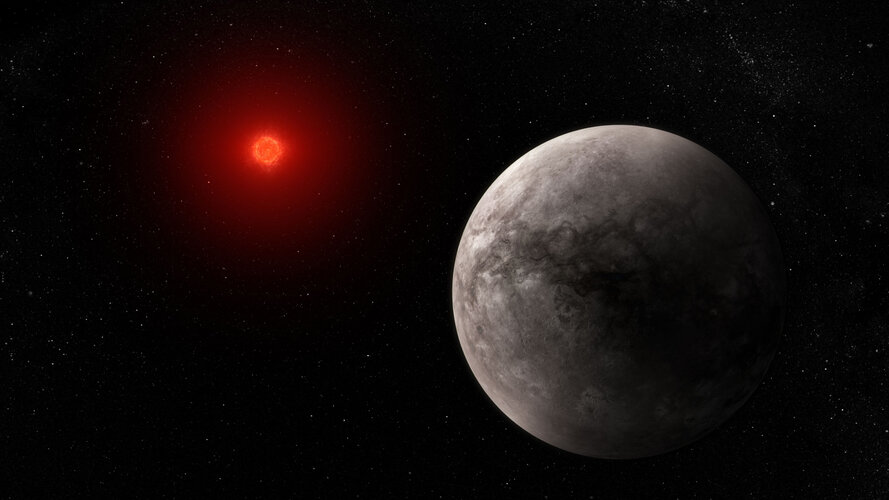
An international team of researchers has used the NASA/ESA/CSA James Webb Space Telescope to measure the temperature of the rocky exoplanet TRAPPIST-1 b. The measurement is based on the planet’s thermal emission: heat energy given off in the form of infrared light detected by Webb’s Mid-Infrared Instrument (MIRI). The result indicates that the planet’s dayside has a temperature of about 500 kelvins (roughly 230°C), and suggests that it has no significant atmosphere.
Proba-3 complete: Formation-flying satellites fully integrated
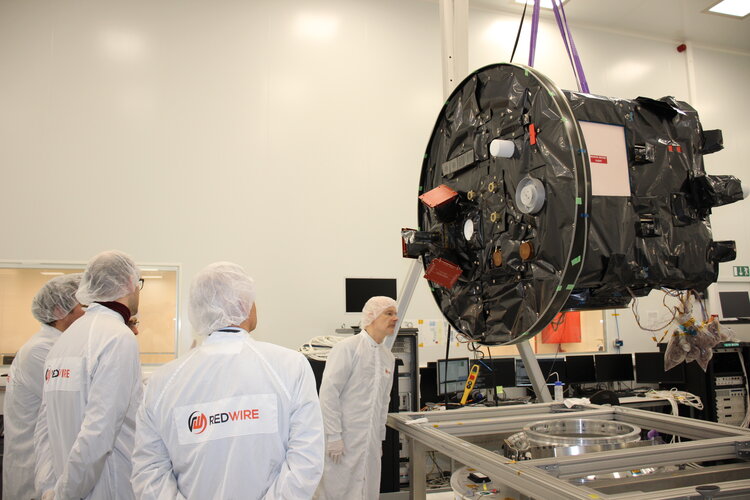
The two spacecraft forming ESA’s Proba-3 mission for precise formation flying in orbit are now complete. All the instruments and sensors allowing them to manoeuvre to millimetre scale precision relative to one another have been integrated aboard, and the pair are fully wrapped in multi-layer insulation – ready to be tested in simulated space conditions.
Council approves senior management changes

At its 315th session on 22 and 23 March 2023, the ESA Council approved a series of nominations and extensions of contracts for ESA directors:
Researchers find new water reservoir on moon
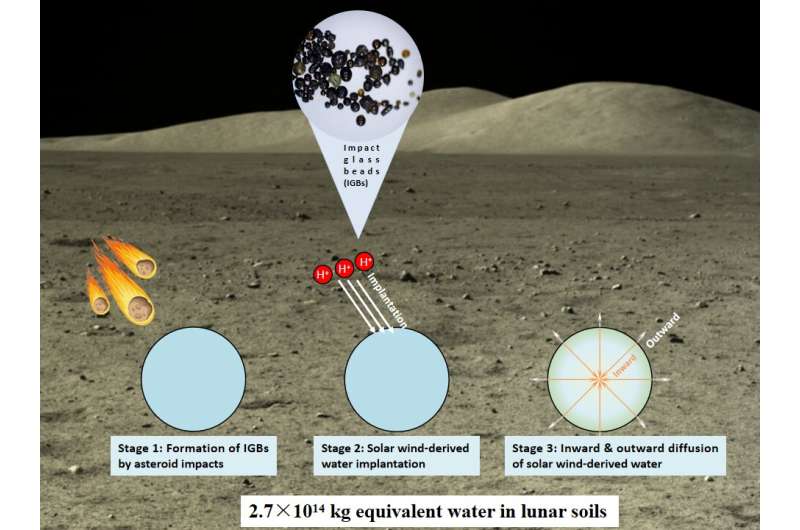
Lunar surface water has attracted much attention due to its potential for in-situ resource utilization by future lunar exploration missions and other space missions
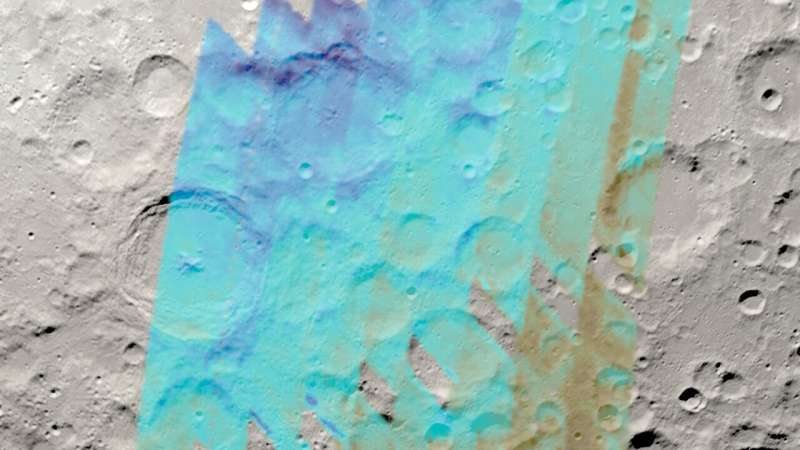
Now, a research group led by Prof. Hu Sen from the Institute of Geology and Geophysics (IGG) of the Chinese Academy of Sciences (CAS) has found that impact glass beads in Chang'e-5 (CE5) lunar soils contain some water.
Detailed studies show that these glass beads are likely a new water reservoir on the moon, recording the dynamic ingress and egress of solar wind-derived water and acting as a buffer for the lunar surface water cycle.
This work was published in Nature Geoscience on March 27.
Many lunar missions have confirmed the presence of structural water or water ice on the moon. There is little doubt that most of the moon's surface harbors water, though the amount is much less than on Earth.
NASA space operations head Lueders to retire

Kathy Lueders, the NASA official who oversees the International Space Station and commercial cargo and crew programs, will retire from the agency at the end of April and be succeeded by her deputy.
OneWeb completes constellation deployment for global broadband

OneWeb is turning its attention to finalizing ground stations after launching a final batch of satellites needed to provide broadband services globally, executive chair Sunil Mittal said March 27.
Webb space telescope measures the temperature of a rocky exoplanet
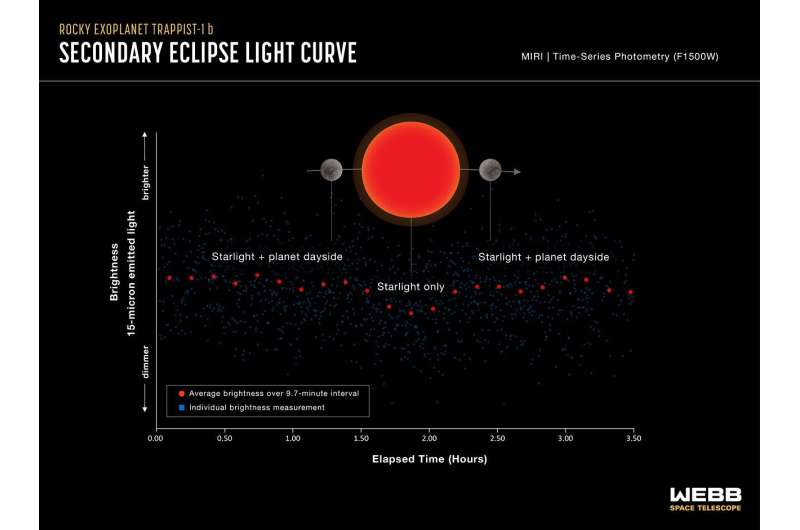
An international team of researchers has used the NASA/ESA/CSA James Webb Space Telescope to measure the temperature of the rocky exoplanet TRAPPIST-1 b. The measurement is based on the planet's thermal emission: heat energy given off in the form of infrared light detected by Webb's Mid-Infrared Instrument (MIRI).
The result indicates that the planet's dayside has a temperature of about 500 Kelvin (roughly 230°C), and suggests that it has no significant atmosphere. This is the first detection of any form of light emitted by an exoplanet as small and as cool as the rocky planets in our own solar system.


