

MIT physicists predict exotic new phenomena and give "recipe" for realizing them
 In work that could lead to important new physics with potentially heady applications in computer science and more, MIT scientists have shown that two previously separate fields in condensed matter physics can be combined to yield new, exotic phenomena.
The work is theoretical, but the researchers are excited about collaborating with experimentalists to realize the predicted phenomena. The
In work that could lead to important new physics with potentially heady applications in computer science and more, MIT scientists have shown that two previously separate fields in condensed matter physics can be combined to yield new, exotic phenomena.
The work is theoretical, but the researchers are excited about collaborating with experimentalists to realize the predicted phenomena. The Scientists open door to manipulating 'quantum light'
 For the first time, scientists at the University of Sydney and the University of Basel in Switzerland have demonstrated the ability to manipulate and identify small numbers of interacting photons - packets of light energy - with high correlation.
This unprecedented achievement represents an important landmark in the development of quantum technologies. It is published in Nature Physics.
For the first time, scientists at the University of Sydney and the University of Basel in Switzerland have demonstrated the ability to manipulate and identify small numbers of interacting photons - packets of light energy - with high correlation.
This unprecedented achievement represents an important landmark in the development of quantum technologies. It is published in Nature Physics. Virgin Orbit begins “incremental” return to work as it seeks new funding

A small set of Virgin Orbit employees will return to work after a week-long furlough as the company attempts to raise money to remain solvent.
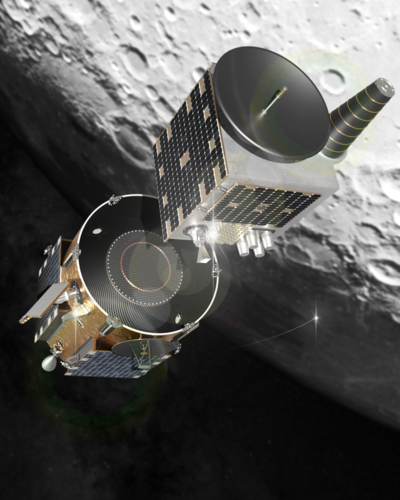
NRO signs agreements with commercial providers of hyperspectral imagery

The National Reconnaissance Office has signed five-year agreements with six commercial providers of hyperspectral satellite imagery
The post NRO signs agreements with commercial providers of hyperspectral imagery appeared first on SpaceNews.
Measuring the cohesive force of meteorite fragments to identify the mobility of asteroids
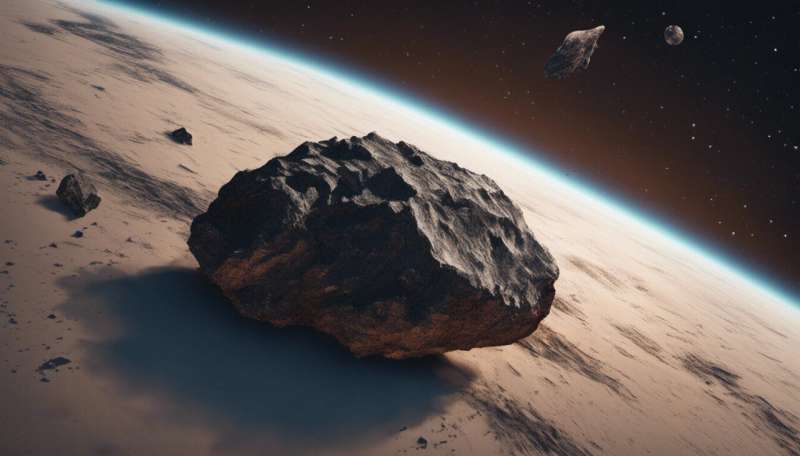
The cohesive force of asteroid particles influence microgravity and can be evaluated under several assumptions of particle size and their sensitivity to particle shape. Approximately hundreds of kilograms of material fall on to Earth's atmosphere daily from space, and filter down as tiny grains and fine dust. Many meteorites that reach Earth from space are pieces of asteroids.
In a new report now published in Science Advances, Yuuya Nagaashi and a research team in planetology at the Kobe University in Japan, conducted cohesive force measurements of meteorite fragments. The cohesive force of the asteroid particles were orders of magnitude smaller, resulting in the high mobility of asteroid surface particles identified during space exploration. For astrobiologists interested in the earliest history of Earth and the solar system, these particles that have survived almost unaltered offer significant information of the earliest period of the solar system's history.
ESA’s new headquarters
 Video:
00:03:03
Video:
00:03:03
After five years of intensive refurbishment works, the Headquarters of the European Space Agency has reopened its doors on rue Mario Nikis in Paris, France. As flexible as it is ultra-modern, ‘ESA HQ Mario Nikis’ is the very embodiment of a European organisation at the cutting edge of high technology and is resolutely open to the city it calls home.
Watch media session from ESA's 315th Council
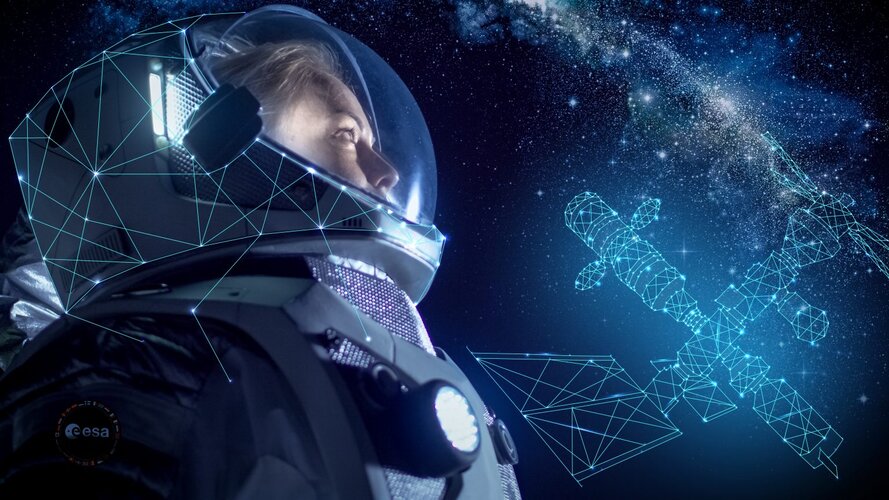
Join us on 23 March to hear about ambitious new ideas for space exploration from ESA's 315th Council, taking place in the freshly renovated ESA HQ Mario Nikis building in Paris.
Avio secures Italian government funding for methane engine and small launch vehicle prototype

Avio is moving ahead with efforts to develop a larger methane-fueled rocket engine and a prototype small launch vehicle with more than $300 million in funding from the Italian government.
Relativity Space to make third bid to launch 3D-printed rocket
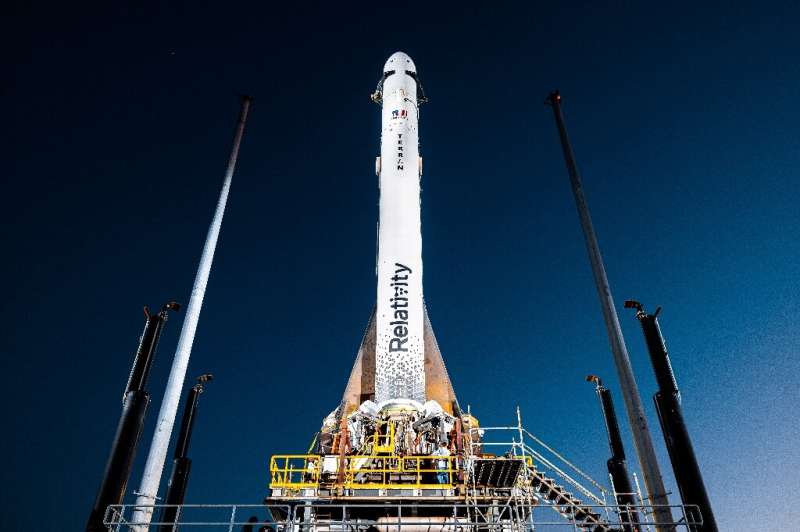
The world's first 3D printed rocket is scheduled to make its third attempt to lift off on Wednesday for the maiden flight of an innovative spacecraft billed as being less costly to produce and fly.
The unmanned rocket, Terran 1, had been scheduled to launch on March 8 from Cape Canaveral, Florida, but it was postponed at the last minute because of propellant temperature issues.
A second attempt on March 11 was scrubbed due to fuel pressure problems.
Relativity Space, the California private aerospace startup that built the rocket, is hoping that the third time's the charm.
The company's three-hour launch window begins at 10:00 pm Eastern Time on Wednesday (0200 GMT Thursday).
Once it does take off, Terran 1 is set to reach low Earth orbit after eight minutes on a voyage intended to gather data and demonstrate that a 3D-printed rocket can withstand the rigors of liftoff and space flight.


