

Space seminar at ESA's technical heart
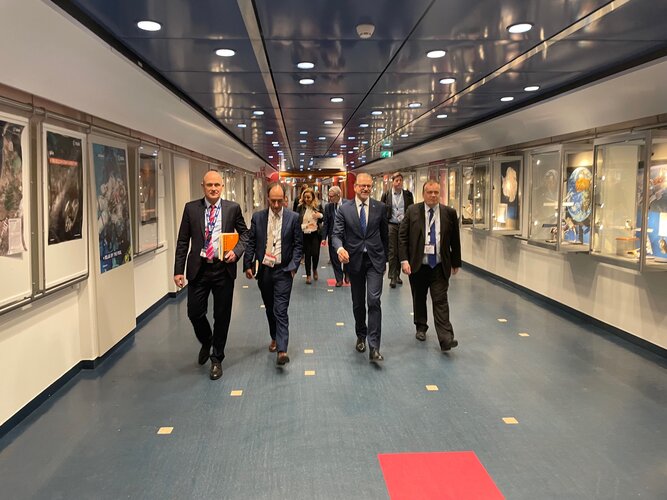 Image:
Space seminar at ESA's technical heart
Image:
Space seminar at ESA's technical heart Space industry deals with launch shortage

Even as the space industry complains of a shortage of launch capacity, SpaceX said it has room to increase an already surging pace of launches.
ESA’s exoplanet missions
 Video:
00:00:57
Video:
00:00:57
More than 5000 exoplanets have been discovered to date, but what do they look like? ESA’s dedicated exoplanet missions Cheops, Plato and Ariel are on a quest to find out. Cheops will focus its search on mini-Neptunes, planets with sizes between Earth and Neptune, on short orbits around their stars. Cheops will find out how large these planets are, and may detect whether the planets have clouds. Plato will look at all kinds of exoplanets and determine their sizes and ages. Plato’s instruments are so sensitive it may discover the first Earth-like planet on an Earth-like orbit.
ATL Partners forms new holding company focused on space and air sensors

ATL Partners, a private equity firm, announced March 20 it has formed a new holding company called LightRidge Solutions to oversee a portfolio of space and airborne sensors businesses
Earth observation supports latest UN climate report
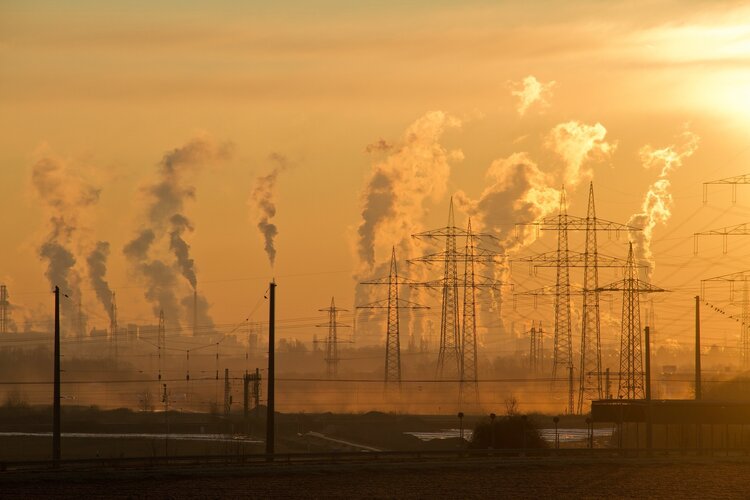
The final instalment of the sixth assessment report by the United Nations' Intergovernmental Panel on Climate Change (IPCC) has been released today. The report warns that the planet has already warmed 1.1°C above pre-industrial levels, resulting in more frequent and intense extreme weather events that are causing increasingly dangerous impacts on nature and people in every region of the world.
The report includes a greater contribution of Earth observation data than its previous iterations in providing the physical evidence of Earth’s changing climate system – from sea-level rise, growing greenhouse-gas emissions and melting sea ice.
Arkisys and partners to show how they would build a satellite in orbit

The U.S. Space Force awarded a $1.6 million contract to a team led by Arkisys to demonstrate robotic satellite assembly.
Ariane 5 rocket decorated with winning Juice artwork
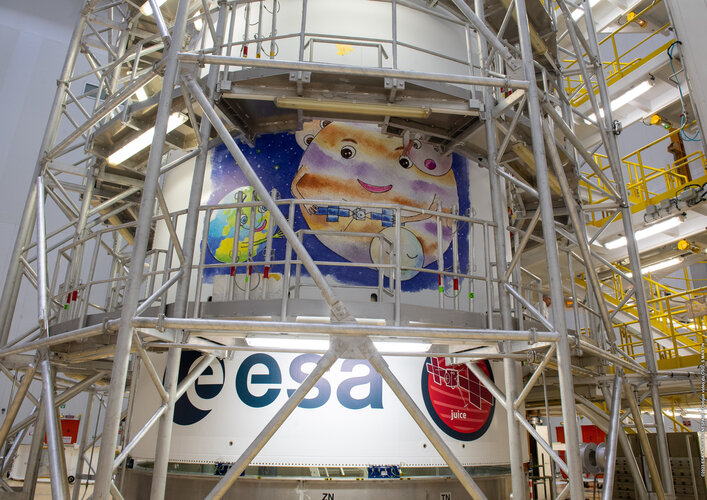 Image:
A close up of an Ariane 5 rocket surrounded by scaffolding. In the centre of the Ariane 5 is the sticker showing the artwork (blue background with Jupiter, three icy moons, Earth and Juice.
Image:
A close up of an Ariane 5 rocket surrounded by scaffolding. In the centre of the Ariane 5 is the sticker showing the artwork (blue background with Jupiter, three icy moons, Earth and Juice. GMV partnership to bring revolutionary precise positioning services to Australia and New Zealand

These days, satellite positioning systems play a fundamental role in our society. We are constantly surrounded by this technology, and it has been fully integrated into our lives.
Mars exploration and the debate about planetary protection

Could planetary protection considerations hinder our plans to send humans to Mars?
Astronomers sound alarm about light pollution from satellites
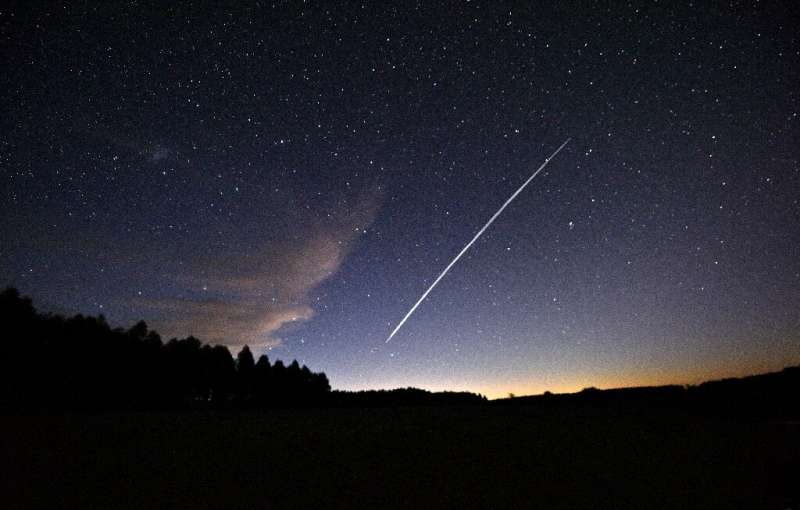
Astronomers on Monday warned that the light pollution created by the soaring number of satellites orbiting Earth poses an "unprecedented global threat to nature."
The number of satellites in low Earth orbit have more than doubled since 2019, when US company SpaceX launched the first "mega-constellation," which comprise thousands of satellites.
An armada of new internet constellations are planned to launch soon, adding thousands more satellites to the already congested area fewer than 2,000 kilometers (1,250 miles) above Earth.
Each new satellite increases the risk that it will smash into another object orbiting Earth, creating yet more debris.
This can create a chain reaction in which cascading collisions create ever smaller fragments of debris, further adding to the cloud of "space junk" reflecting light back to Earth.


