

Space Systems Command demonstrates satellite anti-jam capability
 Space Systems Command (SSC) successfully demonstrated its ground-based antijamming satellite communications (SATCOM) capability using an on-orbit operational satellite. The event demonstrated over-the-air Protected Tactical Waveform (PTW) connectivity between a Protected Tactical Enterprise Service (PTES) Joint Hub and a test terminal, and over-the-wire connectivity to a PTW-capable modem develo
 NASA appoints Lunar science leads for Artemis 3 and 4
 NASA has appointed two scientists to coordinate the lunar science teams supporting the first and second crewed lunar landing missions in more than 50 years. NASA's Artemis missions will land the first woman and first person of color on the Moon, using innovative technologies to explore the lunar South Pole region and establish a long-term presence at the Moon.
Noah Petro, of NASA's Goddard
NASA has appointed two scientists to coordinate the lunar science teams supporting the first and second crewed lunar landing missions in more than 50 years. NASA's Artemis missions will land the first woman and first person of color on the Moon, using innovative technologies to explore the lunar South Pole region and establish a long-term presence at the Moon.
Noah Petro, of NASA's Goddard Arianespace wins Vega contract for Italian imaging satellite constellation

In a vote of confidence for a troubled launch vehicle, Arianespace won a contract from the Italian government for up to three Vega C launches of an Earth observation constellation.
China launches second classified Gaofen-13 remote sensing satellite

China added its initially civilian Gaofen Earth observation series Friday with the launch of the classified optical geostationary Gaofen-13 (02) satellite.
Rolls-Royce wins UK funds for 'Moon' nuclear reactors
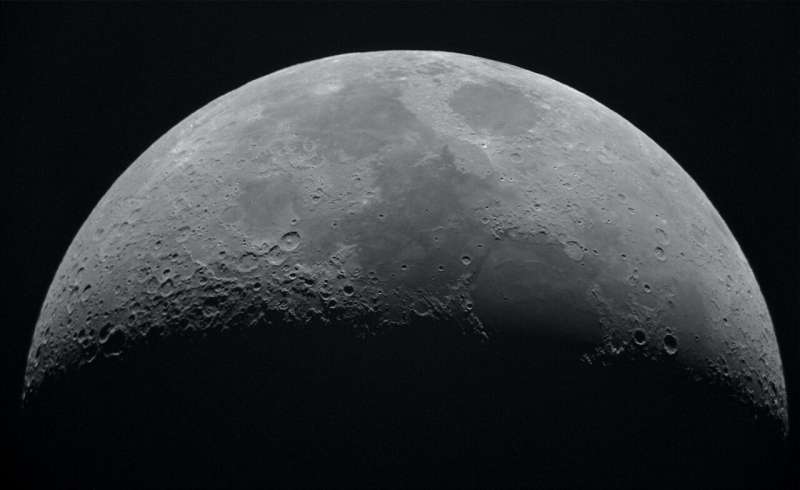
British aerospace giant Rolls-Royce said Friday it had secured UK funding to develop small nuclear reactors that could provide power on the Moon.
Rolls said the UK Space Agency had offered it £2.9 million ($3.5 million) to help research "how nuclear power could be used to support a future Moon base for astronauts".
"Scientists and engineers at Rolls-Royce are working on the micro-reactor program to develop technology that will provide power needed for humans to live and work on the Moon," the aerospace company added in a statement.
Rolls forecast its first car-sized reactor would be ready to be sent to the Moon by 2029.
Friday's news comes as US space agency NASA aims to return humans to the Moon in 2025.
It would be the first visit since the historic Apollo missions ended in 1972.
"Nuclear power has the potential to dramatically increase the duration of future lunar missions and their scientific value," Rolls said.
The group, best known for its engines powering Airbus and Boeing aircraft, will work alongside UK universities including Oxford on the space project.
FCC unveils proposed satellite direct-to-device regulatory framework

The U.S. Federal Communications Commission unveiled its proposed framework March 17 for regulating the use of terrestrial wireless spectrum from space for connecting smartphones beyond the reach of cell towers.
The best way to learn about Venus could be with a fleet of balloons
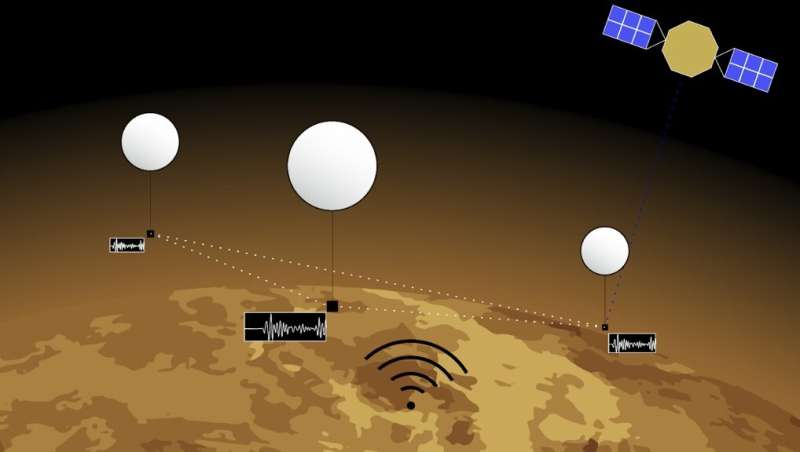
Interest in the exploration of Venus has kicked up a notch lately, especially after a contested recent discovery of phosphine, a potential biosignature, in the planet's atmosphere. Plenty of missions to Venus have been proposed, and NASA and ESA have recently funded several. However, they are mainly orbiters, trying to peer into the planet's interior from above. But they are challenged by having to see through dozens of kilometers of an atmosphere made up of sulfuric acid.
That same atmosphere is challenging for ground missions. While some of the recently funded missions include a component on the ground, they are missing an opportunity that isn't afforded on many other planets in the solar system—riding along in the atmosphere. Technologists have proposed everything from simple balloons to entire floating cities—we even heard of a plan to enclose the entirety of Venus in a shell and live on the surface of that shell.
SpaceX launches final two satellites in SES C-band clearing plan

SpaceX launched the last two satellites March 17 that SES needs to claim C-band spectrum clearing proceeds worth nearly $4 billion in total.
NASA weighing continuing VERITAS versus future Discovery mission

Budget pressures in NASA’s planetary science program could force the agency to choose between continuing a mission to Venus that has already been delayed or requesting proposals for a future mission.
Intelsat buys capacity on Hispasat’s Amazonas Nexus satellite

Intelsat has acquired a “significant amount” of capacity from the recently launched Amazonas Nexus satellite to meet demand for connectivity over the Americas, an executive for the company told SpaceNews.


