

China invests $1.9 bn in top chipmaker: report
 China is pumping $1.9 billion into its top memory chipmaker, according to media reports, as US restrictions on semiconductor exports threaten Beijing's tech ambitions.
Semiconductor manufacturer Yangtze Memory Technologies Co (YMTC) is set to receive 12.9 billion yuan from the state-owned National Integrated Circuit Industry Investment Fund, Bloomberg reported on Thursday, citing government
China is pumping $1.9 billion into its top memory chipmaker, according to media reports, as US restrictions on semiconductor exports threaten Beijing's tech ambitions.
Semiconductor manufacturer Yangtze Memory Technologies Co (YMTC) is set to receive 12.9 billion yuan from the state-owned National Integrated Circuit Industry Investment Fund, Bloomberg reported on Thursday, citing government Drugs from the deep: scientists explore ocean frontiers
 Some send divers in speed boats, others dispatch submersible robots to search the seafloor, and one team deploys a "mud missile" - all tools used by scientists to scour the world's oceans for the next potent cancer treatment or antibiotic.
A medicinal molecule could be found in microbes scooped up in sediment, be produced by porous sponges or sea squirts - barrel-bodied creatures that c
Some send divers in speed boats, others dispatch submersible robots to search the seafloor, and one team deploys a "mud missile" - all tools used by scientists to scour the world's oceans for the next potent cancer treatment or antibiotic.
A medicinal molecule could be found in microbes scooped up in sediment, be produced by porous sponges or sea squirts - barrel-bodied creatures that c Nozzle erosion blamed for Vega C launch failure

Europe plans to return the Vega C rocket to flight by the end of the year after concluding an eroded nozzle component caused the failure of its previous launch last December.
Astra identifies cause of last failed Rocket 3.3 launch

An investigation into a failed Astra launch last June concluded that a complex series of events caused a fuel leak that kept the rocket’s upper stage from reaching orbit.
Week in images: 27 February - 03 March 2023

Week in images: 27 February - 03 March 2023
Discover our week through the lens
Viasat to enter direct-to-device market with Ligado Networks

Viasat said March 2 it is partnering with Ligado Networks to break into the emerging market for providing satellite services directly to consumer smartphones and other devices.
Scientists discover answer to the mystery of cloudy filters on satellites
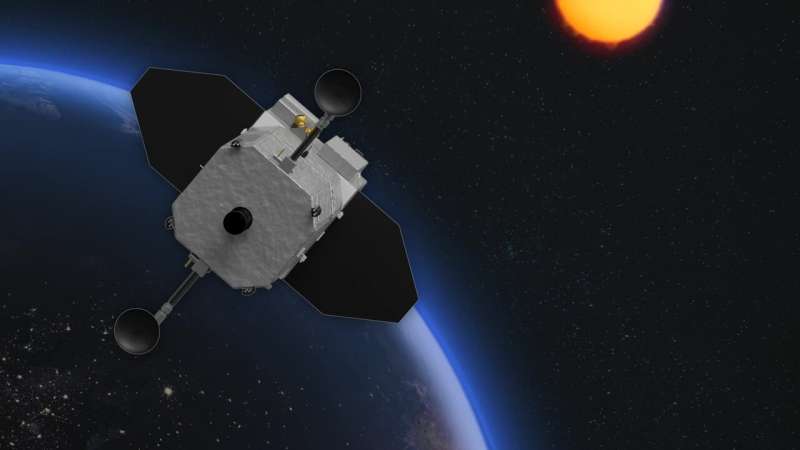
Europe's Vega-C rocket failure traced to defective engine part: ESA
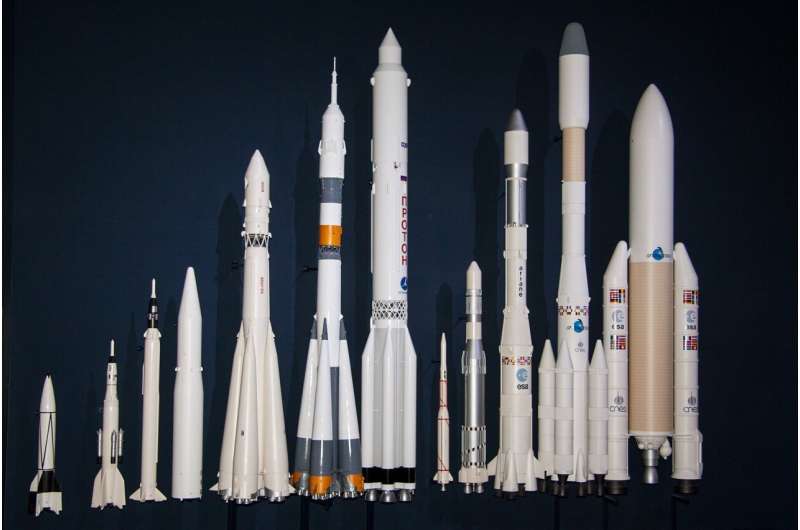
The failed launch of a Vega-C European rocket in French Guiana last December was due to the deterioration of a key engine component that resulted in a rapid loss of boosting power, European Space Agency officials said Friday.
The launching from the Kourou space port would have been the first commercial launch for the Vega-C and presented a new option for European space payloads after numerous delays to the next-generation Ariane 6 rocket and cancelled Russian cooperation over the Ukraine war.
But shortly after lift-off on December 21 with a payload of two observation satellites, the rocket deviated from its programmed trajectory and communications were lost, forcing officials to destroy it over the Atlantic Ocean.
An ESA investigative panel found that pressure in the Zefiro 40 motor, made by Italy's Avio, had started falling during the second stage of lift-off, the commission's co-president Pierre-Yves Tissier told journalists.
At three minutes 27 seconds after the launch, "the rocket's acceleration had fallen almost to zero," he said.
Investigators determined that a nozzle neck supposed to ensure constant combustion pressure in the motor had failed to resist the enormous pressure and temperatures reaching 3,000 degrees Celsius (5,432 degrees Fahrenheit).
DoD releases updated guidance on ‘responsible behaviors in space’

The Defense Department on March 3 released updated guidelines for safe and responsible space operations.
Humans are still hunting for aliens: Here's how astronomers are looking for life beyond Earth

We have long been fascinated with the idea of alien life. The earliest written record presenting the idea of "aliens" is seen in the satiric work of Assyrian writer Lucian of Samosata dated to 200 AD.
In one novel, Lucian writes of a journey to the Moon and the bizarre life he imagines living there—everything from three-headed vultures to fleas the size of elephants.
Now, 2,000 years later, we still write stories of epic adventures beyond Earth to meet otherworldly beings (Hitchhiker's Guide, anyone?). Stories like these entertain and inspire, and we are forever trying to find out if science fiction will become science fact.
Not all alien life is the same
When looking for life beyond Earth, we are faced with two possibilities. We might find basic microbial life hiding somewhere in our Solar System; or we will identify signals from intelligent life somewhere far away.
Unlike in Star Wars, we're not talking far, far away in another galaxy, but rather around other nearby stars. It is this second possibility which really excites me, and should excite you too.


