Quindar raises seed round to provide mission management software services

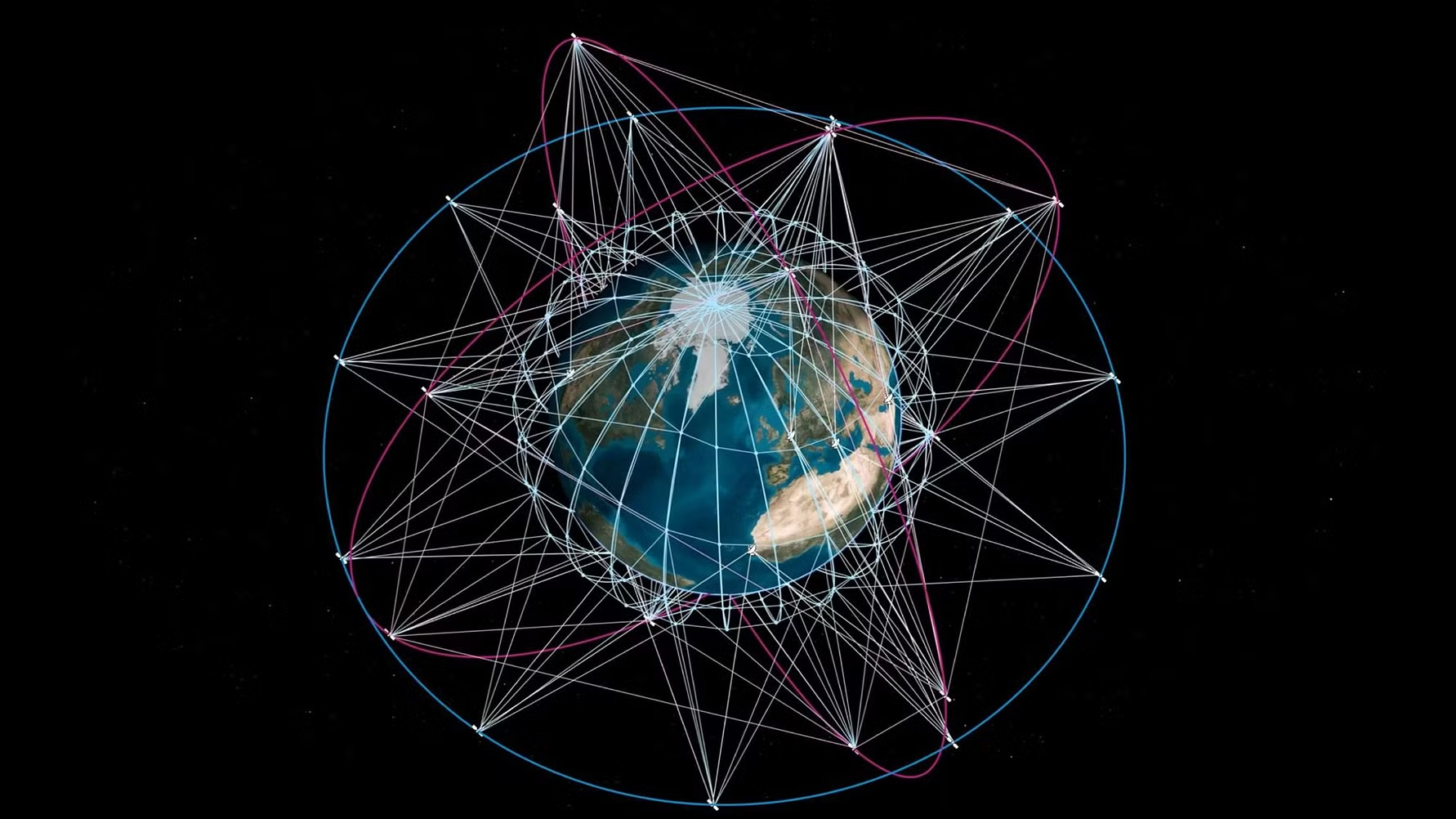
A startup has raised $2.5 million in seed funding to further development of a software system to make it easier for companies to operate satellite constellations.
The post Quindar raises seed round to provide mission management software services appeared first on SpaceNews.
European Commission to present space defence plan in March

The European Commission will present a strategy to bolster the EU's security and defence efforts in space in March, Internal Market Commissioner Thierry Breton said Tuesday, with Russia's war in Ukraine raising tensions in space.
Moscow's invasion last year led to Europe and Russia calling off their previously close cooperation in space, delaying a range of missions and affecting European efforts to launch satellites.
"In the current geopolitical context, we need to enhance the Union's strategic posture to be able to defend our interests, protect our space systems and services and become a more assertive space power," Breton told the opening of the European Space Conference in Brussels.
EU foreign policy chief Josep Borrell called Russia's invasion of Ukraine a "wake-up call", saying that the bloc needs to examine "how space assets and services are crucial" to common European action.
A little less than 10 percent of the roughly 5,500 satellites currently orbiting the globe are run by militaries, Borrell said.
"But many others are dual use and they provide critical information to support our security and defence," he added.
Breton said Europe's space strategy would be based on four pillars.
Space Force not buying large satellites for the foreseeable future
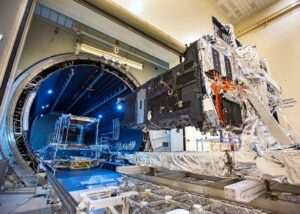
The era of massive satellites needs to be in the rear view mirror for the Department of Defense, the head of military space acquisitions Frank Calvelli said Jan. 24.
The post Space Force not buying large satellites for the foreseeable future appeared first on SpaceNews.
NASA and DARPA to partner on nuclear thermal propulsion demonstration
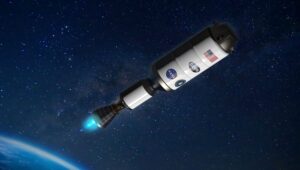
NASA and DARPA will cooperate on the development and flight demonstration of a nuclear propulsion system with applications for both national security and space exploration.
The post NASA and DARPA to partner on nuclear thermal propulsion demonstration appeared first on SpaceNews.
Buckle up, it could get bumpy: The space economy’s vaunted resilience will be tested in 2023

While challenging economic conditions this year will hit some space companies harder than others, the industry as a whole is expected to remain robust as multiple headwinds rock the sector.
The post Buckle up, it could get bumpy: The space economy’s vaunted resilience will be tested in 2023 appeared first on SpaceNews.
Plasma thrusters used on satellites could be much more powerful than previously believed
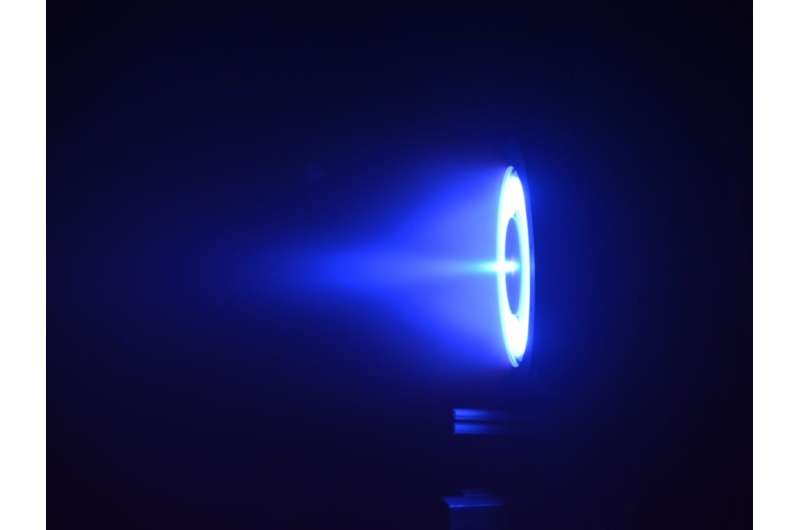
It has been believed that Hall thrusters, an efficient kind of electric propulsion widely used in orbit, must be large to produce a lot of thrust. Now, a new study from the University of Michigan suggests that smaller Hall thrusters can generate much more thrust—potentially making them candidates for interplanetary missions.
"People had previously thought that you could only push a certain amount of current through a thruster area, which in turn translates directly into how much force or thrust you can generate per unit area," said Benjamin Jorns, U-M associate professor of aerospace engineering who led the new Hall thruster study to be presented at the AIAA SciTech Forum in National Harbor, Maryland, today.
Europe's JUICE spacecraft ready to explore Jupiter's icy moons
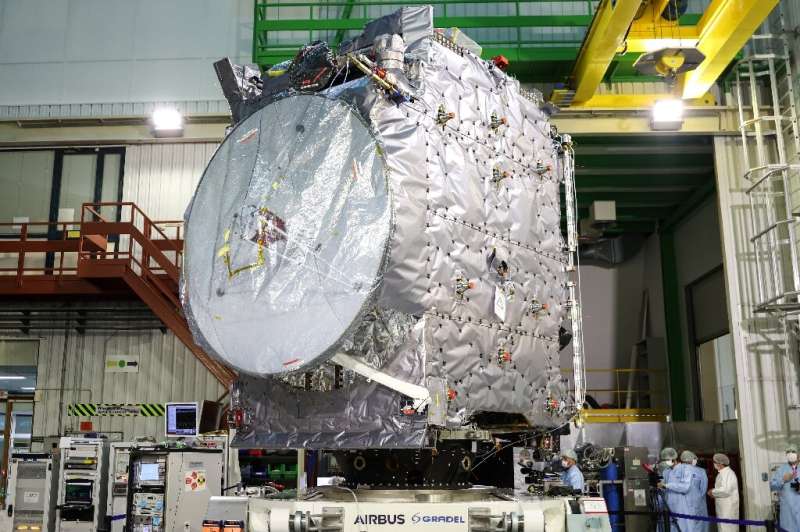
Europe's JUICE spacecraft is all ready to embark on an eight-year odyssey through the Solar System to find out whether the oceans hidden under the surface of Jupiter's icy moons have the potential to host extraterrestrial life.
For now, the Jupiter Icy Moons Explorer (JUICE) is in a white room of its manufacturer Airbus in the southwestern French city of Toulouse. But its days on this planet are numbered.
Soon the spacecraft will be put in a container, wings carefully folded away, ahead of traveling to Europe's spaceport in Kourou, French Guiana off the coast of South America in early February.
From there, one of Europe's most ambitious space missions ever is scheduled to launch in April.
The scientists and engineers in Toulouse who have spent years working on the project are clearly emotional at the thought of saying goodbye to what they call "the beast".
NASA, Pentagon developing nuclear-powered rocket for Mars voyage

NASA is partnering with a Pentagon research agency to develop a nuclear-powered rocket engine in preparation for sending astronauts to Mars.
NASA Administrator Bill Nelson said Tuesday that the US space agency will team up with the Defense Advanced Research Projects Agency (DARPA) to "develop and demonstrate advanced nuclear thermal propulsion technology as soon as 2027."
"With the help of this new technology, astronauts could journey to and from deep space faster than ever –- a major capability to prepare for crewed missions to Mars," Nelson said in a statement.
DARPA is the Pentagon's research and development arm and has played a role in many of the notable innovations of the 20th century including the internet.
NASA said nuclear thermal rockets can be three or more times more efficient than conventional chemical propulsion and would reduce transit time, essential for an eventual mission to Mars.
In a nuclear thermal engine, a fission reactor is used to generate extremely high temperatures.
Heat from the reactor is transferred to liquid propellant which is then converted into gas, which expands through a nozzle and provides thrust.
NASA, DARPA will test nuclear engine for future Mars missions
 NASA and the Defense Advanced Research Projects Agency (DARPA) announced Tuesday a collaboration to demonstrate a nuclear thermal rocket engine in space, an enabling capability for NASA crewed missions to Mars.
NASA and DARPA will partner on the Demonstration Rocket for Agile Cislunar Operations, or DRACO, program. The non-reimbursable agreement designed to benefit both agencies, outlines
NASA and the Defense Advanced Research Projects Agency (DARPA) announced Tuesday a collaboration to demonstrate a nuclear thermal rocket engine in space, an enabling capability for NASA crewed missions to Mars.
NASA and DARPA will partner on the Demonstration Rocket for Agile Cislunar Operations, or DRACO, program. The non-reimbursable agreement designed to benefit both agencies, outlines Plasma thrusters used on satellites could be much more powerful
 It was believed that Hall thrusters, an efficient kind of electric propulsion widely used in orbit, need to be large to produce a lot of thrust. Now, a new study from the University of Michigan suggests that smaller Hall thrusters can generate much more thrust-potentially making them candidates for interplanetary missions.
"People had previously thought that you could only push a certain a
It was believed that Hall thrusters, an efficient kind of electric propulsion widely used in orbit, need to be large to produce a lot of thrust. Now, a new study from the University of Michigan suggests that smaller Hall thrusters can generate much more thrust-potentially making them candidates for interplanetary missions.
"People had previously thought that you could only push a certain a