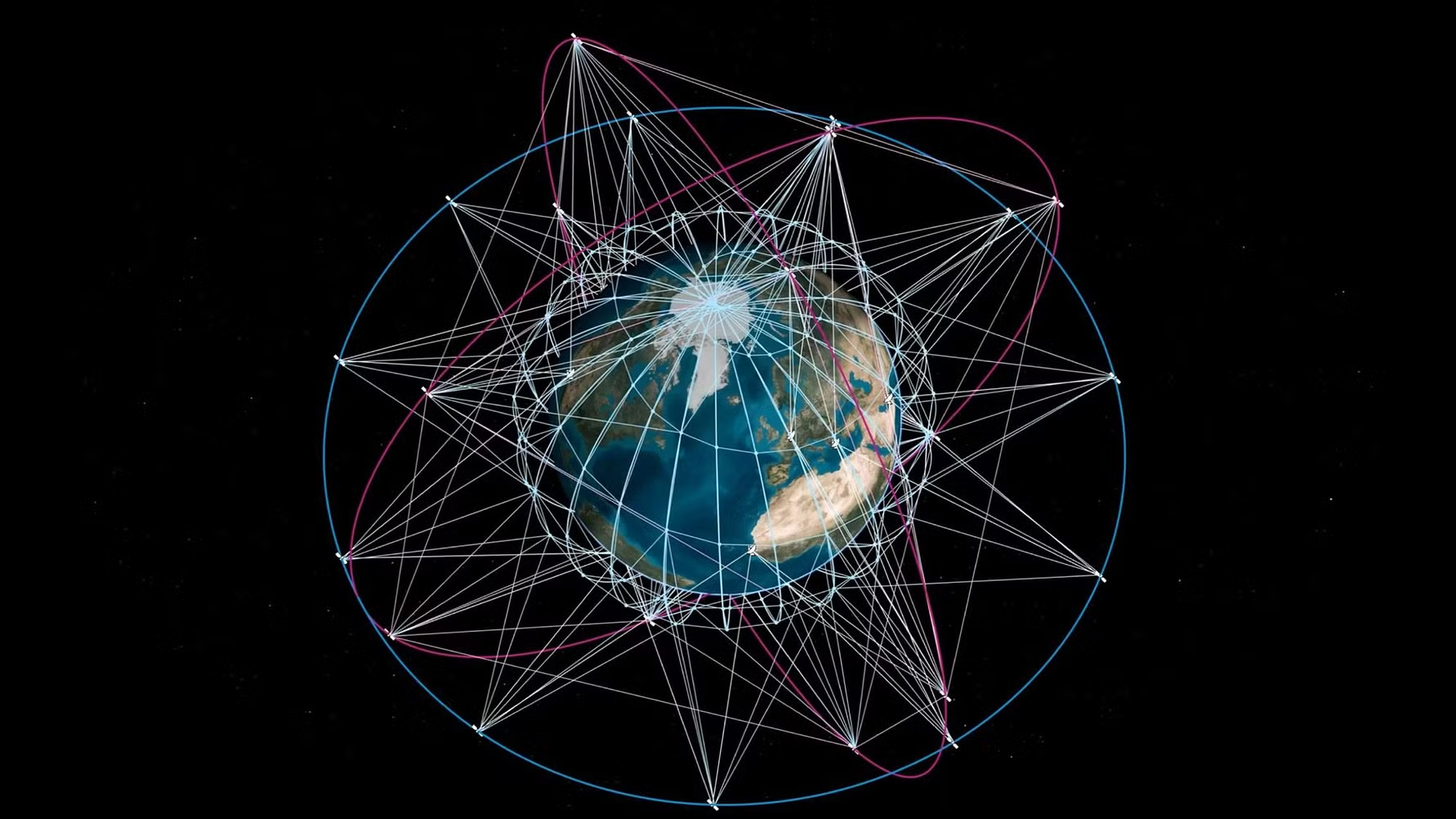
ClearSpace raises $29 million ahead of first debris removal mission

Swiss startup ClearSpace said Jan. 19 it has raised about $29 million to support its first space debris removal mission in 2026.
The post ClearSpace raises $29 million ahead of first debris removal mission appeared first on SpaceNews.
Future-proofing ice measurements from space
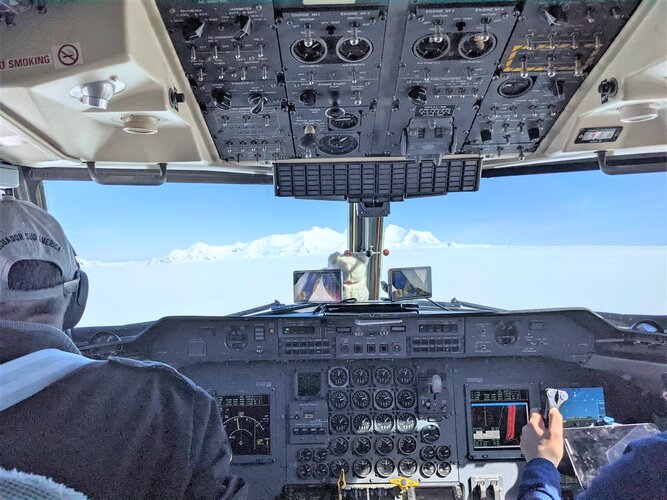
With diminishing ice one of the biggest casualties of our warming world, it’s imperative that accurate measurements continue to be made for scientific research and climate policy, as well as for practical applications such as ship routing.
To ensure that ESA and NASA are getting the best out of their ice-measuring satellites and to help prepare for Europe’s new CRISTAL satellite, the two space agencies along with the British Antarctic Survey and a team of scientists teamed up recently to carry out an ambitious campaign in Antarctica.
With Starshield, SpaceX readies for battle
SpaceX is answering the Pentagon’s call for more commercial allies with Starshield, a business that will leverage its manufacturing might to provide custom- built spacecraft, sensors, and secure communications services.
The post With Starshield, SpaceX readies for battle appeared first on SpaceNews.
Space Capital sees upside to 2022 decline in space investment

Last year was rough for space startups. Overall investment dropped 58 percent from its $47.4 billion peak in 2021 to $20.1 billion in 2022.
The post Space Capital sees upside to 2022 decline in space investment appeared first on SpaceNews.
NASA faces “difficult choices” for current and future Earth science missions
The co-chair of the most recent Earth science decadal survey warned that NASA faces “difficult choices” between continuing current missions and starting new missions given limited funding.
The post NASA faces “difficult choices” for current and future Earth science missions appeared first on SpaceNews.
HawkEye 360 satellites to provide data for U.S. Space Force threat-detection system

Slingshot Aerospace is developing a system for the U.S. Space Force that will use data from HawkEye 360’s satellites to identify potential threats to GPS signals
Geostationary sounder is a key ingredient of near-term forecasts
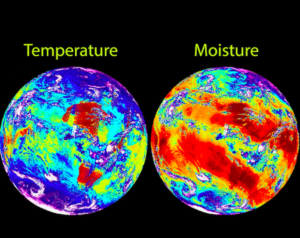
The National Oceanic and Atmospheric Administration’s next generation of geostationary weather satellites will significantly improve weather forecasting thanks to the addition of a hyperspectral infrared sounder.
The post Geostationary sounder is a key ingredient of near-term forecasts appeared first on SpaceNews.
Eutelsat 5 West A successfully retired in graveyard orbit

Eutelsat said Jan. 19 it retired a satellite last week that had helped Europe transition from analog to digital television two decades ago.
The post Eutelsat 5 West A successfully retired in graveyard orbit appeared first on SpaceNews.
Hera spacecraft to return to binary asteroid to survey crater left by DART
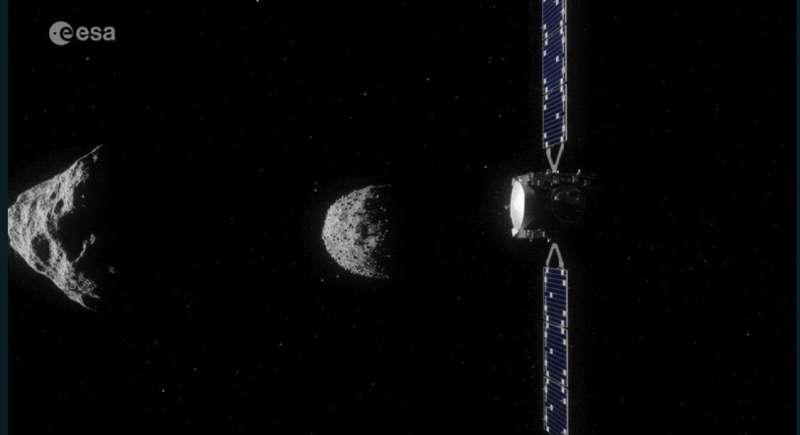
One of last year's space highlights was the NASA DART mission's collision with Dimorphos, the small moon of the binary asteroid Didymos (seen left). The impact measurably shifted the target asteroid's orbit around its primary while casting a plume of debris thousand of kilometers out into space.
Next comes ESA's Hera spacecraft which will return to the binary asteroid to perform a close-up survey of the crater left by DART, as well as measuring Dimorphos' mass and make-up, along with that of its central body.
"Hera is due to be launched in October 2024," explains Ian Carnelli, heading the mission. "In order to make that deadline our team has been working hard during the last year to finalize and test the various spacecraft subsystems—including the two CubeSats that will be deployed from Hera itself in the vicinity of Dimorphos. Meanwhile the overall mission passed its system Critical Design Review at the end of 2022, at the same time as Hera received funding for its launcher and operations.
"This coming year is when everything comes together: all elements of the Hera flight model are due to be integrated so that we can perform a full campaign of environmental testing on the spacecraft at ESA's ESTEC Test Center in the Netherlands.
Stars disappear before our eyes, citizen scientists report
 A startling analysis from Globe at Night - a citizen science program run by NSF's NOIRLab - concludes that stars are disappearing from human sight at an astonishing rate. The study finds that, to human eyes, artificial lighting has dulled the night sky more rapidly than indicated by satellite measurements. The study published in the journal Science showcases the unique contributions that citizen