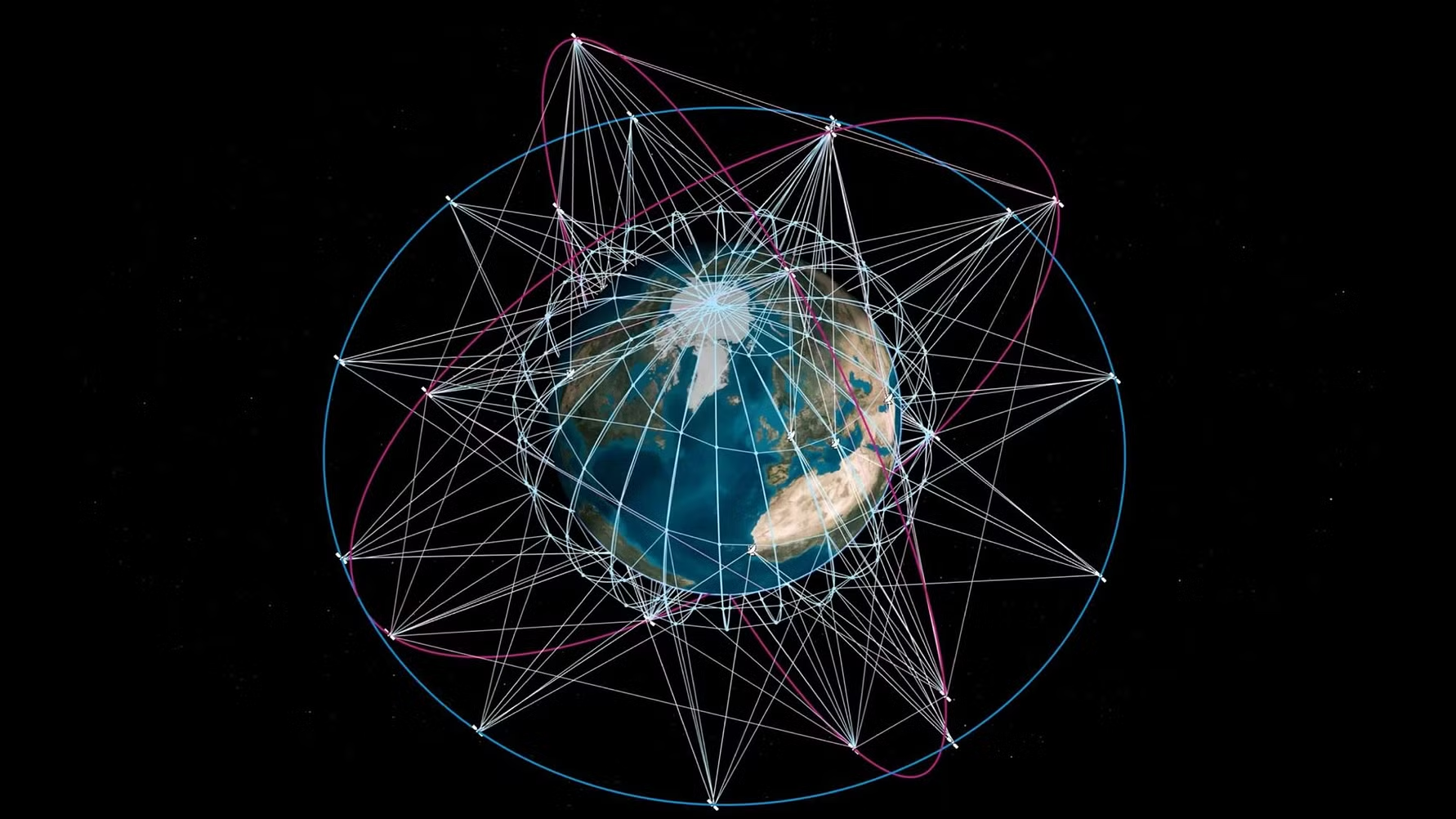
SpaceX launches GPS satellite, Falcon 9’s fifth national security launch
A SpaceX Falcon 9 rocket on Jan. 18 lifted off at 7:24 a.m. Eastern from Space Launch Complex 40 at Cape Canaveral Space Force Station, Florida, carrying a U.S. Space Force GPS satellite.
China to launch relay satellite next year to support moon landing missions
China will launch its Queqiao-2 communications relay satellite in 2024 to support upcoming robotic landing missions at the lunar south pole and far side of the moon.
Op-ed | Despite tech reset, the space economy is here to stay

The global space industry is expected to eclipse $1 trillion over the next few decades. And while casual onlookers sometimes express skepticism of this rapid growth, the venture industry is clearly enticed by how space technologies can power the global economy.
Report calls on NASA to improve coordination of Artemis international partnerships
NASA’s inspector general says that the agency needs to do a better job coordinating international partnerships in its Artemis lunar exploration campaign and overcoming obstacles like export control.
The post Report calls on NASA to improve coordination of Artemis international partnerships appeared first on SpaceNews.
SpaceX Falcon 9 launches fifth GPS satellite for U.S. Space Force

A SpaceX Falcon 9 rocket on Jan. 18 lifted off at 7:24 a.m. Eastern from Space Launch Complex 40 at Cape Canaveral Space Force Station, Florida, carrying a U.S. Space Force GPS satellite.
The rich meteorology of Mars studied in detail from the Perseverance rover
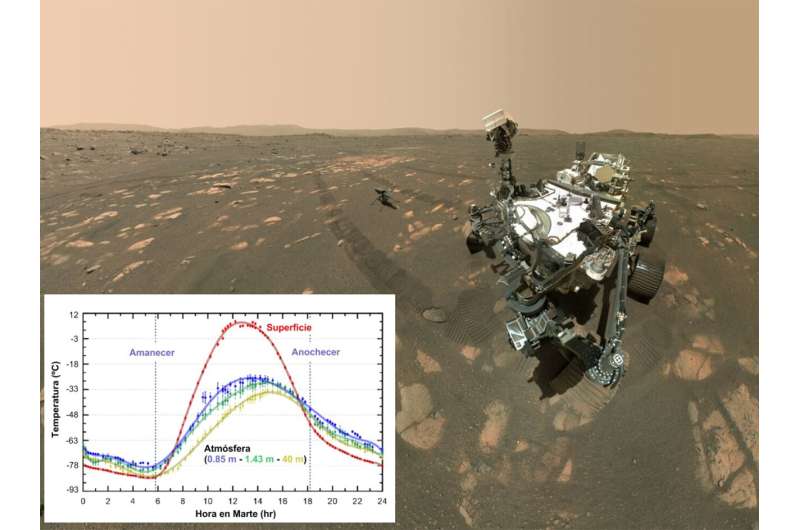
Perseverance is a NASA autonomous vehicle that arrived at the Jezero Crater (the bed of an ancient, now dried-up lake on Mars) on February 18, 2021. The rover is equipped with seven novel, complex scientific instruments dedicated to exploring the planet's surface in search of signs of possible past life, collecting and depositing samples to be brought back to Earth, testing new technologies for use in human exploration, and studying the planet's atmosphere in detail.
With regard to the aim of studying the atmosphere, the MEDA (Mars Environmental Dynamics Analyzer) instrument has been obtaining novel results. MEDA's lead researcher is José Antonio Rodríguez-Manfredi of the Centre for Astrobiology (CAB) in Madrid, and it has had the participation of a team from the UPV/EHU's Planetary Sciences Research Group. The instrument comprises a set of sensors that measure temperature, pressure, wind, humidity and properties of the dust that is always present in suspension in the Mars atmosphere.
Space Force procurement chief looking for big wins in 2023
Frank Calvelli said his push for speed and agility in procurement programs is starting to resonate
The post Space Force procurement chief looking for big wins in 2023 appeared first on SpaceNews.
NASA's Geotail mission operations come to an end after 30 years
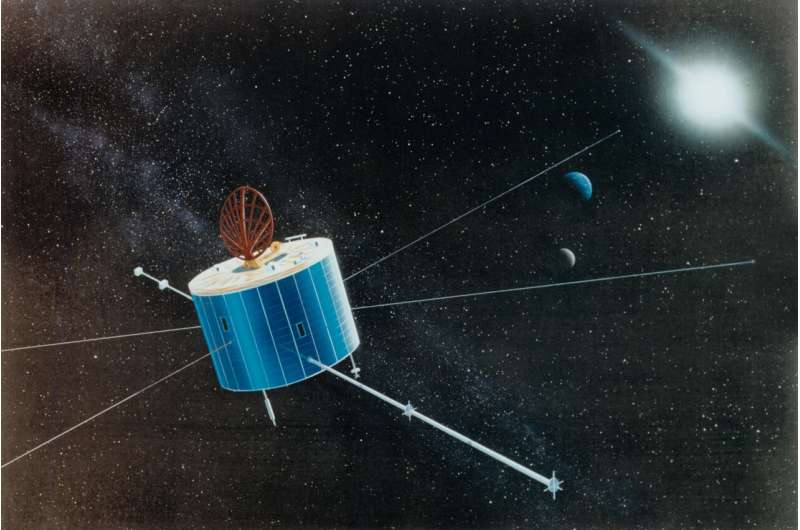
After 30 years in orbit, mission operations for the joint NASA-JAXA Geotail spacecraft have ended, after the failure of the spacecraft's remaining data recorder.
After its launch on July 24, 1992, Geotail orbited Earth, gathering an immense dataset on the structure and dynamics of the magnetosphere, Earth's protective magnetic bubble. Geotail was originally slated for a four-year run, but the mission was extended several times due to its high-quality data return, which contributed to over a thousand scientific publications.
While one of Geotail's two data recorders failed in 2012, the second continued to work until experiencing an anomaly on June 28, 2022. After attempts to remotely repair the recorder failed, the mission operations were ended on November 28, 2022.
"Geotail has been a very productive satellite, and it was the first joint NASA-JAXA mission," said Don Fairfield, emeritus space scientist at NASA's Goddard Space Flight Center in Greenbelt, Maryland, and NASA's first project scientist for Geotail until his retirement in 2008.
Incorporating scents into a VR environment suitable for spacefarers
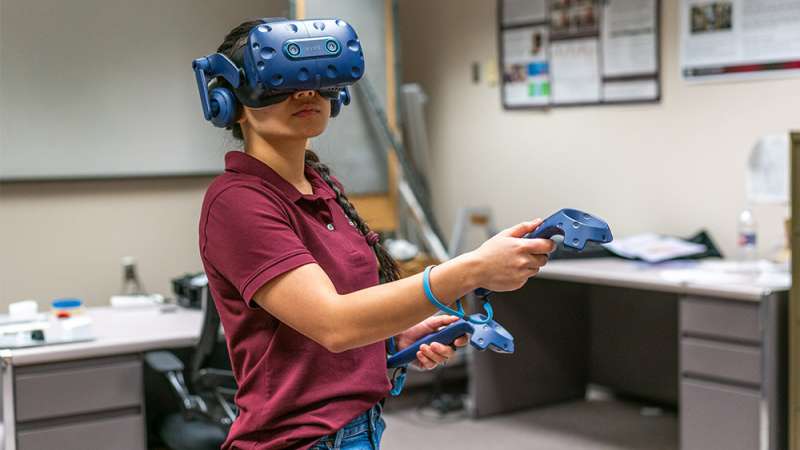
Astronauts are heading back to the moon, and this time they are focusing on establishing the first long-term presence. Afterward, NASA has its sights set on a trip to Mars.
With these long-duration missions ahead, new challenges will have to be accounted for on every front. The moon is about 238,855 miles from Earth, but a trip to Mars for an astronaut means traveling around 140 million miles away and leaving our planet for about three years. Because of this distance, astronauts will also face up to a 20-minute communication delay from Earth to Mars.
SpaceX rocket launches U.S. military satellite into orbit
 Elon Musk's SpaceX launched one of its Falcon 9 rockets Wednesday morning with a GPS satellite on board, part of a U.S. Space Force program to have a constellation of 32 navigation satellites orbiting the Earth.
The rocket blasted off from Cape Canaveral Space Force Station in Florida at 7:24 a.m. EST carrying the fifth Lockheed Martin-made Space Vehicle 6 of the so-called GPS 3 constel
Elon Musk's SpaceX launched one of its Falcon 9 rockets Wednesday morning with a GPS satellite on board, part of a U.S. Space Force program to have a constellation of 32 navigation satellites orbiting the Earth.
The rocket blasted off from Cape Canaveral Space Force Station in Florida at 7:24 a.m. EST carrying the fifth Lockheed Martin-made Space Vehicle 6 of the so-called GPS 3 constel