
Webb confirms its first exoplanet
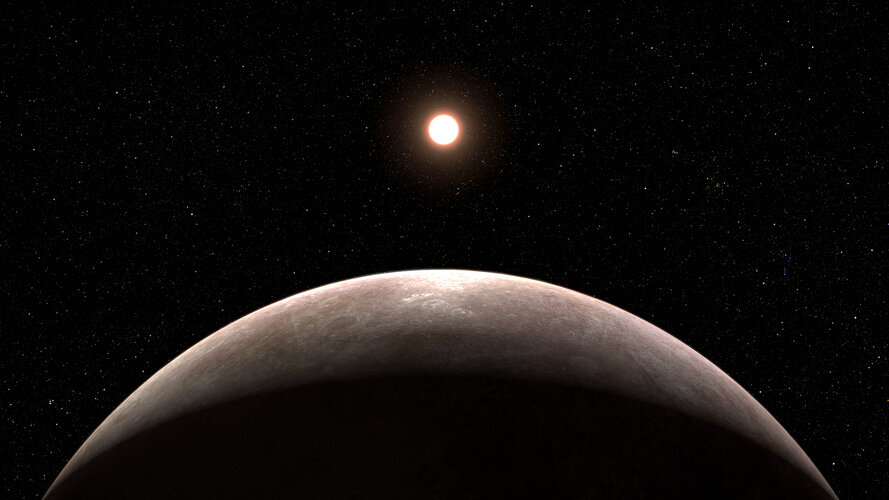
Researchers have confirmed the presence of an exoplanet, a planet that orbits another star, using the NASA/ESA/CSA James Webb Space Telescope for the first time. Formally classified as LHS 475 b, the planet is almost exactly the same size as our own, clocking in at 99% of Earth’s diameter.
Progress and obstacles for space weather forecasting
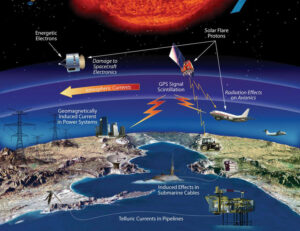
While Congress and the Biden Administration recognize the potential threat posed by space weather events, the United States still needs to improve its ability to monitor and model the phenomenon.
The post Progress and obstacles for space weather forecasting appeared first on SpaceNews.
Europe’s investment arm loans SES 300 million euros to bolster space industry

The European Investment Bank said Jan. 11 it is lending SES 300 million euros ($323 million) as part of efforts to increase the competitiveness of Europe’s space industry.
The post Europe’s investment arm loans SES 300 million euros to bolster space industry appeared first on SpaceNews.
NOAA takes stock of spectrum amid ongoing challenges
The National Oceanic and Atmospheric Administration is taking stock of its dependence on specific bands of the radio frequency spectrum and looking for ways to mitigate the impact of interference or government sales.
The post NOAA takes stock of spectrum amid ongoing challenges appeared first on SpaceNews.
Five things to know about the International Space Station
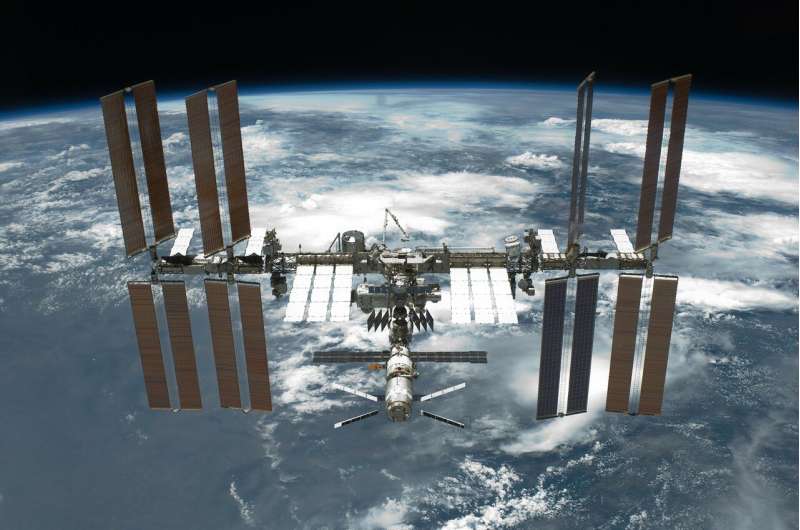
Here are some key facts about the orbiting laboratory set up to advance space exploration—and prepare to send humans to Mars—where Russians and Americans have worked together for a quarter of a century.
Size of a football field
The ISS is the largest man-made structure ever put into orbit.
Launched in 1998 by the United States, Russia, Canada, Japan, and members of the European Space Agency (ESA) it is the size of a football field and weighs about the same as a jam-packed Boeing 747.
Built at a total cost of about 100 billion dollars, mostly paid for by the US, it orbits the Earth every 90 minutes at an average altitude of 400 kilometres (250 miles).
It has been permanently occupied since November 2000 by Russian and American-led crews that usually stay for around six months to carry out experiments in microgravity (weightlessness) which have practical applications on Earth and help prepare for future Mars missions.
Space junk, not meteorites, remains biggest threat to spacecraft
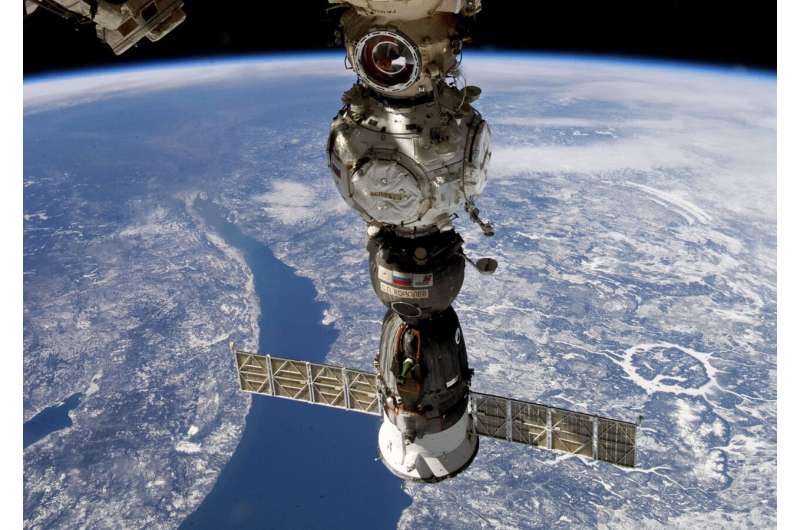
Russian announced on Wednesday a February mission to the International Space Station to pick up crew members left stranded after a strike damaged the capsule that was to take them home.
Didier Schmitt, the European Space Agency's head of human and robotic exploration, said it was not rare for tiny meteorites to hit the space station.
The micrometeorites can be traveling at speeds from 10 to 30 kilometers (6-18 miles) a second—"much faster than a shotgun bullet," Schmitt said.
That is why, when the space station's large observation window is not in use, it is shuttered with "very, very thick layers of protective materials," he said.
Russia will launch new capsule to return space station crew
Capella Space raises $60 million to accelerate constellation
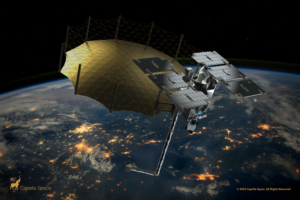
Capella Space has raised $60 million to allow the company to accelerate the deployment of its constellation and meet growing demand for its synthetic aperture radar (SAR) satellite imagery.
The post Capella Space raises $60 million to accelerate constellation appeared first on SpaceNews.
Space Force official: To beat China, U.S. has to spend smarter
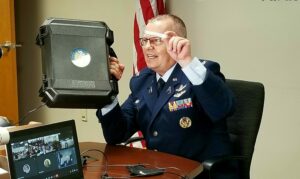
Commercial innovation should be harnessed to compete with China and also deter conflict, Space Force procurement official Col. Eric Felt said Jan. 11
Russia to send rescue mission to space station
 Russia said Wednesday that it will send an empty spacecraft to the International Space Station (ISS) next month to bring home three astronauts whose planned return vehicle was damaged by a strike from a tiny meteoroid.
The Russian space agency, Roscosmos, made the announcement after examining the flight worthiness of the Soyuz MS-22 crew capsule docked with the ISS that sprang a radiator coo
Russia said Wednesday that it will send an empty spacecraft to the International Space Station (ISS) next month to bring home three astronauts whose planned return vehicle was damaged by a strike from a tiny meteoroid.
The Russian space agency, Roscosmos, made the announcement after examining the flight worthiness of the Soyuz MS-22 crew capsule docked with the ISS that sprang a radiator coo