NASA Webb micrometeoroid mitigation update
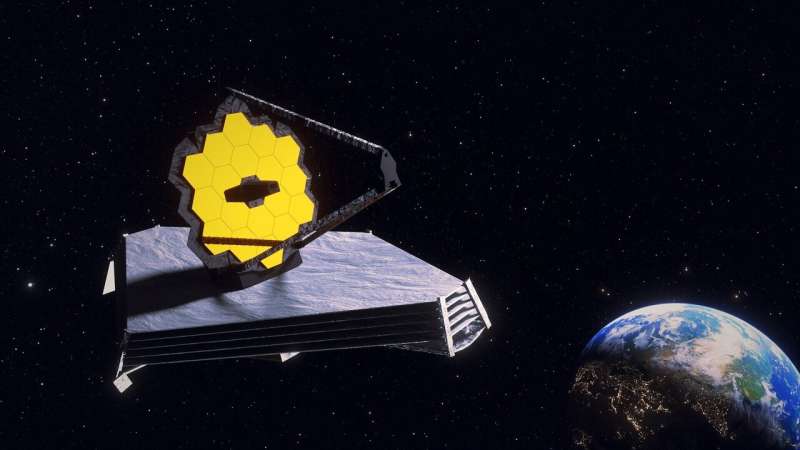
Micrometeoroid strikes are an unavoidable aspect of operating any spacecraft. NASA's James Webb Space Telescope was engineered to withstand continual bombardment from these dust-sized particles moving at extreme velocities, to continue to generate groundbreaking science far into the future.
"We have experienced 14 measurable micrometeoroid hits on our primary mirror, and are averaging one to two per month, as anticipated. The resulting optical errors from all but one of these were well within what we had budgeted and expected when building the observatory," said Mike Menzel, Webb lead mission systems engineer at NASA's Goddard Space Flight Center in Greenbelt, Maryland. "One of these was higher than our expectations and prelaunch models; however, even after this event our current optical performance is still twice as good as our requirements."
To ensure all parts of the observatory continue to perform at their best, NASA convened a working group of optics and micrometeoroid experts from NASA Goddard's Webb team, the telescope's mirror manufacturer, the Space Telescope Science Institute, and the NASA Meteoroid Environment Office at NASA's Marshall Space Flight Center in Huntsville, Alabama.
White House, Congress praise long-delayed first SLS launch

The inaugural flight of the Space Launch System won positive reactions from the White House and Congress, celebrating the successful liftoff while overlooking the vehicle’s extensive delays.
The post White House, Congress praise long-delayed first SLS launch appeared first on SpaceNews.
NASA Moon mission 'exceeding' expectaions
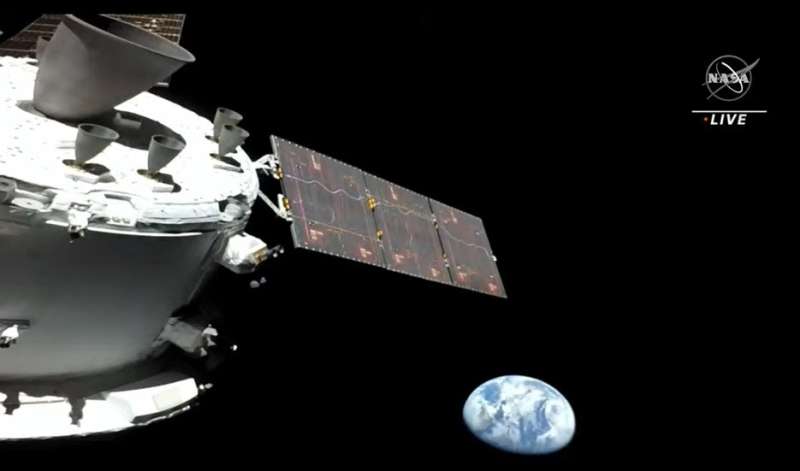
On the third day after lifting off from Florida bound for the Moon, the Orion spacecraft is "exceeding performance expectations," NASA officials said on Friday.
The spacecraft is to take astronauts to the Moon in the coming years—the first to set foot on its surface since the last Apollo mission in 1972.
This first test flight, without a crew on board, aims to ensure that the vehicle is safe.
"Today we met to review the Orion spacecraft performance... it is exceeding performance expectations," said Mike Sarafin, head of the Artemis 1 mission.
The spacecraft's four solar panels, about 13 feet (four meters) long, deployed correctly and are providing more energy than expected, said Jim Geffre, the Orion manager at the Johnson Space Center in Houston.
NASA Moon mission 'exceeding' expectations
 On the third day after lifting off from Florida bound for the Moon, the Orion spacecraft is "exceeding performance expectations," NASA officials said on Friday.
The spacecraft is to take astronauts to the Moon in the coming years - the first to set foot on its surface since the last Apollo mission in 1972.
This first test flight, without a crew on board, aims to ensure that the vehicl
On the third day after lifting off from Florida bound for the Moon, the Orion spacecraft is "exceeding performance expectations," NASA officials said on Friday.
The spacecraft is to take astronauts to the Moon in the coming years - the first to set foot on its surface since the last Apollo mission in 1972.
This first test flight, without a crew on board, aims to ensure that the vehicl SpaceX to launch last new cargo Dragon spacecraft
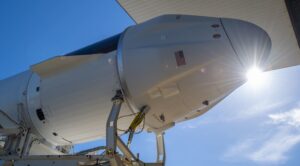
A SpaceX Dragon launching soon to the International Space Station is the last cargo version of the spacecraft the company expects to build, with one more crewed spacecraft under construction.
Orion ready for lunar flyby maneuver
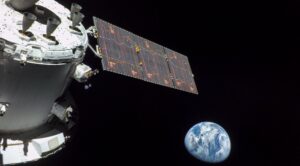
NASA has approved plans to proceed with the next critical milestone in the Artemis 1 mission, a maneuver by the uncrewed Orion spacecraft as it flies by the moon Nov. 21.
Arianespace Vega C mission set to complete Pleiades Neo constellation
 On Thursday, November 24, 2022 at 10:47 pm local time (01:47 am (UTC) on Friday, November 25), Arianespace's first Vega C mission will lift off from Europe's Spaceport in French Guiana, with the 30cm resolution satellites Pleiades Neo 5 and 6. This first commercial flight follows the success, July 13, of Vega C inaugural launch operated by the European Space Agency (ESA).
After liftoff fro
On Thursday, November 24, 2022 at 10:47 pm local time (01:47 am (UTC) on Friday, November 25), Arianespace's first Vega C mission will lift off from Europe's Spaceport in French Guiana, with the 30cm resolution satellites Pleiades Neo 5 and 6. This first commercial flight follows the success, July 13, of Vega C inaugural launch operated by the European Space Agency (ESA).
After liftoff fro LOFTID inflatable heat shield test a success, early results show
 NASA's Low-Earth Orbit Flight Test of an Inflatable Decelerator, or LOFTID, launched on Nov. 10, 2022, to demonstrate inflatable heat shield technology that could be key to landing humans on Mars.
About an hour after launch on a United Launch Alliance Atlas V rocket, LOFTD inflated and deployed in space. After being released by the Centaur upper stage, the heat shield, or aeroshell, began
NASA's Low-Earth Orbit Flight Test of an Inflatable Decelerator, or LOFTID, launched on Nov. 10, 2022, to demonstrate inflatable heat shield technology that could be key to landing humans on Mars.
About an hour after launch on a United Launch Alliance Atlas V rocket, LOFTD inflated and deployed in space. After being released by the Centaur upper stage, the heat shield, or aeroshell, began The first life in our solar system may have been on Mars
 When Mars was a young planet, it was bombarded by ice asteroids delivering water and organic molecules necessary for life to emerge. According to the professor behind a new study, this means that the first life in our solar system may have been on Mars.
Mars is called the red planet. But once, it was actually blue and covered in water, bringing us closer to finding out if Mars had ever harboure
When Mars was a young planet, it was bombarded by ice asteroids delivering water and organic molecules necessary for life to emerge. According to the professor behind a new study, this means that the first life in our solar system may have been on Mars.
Mars is called the red planet. But once, it was actually blue and covered in water, bringing us closer to finding out if Mars had ever harboure NASA, Japan announce Gateway contributions, Space Station extension
 NASA and the Government of Japan on Thursday announced further contributions by Japan to Gateway, a key component of the agency's Artemis missions for long-term lunar exploration. NASA Administrator Bill Nelson participated virtually from the agency's Kennedy Space Center in Florida in an event held in Tokyo that included Minister of Education, Culture, Sports, Science and Technology Keiko Nagao