US weather satellite, test payload launched into space

A satellite intended to improve weather forecasting and an experimental inflatable heat shield to protect spacecraft entering atmospheres were launched into space from California on Thursday.
A United Launch Alliance Atlas V rocket carrying the Joint Polar Satellite System-2 satellite and the NASA test payload lifted off at 1:49 a.m. from Vandenberg Space Force Base, northwest of Los Angeles.
Developed for the National Oceanic and Atmospheric Administration, JPSS-2 was placed into an orbit that circles the Earth from pole to pole, joining previously launched satellites in a system designed to improve weather forecasting and climate monitoring.
The NASA mission blog said there was no immediate data confirming deployment of the solar array that will power the satellite. "There may not be an issue, but we're monitoring closely as more telemetry data becomes available," the post said.
The array has five panels that were collapsed in an accordion fold for launch. The fully deployed array would extend 30 feet (9.1 meters).
Mission officials say the satellite represents the latest technology and will increase precision of observations of the atmosphere, oceans and land.
After releasing the satellite, the rocket's upper stage reignited to position the test payload for re-entry into Earth's atmosphere and descent into the Pacific Ocean.
Apple lays the groundwork for emergency SOS via satellite service
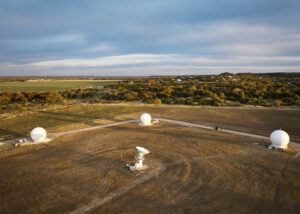
Apple said Nov. 10 its $450 million investment in an SOS via satellite service has helped Globalstar upgrade ground stations across the United States and elsewhere with high-power antennas.
The post Apple lays the groundwork for emergency SOS via satellite service appeared first on SpaceNews.
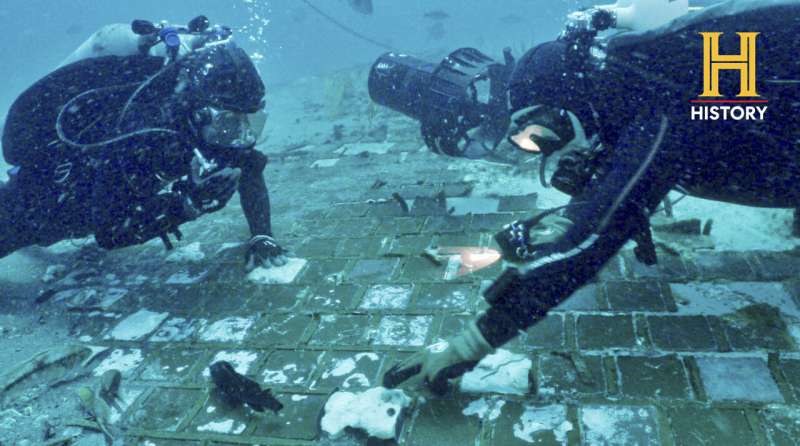
Section of destroyed shuttle Challenger found on ocean floor
Cosmic radiation detection takes front seat during NASA's Artemis I space mission
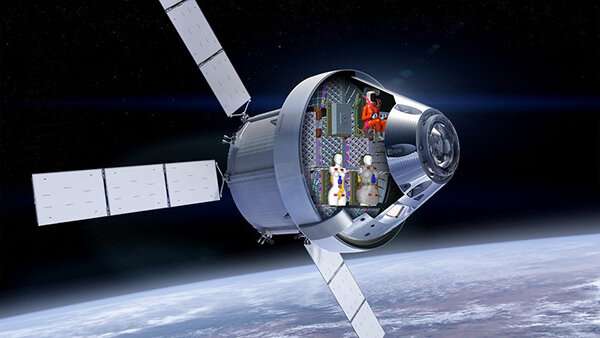
Although bad weather and technical issues forced NASA to postpone its August and September launch attempts for Artemis I—an uncrewed space mission that will voyage around the moon and back—the space agency is looking towards a launch window in the second half of November 2022, possibly November 16. The highly anticipated space flight will be the first to test the new Orion spacecraft along with its rocket and ground systems.
The Artemis I mission is the first step in NASA's plans to carry human crews to further explore the lunar surface and eventually establish a sustainable outpost on the moon. The flight would also contribute to the groundwork required for a mission to Mars. When it blasts off from the Kennedy Space Center in Florida, Artemis I will carry two mannequins strapped into its crew module.
Momentus upbeat about second Vigoride mission
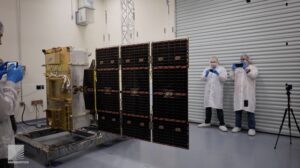
Momentus says it has “higher confidence” in its second space tug set to launch in December after fixing problems encountered with its first vehicle launched earlier this year.
The post Momentus upbeat about second Vigoride mission appeared first on SpaceNews.
UK grants Starlink and Telesat NGSO licenses
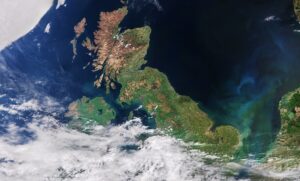
The United Kingdom gave SpaceX permission Nov. 10 to expand its Starlink satellite broadband network in the country, while also granting a license to Telesat for a competing constellation bound for non-geostationary orbit.
Advanced Space wins $72 million Air Force contract for lunar experiment

The Air Force Research Laboratory awarded a $72 million contract to Advanced Space to develop an experimental spacecraft to monitor deep space, far beyond Earth’s orbit.
The post Advanced Space wins $72 million Air Force contract for lunar experiment appeared first on SpaceNews.
Space Development Agency still hoping to launch satellites next month, ‘but there’s risk’

The Space Development Agency remains optimistic it will launch next month the first satellites of a planned mesh network of sensors and communications nodes in low Earth orbit
The post Space Development Agency still hoping to launch satellites next month, ‘but there’s risk’ appeared first on SpaceNews.
Earth from Space: Santiago, Chile

The Copernicus Sentinel-2 mission captured this image of Santiago – the capital and largest city of Chile.
ULA launches weather satellite for NOAA and Re-entry test for NASA
 United Launch Alliance has successfully launched the third in a series of polar-orbiting weather satellites for the National Oceanic and Atmospheric Administration (NOAA) at 1:49 a.m. PST Thursday, as well as a NASA technology demonstration misison on a ULA Atlas V rocket from Vandenberg Space Force Base in California.
Mission managers for NOAA's JPSS-2 confirm the satellite is now in Sun
United Launch Alliance has successfully launched the third in a series of polar-orbiting weather satellites for the National Oceanic and Atmospheric Administration (NOAA) at 1:49 a.m. PST Thursday, as well as a NASA technology demonstration misison on a ULA Atlas V rocket from Vandenberg Space Force Base in California.
Mission managers for NOAA's JPSS-2 confirm the satellite is now in Sun