TRUTHS on the table at ESA’s Ministerial Council
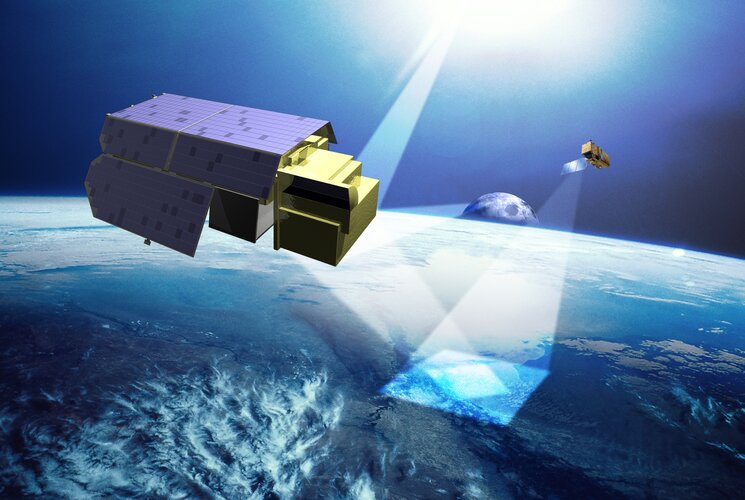
With the satellite and instrument design consolidated and the scientific community assured it will deliver the data they need, TRUTHS has been approved as part of Earth Observation Programme proposal for the upcoming ESA Council Meeting at Ministerial Level. Carrying a primary International System of Units reference system, TRUTHS promises to set the gold standard for climate measurements.
Former SES CEO joins megaconstellation startup E-Space

Former SES CEO Karim Michel Sabbagh has returned to the space industry to oversee strategy in Europe and the Middle East for E-Space, the connectivity startup plotting a network of hundreds of thousands of satellites.
Launch on demand: If satellites are shot down, will Space Force be ready to restock?

Responsive space launch capabilities are gaining more attention as world events that underline the strategic value of satellites also makes them more attractive targets for adversaries.
The post Launch on demand: If satellites are shot down, will Space Force be ready to restock? appeared first on SpaceNews.
Image: European Service Modules currently in production at Airbus facilities
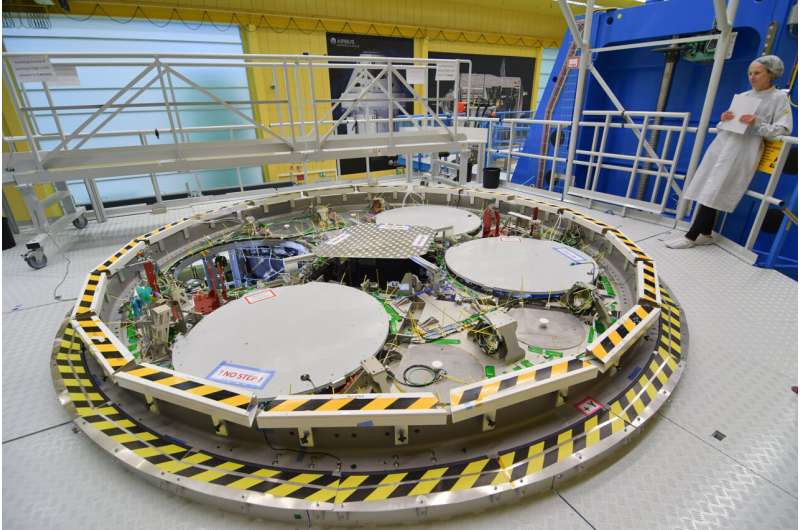
The third (pictured) and fourth European Service Modules are currently in production at Airbus facilities in Bremen, Germany. They are key elements of the Orion spacecraft, the first to return humans to the moon since the 1970s.
These modules provide the spacecraft with propulsion, power and thermal control, and will supply astronauts with water and oxygen. The Orion spacecraft is composed of a European Service Module, a Crew Module Adapter and a Crew Module. The latter two components are provided by NASA.
Powering flights to the moon is a collaborative effort. The components and hardware used in the European Service Modules are built and supplied by more than twenty different companies from ten different countries in Europe.
When ready for launch, each module will have a total mass of 13,500 kg, almost two-thirds of which is propellant (rocket fuel). More than 11 km of cables are needed to send commands and receive information from the many on-board sensors. As can be seen in the photo, tie-wraps (yellow) come in handy when it comes to keeping all these cables organized.
SpaceX deploys two of six C-band satellites Intelsat is launching this year
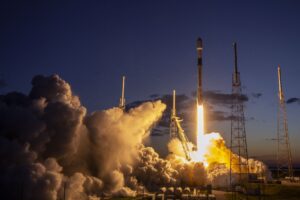
SpaceX Oct. 8 successfully deployed the first two of seven satellites Intelsat needs to clear C-band spectrum in the United States, keeping the operator on course to launch all but one of them before the end of this year.
SpaceX sunset launch from Canaveral completes Space Coast trio
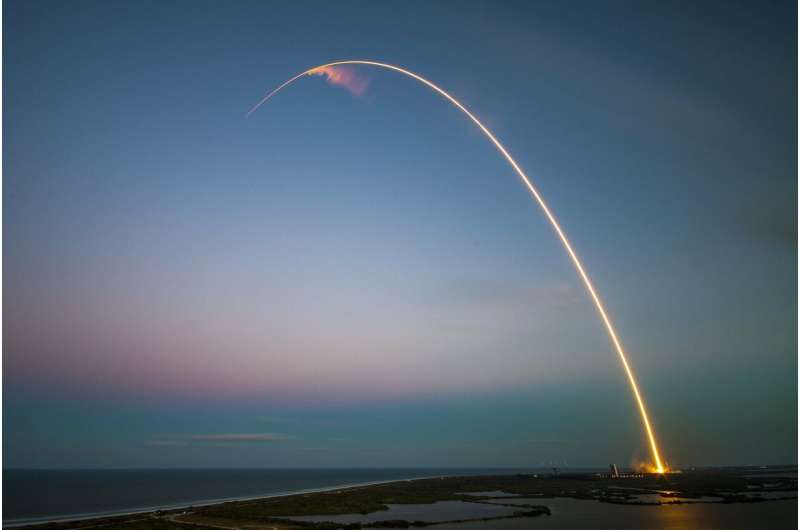
SpaceX was able to send up a Falcon 9 with a pair of satellites from Cape Canaveral on Saturday at sunset to complete a trio of launches for the Space Coast this week.
Tuesday saw an Atlas V lift off from Cape Canaveral Space Force Station while Wednesday saw the liftoff of the Crew-5 mission on a SpaceX Falcon 9 from Kennedy Space Center sending four passengers to the International Space Station.
SpaceX was in line to make it three launches in three days, but scrubbed the Thursday launch attempt, aborted with 30 seconds left on the countdown clock. But Saturday's liftoff in clear skies and a setting sun went off without a hitch.
The company opted to skip a Friday attempt to allow it more time for teams to look at the launch vehicle.
Liftoff took place at 7:05 p.m. from Space Launch Complex 40 carrying the Intelsat G-33/G-34 satellites to geosynchronous transfer orbit.
The first-stage booster made a record-tying 14th landing on SpaceX's droneship A Shortfall of Gravitas in the Atlantic Ocean.
The launch was SpaceX's 45th this calendar year from both Florida and California.
The moon is the perfect spot for humanity's offsite backup
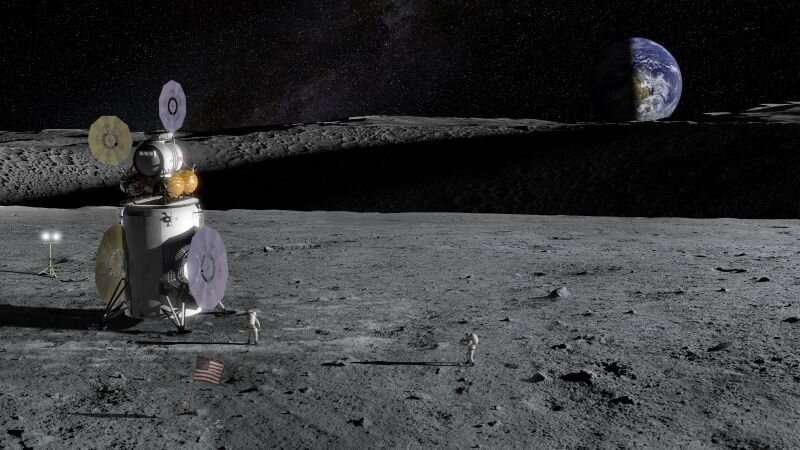
In a recent study, a collaborative team of researchers discuss the potential for future lunar settlers to establish a backup data storage system of human activity in the event of a global catastrophe on Earth that could be used to recover human civilization on a post-catastrophe planet. This comes as NASA's Artemis missions plan to send people back to the moon for the first time since 1972, coupled with current global events such as the ongoing coronavirus pandemic and the War in Ukraine, with Russian President Vladimir Putin recently threatening nuclear war. Given the current state of world affairs, how important is it to establish a type of off-world data backup?
"The COVID-19 pandemic taught us how vulnerable our world is to large-scale disasters because of its growing interconnectivity," says Carson Ezell, who is an undergraduate at Harvard University, the Director of Space Futures Initiative, and lead author on the study.
Sherpa tug starts raising orbit more than a month after launch
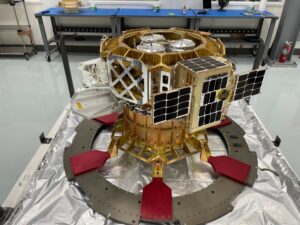
A Sherpa tug launched a month ago is still undergoing commissioning and has yet to start maneuvers as its orbit gradually decays.
The post Sherpa tug starts raising orbit more than a month after launch appeared first on SpaceNews.
China sends two satellites into space via offshore rocket launch
 China successfully launched two test satellites from a launch platform in the Yellow Sea on Friday.
The CentiSpace-S5/S6 test satellites with LEO satellite navigation enhancement system were lifted off by a Long March-11 carrier rocket at 09:10 pm (Beijing Time) and they have entered the planned orbit successfully.
The satellites will be used to monitor the performance of the global
China successfully launched two test satellites from a launch platform in the Yellow Sea on Friday.
The CentiSpace-S5/S6 test satellites with LEO satellite navigation enhancement system were lifted off by a Long March-11 carrier rocket at 09:10 pm (Beijing Time) and they have entered the planned orbit successfully.
The satellites will be used to monitor the performance of the global Mengtian space lab fueled ahead of upcoming launch
 Propellant injection work on the Mengtian space lab, the second lab component of China's Tiangong space station, was conducted on Monday morning at the Wenchang Space Launch Center in Hainan province, according to the China Manned Space Agency.
The agency said in a news release that the lab module has undergone ground tests at the center and will undergo checks of its functions along with
Propellant injection work on the Mengtian space lab, the second lab component of China's Tiangong space station, was conducted on Monday morning at the Wenchang Space Launch Center in Hainan province, according to the China Manned Space Agency.
The agency said in a news release that the lab module has undergone ground tests at the center and will undergo checks of its functions along with