Europe’s space industry gathers at ESA

ESA welcomed a record 1700 visitors from 800 companies and institutions to its Industry Space Days event on 28–29 September at ESTEC, its technical centre in The Netherlands. It is a place where industry can meet and share their ideas for new emerging uses of space and commercial potential.
Space Force studying requirements for cislunar space domain awareness
The Space Force expects to know by next spring what capabilities it will need to carry out space domain awareness activities in cislunar space.
The post Space Force studying requirements for cislunar space domain awareness appeared first on SpaceNews.
South Korea seeks $32.9 million to launch satellites grounded by Russia sanctions
SEOUL, South Korea — South Korea’s science ministry plans to set aside 47.2 billion won ($32.9 million) in next year’s budget to launch two satellites that have been left grounded because of Western sanctions on Russia over the war in Ukraine.
NASA and SpaceX to study possible private Hubble servicing mission
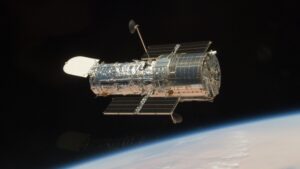
NASA and SpaceX announced Sept. 29 they will study a concept to send a Crew Dragon spacecraft to reboost, and possibly service, the Hubble Space Telescope to extend its life.
The post NASA and SpaceX to study possible private Hubble servicing mission appeared first on SpaceNews.
Venus: The trouble with sending people there
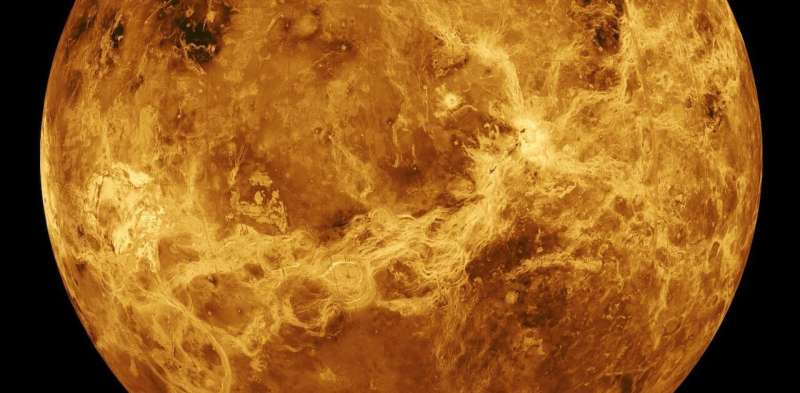
Venus, often called Earth's "evil twin" planet, formed closer to the sun and has since evolved quite differently from our own planet. It has a "runaway" greenhouse effect (meaning heat is completely trapped), a thick carbon-dioxide-rich atmosphere, no magnetic field and a surface hot enough to melt lead.
Several uncrewed scientific missions will study how and why that happened in the next decade. But now some scientists want to send a crewed mission there as well for a flyby. Is that a good idea?
With a slightly smaller diameter than Earth, Venus orbits closer to the sun. This means that any water on the surface would have evaporated shortly after its formation, starting its greenhouse effect. Early and sustained volcanic eruptions created lava plains and increased the carbon dioxide in the atmosphere—starting the runaway greenhouse effect, which increased the temperature from just a little higher than Earth's to its current high value of 475°C.
While the Venus year is shorter than ours (225 days), its rotation is very slow (243 days) and "retrograde"—the other way round to Earth. The slow rotation is related to a lack of magnetic field, resulting in a continuing loss of atmosphere.
Week in images: 26-30 September 2022
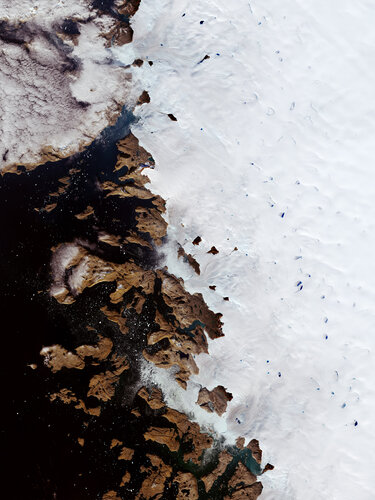
Week in images: 26-30 September 2022
Discover our week through the lens
Tents for Industry Space Days
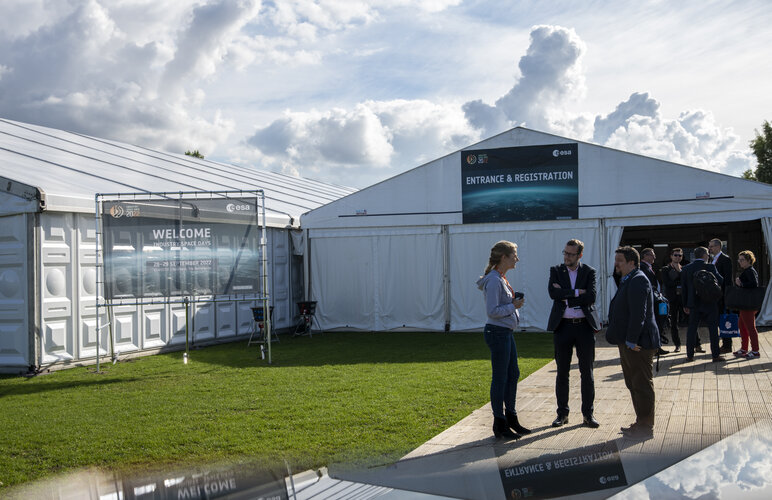 Image:
Tents for Industry Space Days
Image:
Tents for Industry Space Days Space surveillance telescope developed by the U.S. begins operations in Australia
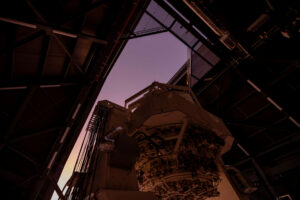
The Space Surveillance Telescope, declared operational Sept. 30, will join the network of sensors used by the United States, Australia and other allies to track objects in orbit
National Space Council to seek industry input on future regulatory framework
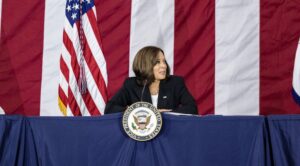
The National Space Council plans to hold “learning sessions” with industry in coming weeks on how to develop a new regulatory framework for novel commercial space activities.
The post National Space Council to seek industry input on future regulatory framework appeared first on SpaceNews.
Office of Space Commerce: FCC “aggressively” pushing limits of authority with orbital debris rule
The FCC’s adoption of a new rule for disposal of low Earth orbit satellites is well-intentioned but pushing the limits of its authority, says the director of the Office of Space Commerce.
The post Office of Space Commerce: FCC “aggressively” pushing limits of authority with orbital debris rule appeared first on SpaceNews.