

Startups raise millions for lunar rovers and asteroid mining
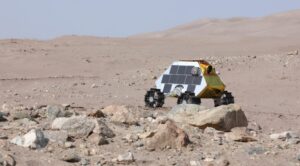
Two startups recently raised a combined $25 million in seed rounds to advance plans for lunar and asteroid missions, showing continued interest in space startups despite broader market uncertainty.
The post Startups raise millions for lunar rovers and asteroid mining appeared first on SpaceNews.
ESA conducts first tests of exoplanet hunter Plato in space-like conditions
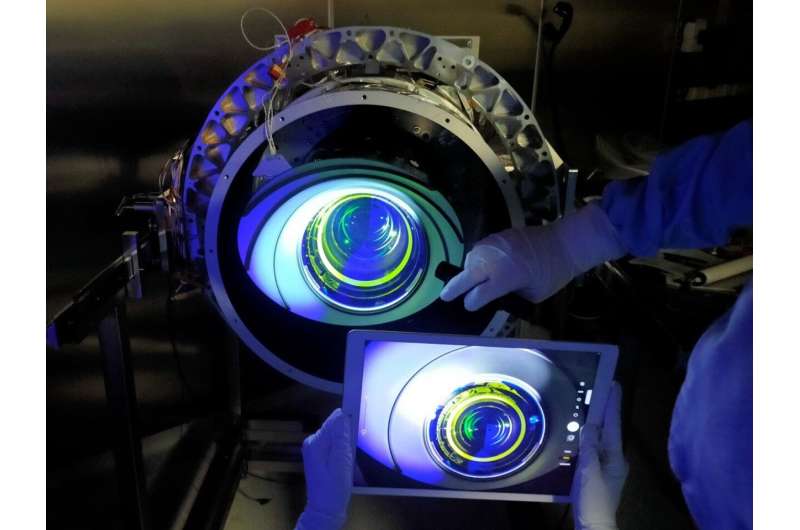
Euclid gains solar power and protection
 Video:
00:02:54
Video:
00:02:54
Spacecraft are not so different to humans – whilst the Sun can be a great source of vital energy, both people and machines must also be protected from its harmful effects.
In this video, engineers at Thales Alenia Space in Turin are attaching a combined sunshield and solar panel module to the main body of ESA’s Euclid spacecraft. This process took place on 23 May 2022 and lasted an entire day.
The module has two functions: whilst the solar panels will provide the spacecraft with power, the sunshield will shade the instrument-carrying payload module from
Arianespace narrows Vega C and Ariane 6 maiden flight windows

Arianespace plans to conduct the maiden flight of Vega C and Ariane 6 rockets in “the first week of July” and “towards the end of the year,” respectively, a senior executive said June 1.
Avio Q&A: Powering the growth trajectory
SpaceNews interviews Avio CEO Giulio Ranzo as the rocket maker is just weeks away from Vega C’s debut. Avio is also ramping up production of boosters to meet Amazon’s colossal Ariane 6 order, and could potentially accelerate the development of the next-generation Vega E as Russia’s war in Ukraine threatens suppliers.
NASA eyes November for launch of NOAA's JPSS-2
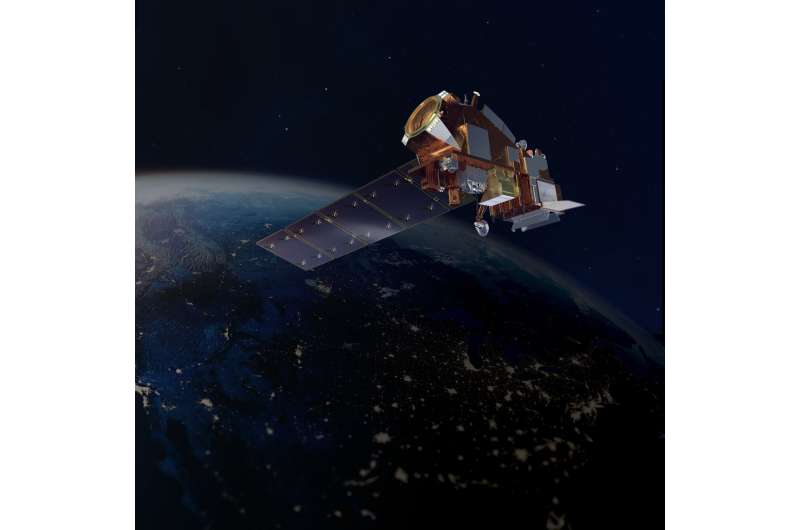
NASA and the National Oceanic and Atmospheric Administration (NOAA) are now targeting Nov. 1, 2022, as the new launch date for NOAA's Joint Polar Satellite System-2 (JPSS-2) satellite mission. During recent tests of a key instrument designed to collect visible and infrared images, the team found and corrected an issue, which resulted in additional time needed to complete thermal vacuum testing.
The Visible Infrared Imaging Radiometer Suite instrument, or VIIRS, experienced a test equipment issue during thermal vacuum testing. Engineers determined the issue was the result of the movement of test equipment caused by temperature fluctuations during the test. After modifying the test set up, the team retested the system, and it demonstrated excellent performance.
JPSS-2, the third satellite in the Joint Polar Satellite System series, is scheduled to lift off from the Vandenberg Space Force Base in California, on a United Launch Alliance (ULA) Atlas V rocket.
Looking ahead to Webb’s first images
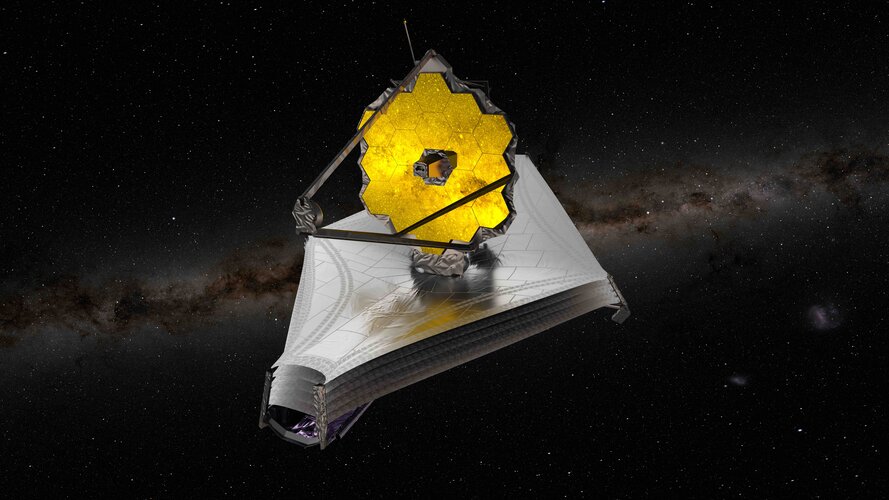
The NASA/ESA/CSA James Webb Space Telescope will release its first full-colour images and spectroscopic data on 12 July 2022.
Analysts: NRO contracts will have long-term ripple effects on satellite imagery industry
The contracts recently awarded by the National Reconnaissance Office to BlackSky, Maxar Technologies and Planet Labs will likely reshape the imagery market, says a new report from Quilty Analytics.
The post Analysts: NRO contracts will have long-term ripple effects on satellite imagery industry appeared first on SpaceNews.
NASA awards two contracts for next generation spacesuits
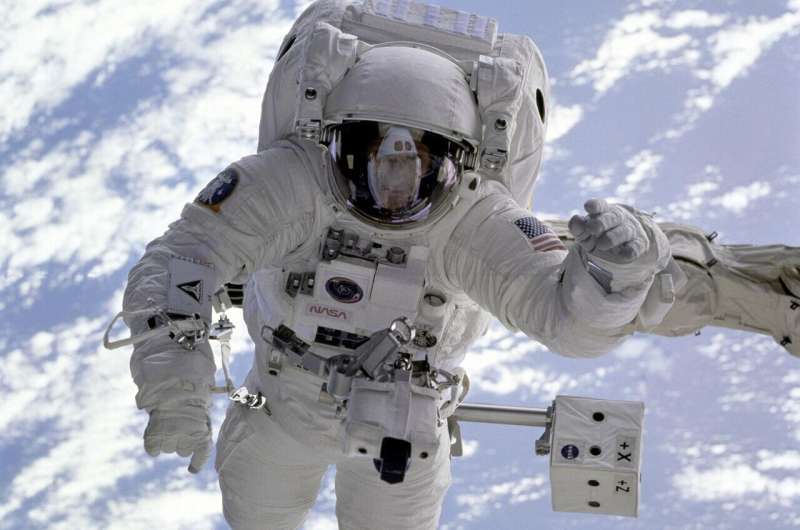
NASA on Wednesday announced it has awarded contracts to two companies to develop the next generation of spacesuits for missions to the International Space Station and the Moon.
The winners of the Extravehicular Activity Services (xEVAS) Contract were Axiom Space—which has organized commercial flights to the ISS and is working on its own private space station—and Collins Aerospace.
"History will be made with the suits when we get to the Moon. We will have our first person of color and our first woman that will be wearers and users of these suits in space," Vanessa Wyche, director of NASA Johnson Space Center in Houston told reporters.
The values of the contracts have not yet been announced but they have a combined ceiling of $3.5 billion through 2034.
NASA could end up picking both companies, just one, or add more companies later.
Experts at the US space agency laid out the technical standards they required of the suits, with the companies responsible for designing, certifying and producing the suits as well as support equipment for both the ISS and the Artemis missions to return to the Moon.
Did NASA find Hell? Scientists brace for first glimpse of world that constantly burns
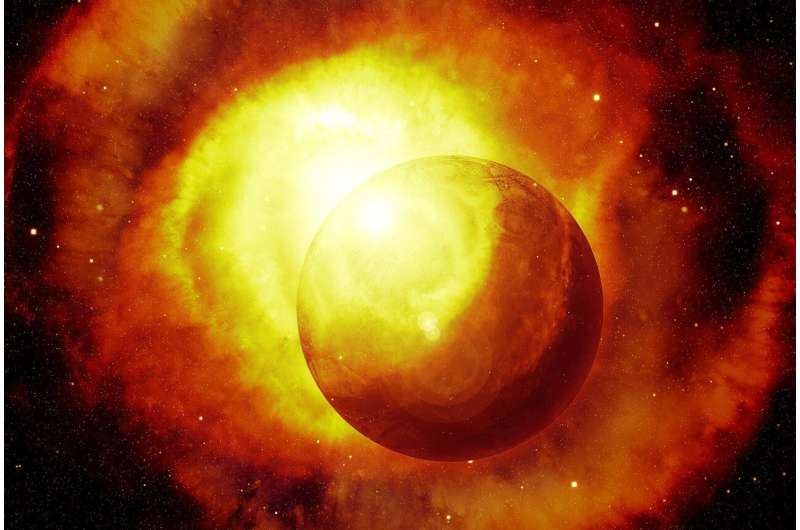
Mankind's first look at conditions on a "super-Earth" 50 light years away is expected in coming weeks via the James Webb Space Telescope, and NASA is bracing to see the stuff of nightmares.
The planet, called 55 Cancri e, orbits so close to "its Sun-like star" that surface conditions could literally be like the Hell of biblical description: a dimension in a constant state of burning.
Data show 55 Cancri e is less than 1.5 million miles from its star—1/25 the distance super hot Mercury is from our sun, NASA says.
"With surface temperatures far above the melting point of typical rock-forming minerals, the day side of the planet is thought to be covered in oceans of lava," NASA reported last week.
"Imagine if Earth were much, much closer to the Sun. So close that an entire year lasts only a few hours. So close that gravity has locked one hemisphere in permanent searing daylight and the other in endless darkness. So close that the oceans boil away, rocks begin to melt, and the clouds rain lava."
Nothing like it exists in our solar system, NASA says.


