

Experiments measure freezing point of extraterrestrial oceans to aid search for life
 Researchers from the University of Washington and the University of California, Berkeley have conducted experiments that measured the physical limits for the existence of liquid water in icy extraterrestrial worlds. This blend of geoscience and engineering was done to aid in the search for extraterrestrial life and the upcoming robotic exploration of oceans on moons of other planets.
The r
Researchers from the University of Washington and the University of California, Berkeley have conducted experiments that measured the physical limits for the existence of liquid water in icy extraterrestrial worlds. This blend of geoscience and engineering was done to aid in the search for extraterrestrial life and the upcoming robotic exploration of oceans on moons of other planets.
The r How space is connecting cars
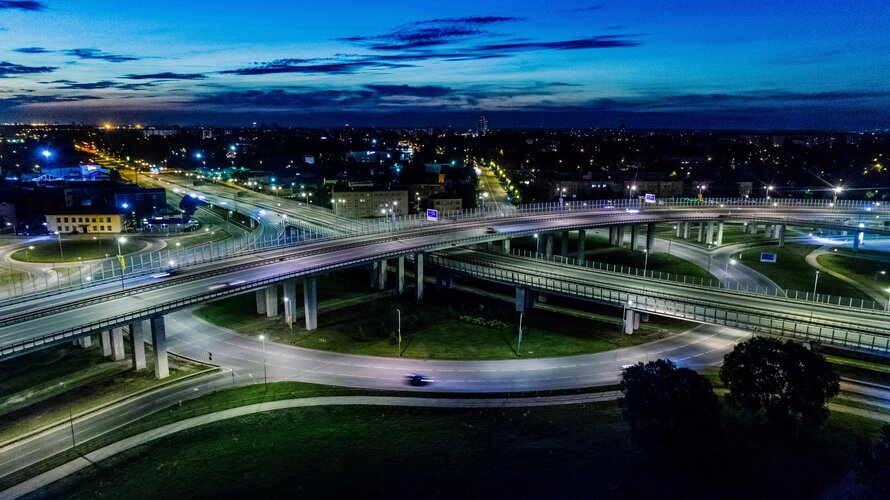
Today’s connected cars are dynamic, updateable devices – and, because they can be updated, they are well equipped to become tomorrow’s cars. ESA is working with European carmakers to ensure that connected vehicles harness the full potential of space.
Momentus receives approvals for first tug launch
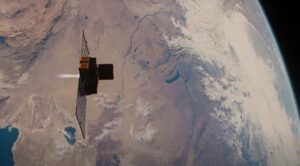
In-space transportation company Momentus has secured all the regulatory approvals for its first mission, set to launch later this month.
The post Momentus receives approvals for first tug launch appeared first on SpaceNews.
MIRI’s sharper view hints at new possibilities for science
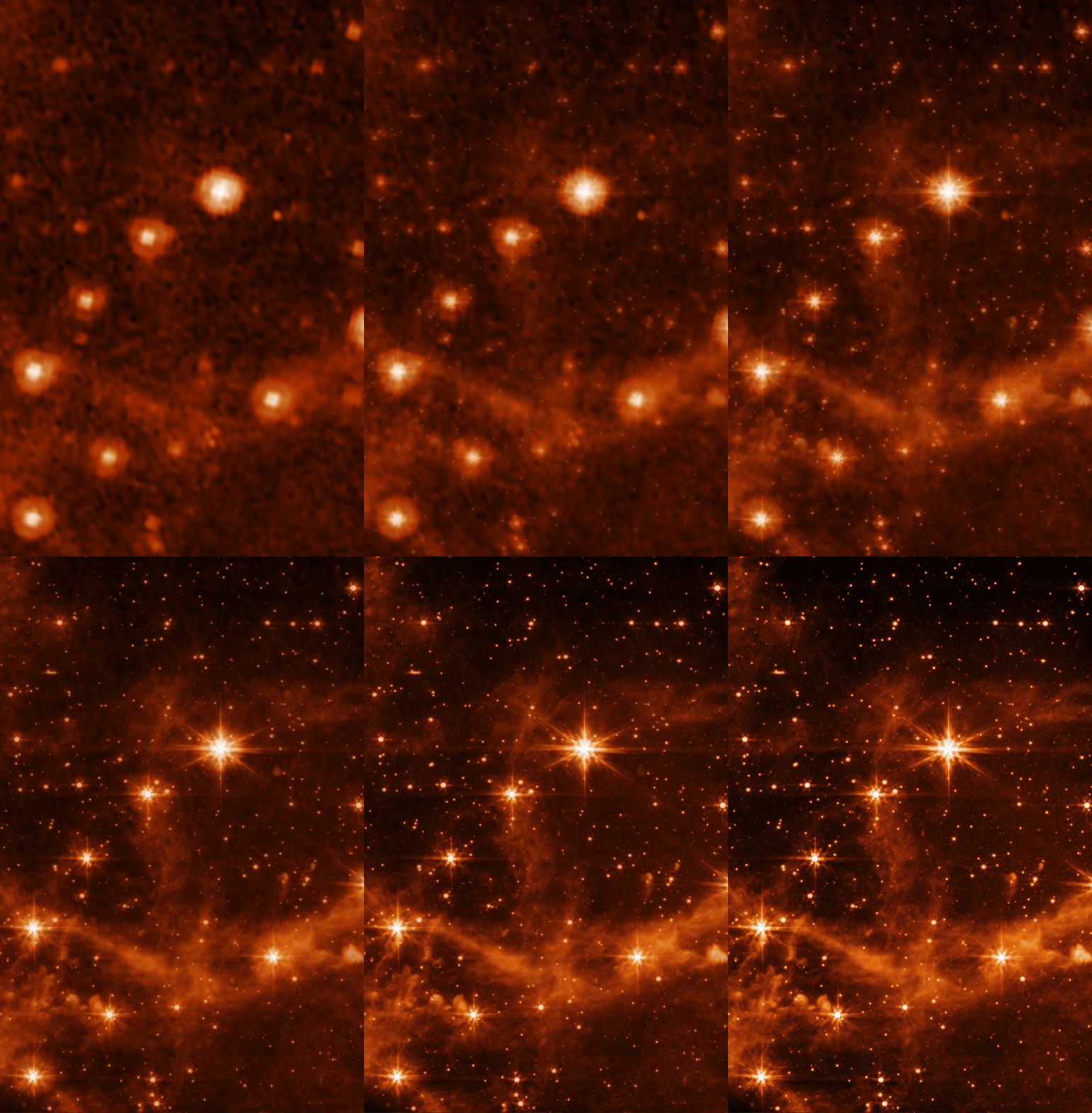 Image:
Click here to download the images used in this gif.
The James Webb Space Telescope is aligned across all four of its science instruments, as seen in a previous engineering image showing the observatory’s full field of view. Now, we take a closer look at that same image, focusing on Webb’s coldest instrument: the Mid-Infrared Instrument, or MIRI.
The MIRI test image (at 7.7 microns) shows part of the Large Magellanic Cloud. This small satellite galaxy of the Milky Way provided a dense star field to test Webb’s performance.
Here, a close-up of the MIRI image is compared
Last chance to register for ESA’s Living Planet Symposium
ESA’s Living Planet Symposium is fast approaching. Taking place on 23–27 May in Bonn, Germany, the symposium gives you the opportunity to network with the most eminent scientists in the field of Earth science, learn more about Earth science and innovative concepts such as New Space and, if you’re lucky, rub elbows with a few ESA astronauts.
This is your last chance to register to one of the largest Earth observation conferences in the world!
MIRI and Spitzer comparison image
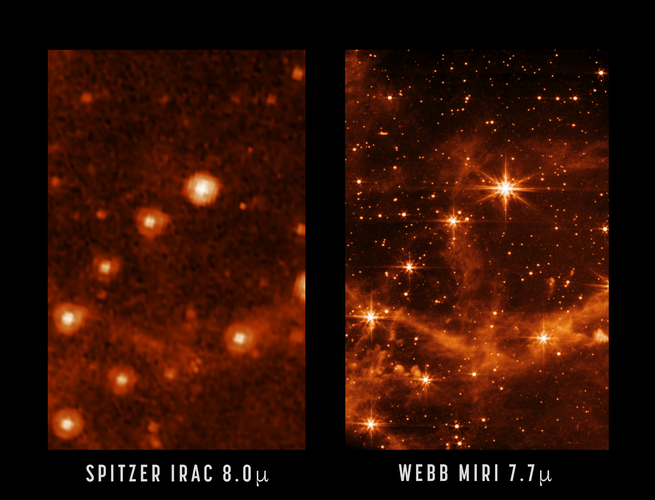 Image:
Click here to download the gif.
The James Webb Space Telescope is aligned across all four of its science instruments, as seen in a previous engineering image showing the observatory’s full field of view. Now, we take a closer look at that same image, focusing on Webb’s coldest instrument: the Mid-Infrared Instrument, or MIRI.
The MIRI test image (at 7.7 microns) shows part of the Large Magellanic Cloud. This small satellite galaxy of the Milky Way provided a dense star field to test Webb’s performance.
Here, a close-up of the MIRI image is compared to a past image
South Korea’s new president seeks independent space agency, deeper US space cooperation

South Korea’s newly elected president Yoon Suk-yeol will take office May 10 with a set of ambitious space projects aimed at making the country a major space power by 2035.
The post South Korea’s new president seeks independent space agency, deeper US space cooperation appeared first on SpaceNews.
Op-ed | A comprehensive triad for space resilience – more than just numbers
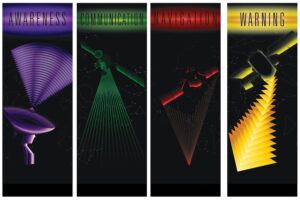
To meet the threat to U.S. space systems, DoD needs to broaden its approach to resilience to fully embrace reconstitution.
The post Op-ed | A comprehensive triad for space resilience – more than just numbers appeared first on SpaceNews.
CACI to launch experimental satellite to demonstrate alternative to GPS navigation
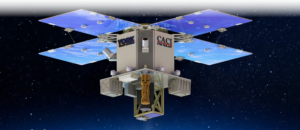
CACI International is funding an experiment to demonstrate space technologies for military use, including an alternative to GPS navigation.
The post CACI to launch experimental satellite to demonstrate alternative to GPS navigation appeared first on SpaceNews.
What does micrometeoroid damage do to gossamer structures like Webb's sunshield?
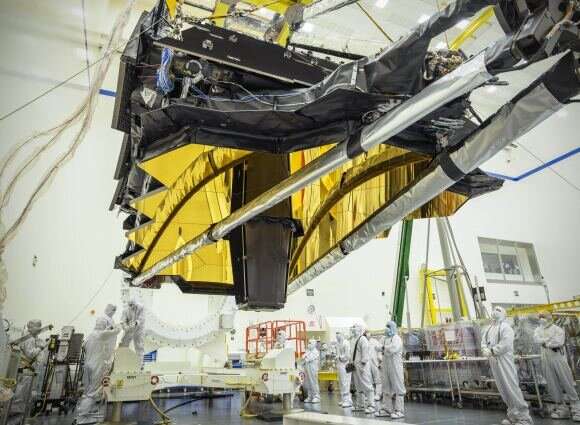
Tiny little bullets flood the solar system, each micrometeoroid a potential hazard. New research has found that the James Webb Space Telescope's thin sunshields, and future inflatable spacecraft, may be at risk.
A micrometeoroid is a tiny bit of space junk usually weighing less than a gram. Some of them are the leftover bits of the countless collisions that have occurred over the past 4.5 billion years of the history of the solar system. Most, however, come from the dust cloud that initially collapsed to form our solar system, and never got to be a part of a larger body.


