

A research study analyzes the characteristics of Apophis, the asteroid that will approach Earth in 2029
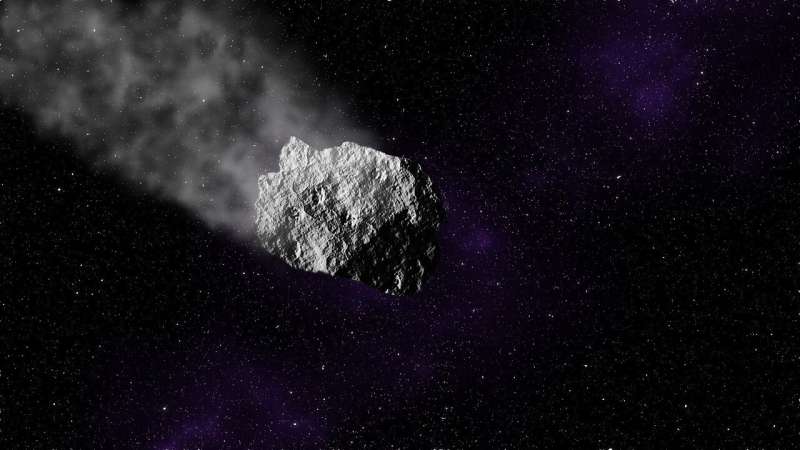
The study, in which the Universidad Carlos III de Madrid (UC3M) and the Universidad Estatal Paulista Júlio de Mesquita Filho (Júlio de Mesquita Filho Paulista State University) (UNESP) of Brazil are participating, analyzes the surface and dynamics of Apophis, an asteroid that will pass close to Earth in 2029.
The Apophis asteroid was discovered in 2004 and has been monitored since then due to its classification as a potentially hazardous asteroid (PHA), as it was estimated that it would have a 2% chance of hitting Earth. This possibility has already been ruled out and, according to the latest measurements, Apophis will reach its closest trajectory to Earth (38,000 kilometers) on the 13th of April, 2029.
This study analyzes the physical characteristics of this celestial body and the possible effects that its approach to Earth may have. Gabriel Borderes-Motta, a researcher at UC3M's Department of Bioengineering and Aerospace Engineering, explains that "collision is not the only possibility in approach events like this one. The gravitational interaction between a planet and a body such as Apophis can change the shape of the body, break the body into pieces, disintegrate possible loose stones on the asteroid's surface, or even remove other bodies orbiting the asteroid (such as rocks, satellites, or rings).
Video: What are the Trojan asteroids?
Use this form if you have come across a typo, inaccuracy or would like to send an edit request for the content on this page. For general inquiries, please use our contact form. For general feedback, use the public comments section below (please adhere to guidelines).
Please select the most appropriate category to facilitate processing of your request
Satellite supply chains coming under increasing scrutiny

Changes in the geopolitical landscape following Russia’s war in Ukraine are pushing space companies to tighten international supply chains amid a renewed focus on security.
The post Satellite supply chains coming under increasing scrutiny appeared first on SpaceNews.
Swarm launched satellites on Astra mission
Swarm Technologies was the unidentified customer of an Astra Space launch this month that placed 16 of its tiny satellites into orbit.
The post Swarm launched satellites on Astra mission appeared first on SpaceNews.
U.S. government urged to address supply risks in the space sector

As space becomes increasingly important to military operations, DoD should address supply risks in the space sector given the volatility of the market, experts said.
The post U.S. government urged to address supply risks in the space sector appeared first on SpaceNews.
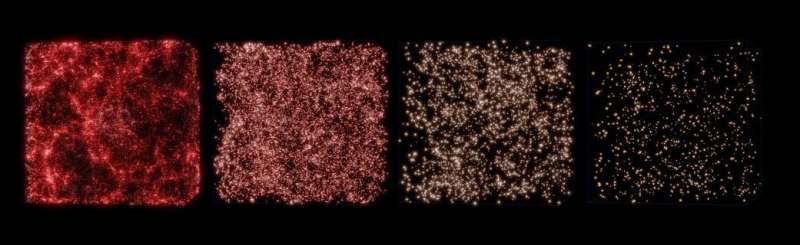
NASA's Roman mission will test competing cosmic acceleration theories
Former Momentus executive Fred Kennedy to lead startup focused on nuclear-powered rocket engines

Fred Kennedy, a former Pentagon official and veteran space executive, announced March 22 he is leading a new startup to commercialize nuclear thermal rocket propulsion.
The post Former Momentus executive Fred Kennedy to lead startup focused on nuclear-powered rocket engines appeared first on SpaceNews.
MTG-I weather satellite passes tests in preparation for liftoff
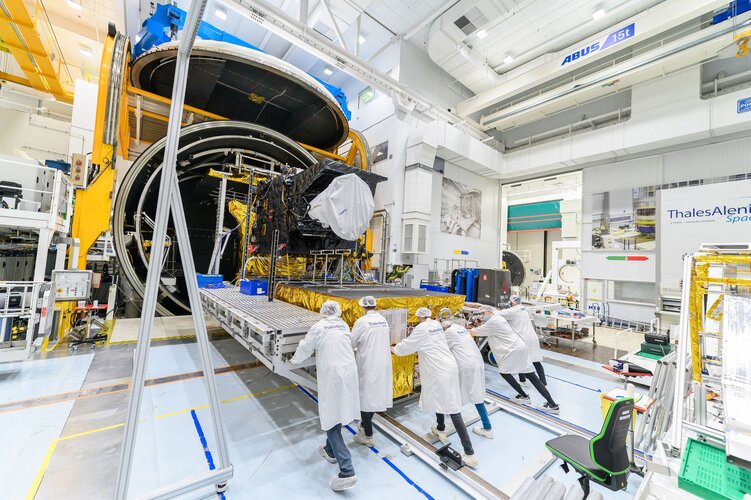
With extreme weather events threatening to be more frequent and more severe as the climate crisis takes grip, it’s never been more important to have fast and accurate forecasts. ESA and Eumetsat are working hard to ensure that there will be a constant stream of weather data from space for the next decades and that these data will arrive faster and be more accurate compared to what we have today. It is therefore fitting that on World Meteorological Day, ESA can be assured that the first of the next generation weather satellites, Meteosat Third Generation
Rocket Lab to Launch Three Demonstration Satellites for E-Space
 Rocket Lab USA (Nasdaq: RKLB) will launch three demonstration satellites for E-Space, to validate the systems and technology for its satellite system. The satellites are scheduled to fly as part of a rideshare mission on Rocket Lab's Electron launch vehicle from Launch Complex 1 Pad A on New Zealand's Mahia Peninsula expected in the second quarter of 2022.
E-Space aims to reduce the launch
Rocket Lab USA (Nasdaq: RKLB) will launch three demonstration satellites for E-Space, to validate the systems and technology for its satellite system. The satellites are scheduled to fly as part of a rideshare mission on Rocket Lab's Electron launch vehicle from Launch Complex 1 Pad A on New Zealand's Mahia Peninsula expected in the second quarter of 2022.
E-Space aims to reduce the launch Mini robots practise grasping space debris
 A challenging feat for a little robot: Honey the Astrobee must grasp and transport Bumble the Astrobee. To pull it off, Honey needs to understand Bumble's trajectory, position itself correctly and avoid a collision at all costs. Artificial intelligence (AI) helps the cube-shaped robot to accurately assess the situation. The experiment is part of the TumbleDock/ROAM project, which the German Aero


