

Watch live: first space steps for Matthias
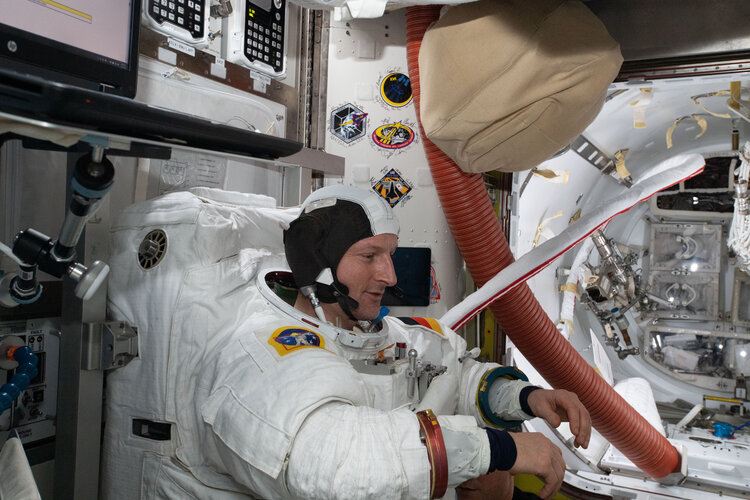
Tune in to ESA Web TV channel 2 from 12:30 CET (11:30 GMT) this Wednesday 23 March to watch ESA astronaut Matthias Maurer’s first spacewalk, known as US EVA 80, live from the International Space Station.
SES to acquire Leonardo DRS satcom business for $450 million

Leonardo DRS, a provider of satellite communications services to the U.S. government, announced March 22 it is selling its satcom business to satellite operator SES in a $450 million deal.
The post SES to acquire Leonardo DRS satcom business for $450 million appeared first on SpaceNews.
Micro-geostationary satellite enters design phase

A small but powerful European telecommunications satellite – the first of a series – is to be developed under a contract signed between ESA and SWISSto12, an innovative company based in Renens, Switzerland.
On National Security | DoD’s internet-in-space a win for commercial space
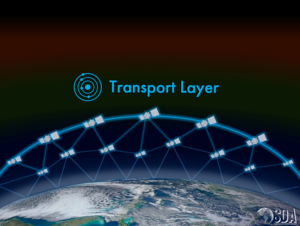
The Space Development Agency is overseeing the Defense Department’s first major procurement of small satellites in low Earth orbit, a trend that has accelerated in the commercial industry as companies plan ever-larger megaconstellations.
The post On National Security | DoD’s internet-in-space a win for commercial space appeared first on SpaceNews.
Space-grown lettuce could help astronauts avoid bone loss

NASA is preparing to send humans to Mars sometime in the 2030s. The 3-year mission will expose astronauts to a long period of microgravity, which will cause them to lose bone mass. But now, scientists report transgenic lettuce that produces a bone-stimulating hormone. Someday, astronauts could grow the lettuce in space and help guard against bone loss—simply by eating a big bowl of salad. In addition, the lettuce might help stave off osteoporosis in resource-limited areas here on Earth, the researchers say.
The researchers will present their results today at the spring meeting of the American Chemical Society (ACS).
Previous studies of astronauts on extended space missions have shown that they lose, on average, more than 1% of bone mass per month spent in space, a condition known as osteopenia.
Turn your phone into a space monitoring tool
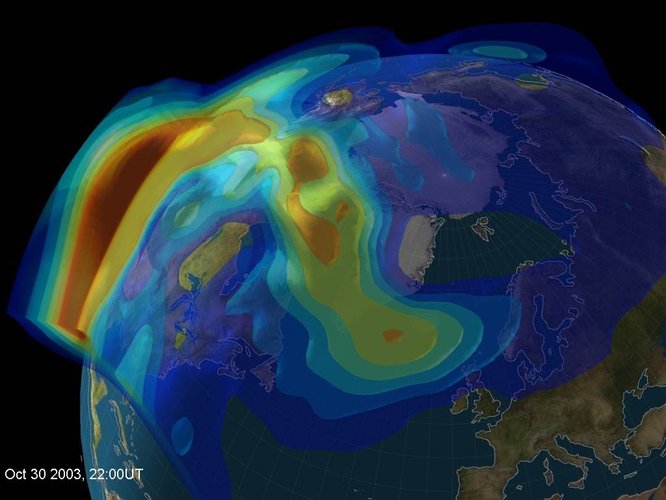
A newly released Android app will turn your smartphone into an instrument for crowdsourced science. Leave it by your window each night with your satnav positioning turned on and your phone will record small variations in satellite signals, gathering data for machine learning analysis of meteorology and space weather patterns.
Satellite navigation signals help map sea surface shape
 Video:
00:05:00
Video:
00:05:00
Monitoring the constantly changing shape of the sea surface is important for scientific and societal applications such as ocean current forecasting, climate research, ship routing, cable laying, and debris tracking.
A project supported by the Discovery element of ESA’s Basic Activities recently investigated a new technique to measure sea surface topography very precisely. The project was based on an idea submitted by the Institute for Space Studies of Catalonia (IEEC) through the Open Space Innovation Platform (OSIP) – ESA’s place for your space ideas.
The technique involves looking at satellite navigation (GNSS) signals that have been reflected off of
Settle the TRAPPIST exoplanets: challenge for evolutionary computing

It reads like a work of science fiction: software that mates, reproduces and mutates being deployed to plan the exploration and settlement of the exotic TRAPPIST-1 solar system, around 40 light years away from Earth. In fact this is the latest competition conceived by ESA’s Advanced Concepts Team, this time seeking to challenge the worldwide evolutionary computing community.
GEO operators say they can compete against LEO systems on cost
Despite all the investment in low Earth orbit broadband megaconstellations, operators of geostationary satellites argue they can offer more cost-effective services.
The post GEO operators say they can compete against LEO systems on cost appeared first on SpaceNews.
Telstra to build teleports for OneWeb constellation

Australian communications company Telstra announced plans March 22 to build and maintain three dedicated teleports to provide satellite gateway services in the Southern Hemisphere for OneWeb’s broadband constellation.
The post Telstra to build teleports for OneWeb constellation appeared first on SpaceNews.


