

MDA retires space tracking and surveillance system after 12 years, thousands of missions
 The Missile Defense Agency (MDA) retired two Space Tracking and Surveillance System (STSS) demonstration satellites on March 8, 2022, ending an extraordinarily successful experiment that demonstrated that a space layer can significantly enhance the Missile Defense System (MDS).
On September 25, 2009 from Cape Canaveral Air Force Station in Florida, MDA, NASA, and the Air Force launched the
The Missile Defense Agency (MDA) retired two Space Tracking and Surveillance System (STSS) demonstration satellites on March 8, 2022, ending an extraordinarily successful experiment that demonstrated that a space layer can significantly enhance the Missile Defense System (MDS).
On September 25, 2009 from Cape Canaveral Air Force Station in Florida, MDA, NASA, and the Air Force launched the Ukrainian space industry players continue work, eye European projects amid war

While Russia’s invasion of Ukraine continues to impact the Ukrainian space sector, senior industry representatives say that local companies have so far managed to adapt their activities to the realities of war, and they are determined to advance joint projects with their European partners.
NASA ready to roll out SLS

NASA is ready to roll out the first Space Launch System rocket this week for a countdown rehearsal ahead of a launch later this year.
The post NASA ready to roll out SLS appeared first on SpaceNews.
Space station operations remain normal despite geopolitical tensions

Russia’s invasion of Ukraine has not affected operations of the International Space Station or plans for a NASA astronaut to return home on a Soyuz spacecraft late this month, according to agency officials.
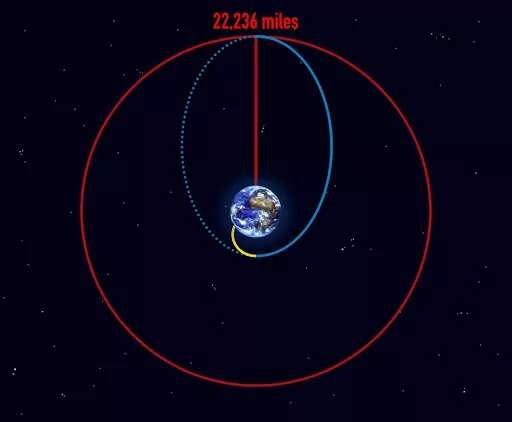
NOAA's GOES-T reaches geostationary orbit, now designated GOES-18
Kymeta secures $84 million to scale up antenna production

Antenna maker Kymeta said March 15 it has raised $84 million to expand manufacturing facilities ahead of deploying its first flat panel, electronically steered user terminals for low Earth orbit (LEO) satellites this year.
Launching robots into lunar caves

A hundred meters below the surface of the moon lie caves untouched by humans. They were discovered about ten years ago, but space agencies want to send robots to investigate these mysterious cavities before astronauts venture in. "On the moon's surface, the temperature is 150 degrees above zero during the day and 150 degrees below zero at night," says Lucas Froissart, who recently completed a Master's degree in mechanical engineering at EPFL. "In these subterranean caves, which can be reached through natural, vertical pits, the temperature is -30 degrees and there's no radiation. Since the climate is constant and tolerable for human beings, these tunnels could conceivably serve as base camps."
Round robots
During his Master's program, Froissart landed an internship at the Japan Aerospace Exploration Agency (JAXA). Because of the pandemic, however, he couldn't go to Tokyo. He ended up doing his internship work in Professor Auke Ijspeert's lab, collaborating with his Japanese colleagues by video conference.
DoD estimates $2.5 billion price tag for global constellation to track hypersonic missiles
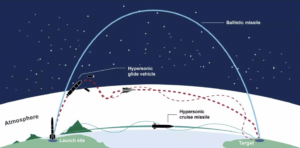
A $550 million congressional add-on in 2022 would only be a down payment to kickstart the deployment of a 28-satellite constellation of infrared space sensors in low Earth orbit
The post DoD estimates $2.5 billion price tag for global constellation to track hypersonic missiles appeared first on SpaceNews.
Astra’s Rocket 3.3 returns to flight with successful launch
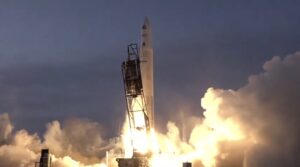
Astra successfully returned its Rocket 3.3 vehicle to flight March 15, placing several payloads into low Earth orbit.
The post Astra’s Rocket 3.3 returns to flight with successful launch appeared first on SpaceNews.
NASA system predicts impact of small asteroid
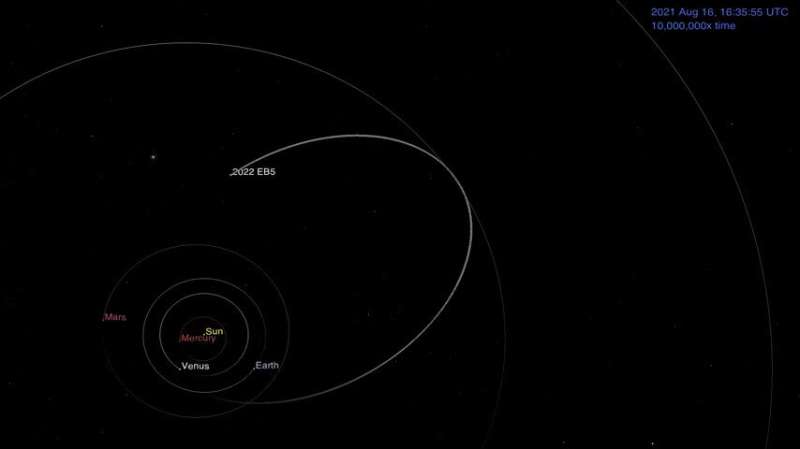
A small asteroid hit Earth's atmosphere over the Norwegian Sea before disintegrating on March 11, 2022. But this event wasn't a complete surprise: Astronomers knew it was on a collision course, predicting exactly where and when the impact would happen.
Two hours before the asteroid made impact, K. Sarneczky at the Piszkéstető Observatory in northern Hungary first reported observations of the small object to the Minor Planet Center—the internationally recognized clearinghouse for the position measurements of small celestial bodies. The object was posted on the Minor Planet Center's Near-Earth Object Confirmation Page to flag it for additional observations that would confirm it as a previously unknown asteroid.
NASA's "Scout" impact hazard assessment system then took these early measurements to calculate the trajectory of 2022 EB5. As soon as Scout determined that 2022 EB5 was going to hit Earth's atmosphere, the system alerted the Center for Near Earth Object Studies (CNEOS) and NASA's Planetary Defense Coordination Office, and flagged the object on the Scout webpage to notify the near-Earth object observing community. Maintained by CNEOS at NASA's Jet Propulsion Laboratory in Southern California, Scout automatically searches the Minor Planet Center's database for possible new short-term impactors.


