Planet unveils Pelican Earth-imaging constellation
Planet unveiled “very high resolution” Pelican Earth-imaging satellites and announced plans to bring synthetic-aperture radar (SAR) into its Planet Fusion Monitoring data stream.
India’s PM vows broader public-private space cooperation as OneWeb eyes Indian launches
India's prime minister said Oct. 11 his government will widen cooperation with industry, young innovators and startups to bring about “exponential innovation” in the country’s space sector. OneWeb, meanwhile, signaled its intent to launch its satellites aboard Indian rockets.
UAE appoints new director-general of national space agency

The United Arab Emirates named Salem Butti Salem Al Qubaisi to replace the founding director-general of the UAE Space Agency.
Astra prepares for next launch after identifying cause of August launch failure
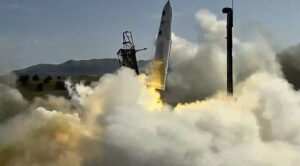
Small launch vehicle company Astra has identified the cause of an August launch failure and says it will make its next attempt as soon as late this month.
A new test facility for the new Vega E engine

On Tuesday October 5th Avio has inaugurated the Space Propulsion Test Facility at the Experimental Range for Joint Training of Salto di Quirra
NASA's Lucy spacecraft poised to launch Oct. 16
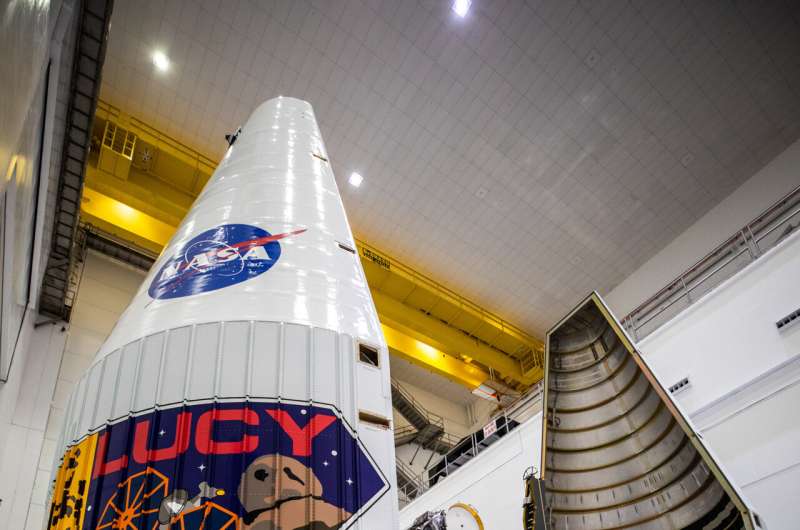
NASA's Lucy spacecraft is encapsulated in a protective fairing atop an Atlas V rocket, awaiting its 23-day launch window to open on October 16.
Brain injury after long-duration spaceflight
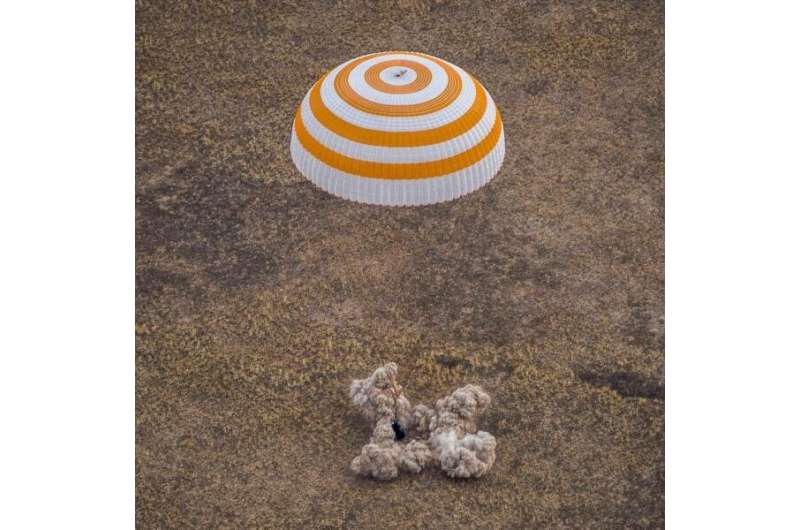
Spending long periods in space not only leads to muscle atrophy and reductions in bone density, it also seems to have lasting effects on the brain. Neuroimaging studies (amongst others from this LMU team of researchers) has hinted at this over the last three years. However, little is known if the observed brain-structural alterations are harmless or clinically relevant. LMU physicians Professor Peter zu Eulenburg and Professor Alexander Choukér together with renowned researchers from the University of Gothenburg (Sweden) and Russian colleagues have assessed the structural integrity of the human brain via blood-based markers in astronauts after return from a long-duration mission. The researchers could demonstrate with their pilot study published in JAMA Neurology that there are strong indications for brain injury and accelerated aging following a long-duration mission.
Space exploration should aim for peace, collaboration and co-operation, not war and competition
When the Soviet Union launched Sputnik 1 in 1957, it represented humanity's first significant foray into the cosmos. Our imagination was opened to the wonder and lure of space for human endeavor as science fiction suddenly became science fact.
A space arms race?
At the time, the prevailing Cold War mentality contributed to suspicion and fear about what it meant to be in space, and resulted in the military roots of space technology and applications. John F. Kennedy famously stated that "if the Soviets control space they can control the earth, as in past centuries the nation that controlled the seas dominated the continents."
The Space Race, as it would become known, was characterized by fierce competition between the Soviet Union and the United States to achieve space superiority.
Celebrate Virtual International Observe the Moon Night with NASA
 The public is invited to participate in several of NASA’s virtual activities in celebration of International Observe the Moon Night on Saturday, Oct. 16.
 National Reconnaissance Office releases solicitation for commercial space radar imagery
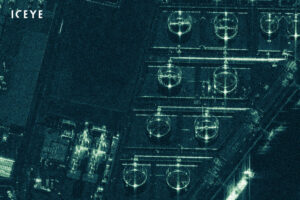
The National Reconnaissance Office on Oct. 12 published its first solicitation for commercial space radar imagery.