

Tuesday, 06 July 2021 08:11
Raytheon to develop Long Range Standoff nuclear missiles in $2B contract
Washington DC (UPI) Jul 2, 2021
 The Pentagon this week awarded Raytheon a contract worth up to $2 billion to develop a new nuclear cruise missile.
The contract, announced Thursday, calls for development of the new missiles through 2027, when a first flight could occur and a decision about production may be made.
The series of air-launched, Long-Range Standoff weapons would replace the Air Launched Cruise or AGM
The Pentagon this week awarded Raytheon a contract worth up to $2 billion to develop a new nuclear cruise missile.
The contract, announced Thursday, calls for development of the new missiles through 2027, when a first flight could occur and a decision about production may be made.
The series of air-launched, Long-Range Standoff weapons would replace the Air Launched Cruise or AGM
The Pentagon this week awarded Raytheon a contract worth up to $2 billion to develop a new nuclear cruise missile.
The contract, announced Thursday, calls for development of the new missiles through 2027, when a first flight could occur and a decision about production may be made.
The series of air-launched, Long-Range Standoff weapons would replace the Air Launched Cruise or AGM
Published in
News
Tuesday, 06 July 2021 08:11
Space Force selects first 50 transfers from Army, Navy, Marine Corps
Washington DC (UPI) Jun 30, 2021
 Fifty active-duty Army, Navy and Marine Corps personnel have been chosen to transfer to the U.S. Space Force and will join the branch in July, the Space Force said on Wednesday.
The group will test integration efforts to bring additional personnel into the new military branch, founded in 2019 with a mandate to deter aggression and protect the interests of the United States in space.
Fifty active-duty Army, Navy and Marine Corps personnel have been chosen to transfer to the U.S. Space Force and will join the branch in July, the Space Force said on Wednesday.
The group will test integration efforts to bring additional personnel into the new military branch, founded in 2019 with a mandate to deter aggression and protect the interests of the United States in space.
Fifty active-duty Army, Navy and Marine Corps personnel have been chosen to transfer to the U.S. Space Force and will join the branch in July, the Space Force said on Wednesday.
The group will test integration efforts to bring additional personnel into the new military branch, founded in 2019 with a mandate to deter aggression and protect the interests of the United States in space.
Published in
News
Tuesday, 06 July 2021 08:11
Britain to spend $4.8M developing inter-missile communication system
Washington DC (UPI) Jul 1, 2021
 Britain invested $4.8 million for smarter missile systems - allowing munitions to communicate and react quickly to changing threats - the British Ministry of Defense said on Thursday.
The contract was awarded to the Defense Science Technology Laboratory for the Co-operative Strike Weapons Technology Demonstrator, which the British government is charging with improving current systems
Britain invested $4.8 million for smarter missile systems - allowing munitions to communicate and react quickly to changing threats - the British Ministry of Defense said on Thursday.
The contract was awarded to the Defense Science Technology Laboratory for the Co-operative Strike Weapons Technology Demonstrator, which the British government is charging with improving current systems
Britain invested $4.8 million for smarter missile systems - allowing munitions to communicate and react quickly to changing threats - the British Ministry of Defense said on Thursday.
The contract was awarded to the Defense Science Technology Laboratory for the Co-operative Strike Weapons Technology Demonstrator, which the British government is charging with improving current systems
Published in
News
Tuesday, 06 July 2021 08:11
NASA rocket, satellite tag-team to view the giant electric current in the sky
Greenbelt MD (SPX) Jul 05, 2021
 Some 50 miles up, where Earth's atmosphere blends into space, the air itself hums with an electric current. Scientists call it the atmospheric dynamo, an Earth-sized electric generator. It's taken hundreds of years for scientists to lay the groundwork to understand it, but the principles that keep it running are only just now being revealed in detail.
Following up on its predecessor's 2013
Some 50 miles up, where Earth's atmosphere blends into space, the air itself hums with an electric current. Scientists call it the atmospheric dynamo, an Earth-sized electric generator. It's taken hundreds of years for scientists to lay the groundwork to understand it, but the principles that keep it running are only just now being revealed in detail.
Following up on its predecessor's 2013
Some 50 miles up, where Earth's atmosphere blends into space, the air itself hums with an electric current. Scientists call it the atmospheric dynamo, an Earth-sized electric generator. It's taken hundreds of years for scientists to lay the groundwork to understand it, but the principles that keep it running are only just now being revealed in detail.
Following up on its predecessor's 2013
Published in
News
Tuesday, 06 July 2021 08:11
Report that China building new ICBM silos 'concerning': US
Washington July 1, 2021
 The United States expressed concern on Thursday over a report that China is building more than 100 new silos for intercontinental ballistic missiles.
The Washington Post, citing a study of commercial satellite images by a California-based group, reported on Thursday that the silos were being built in a desert near the northwestern city of Yumen.
The James Martin Center for Nonproliferati
The United States expressed concern on Thursday over a report that China is building more than 100 new silos for intercontinental ballistic missiles.
The Washington Post, citing a study of commercial satellite images by a California-based group, reported on Thursday that the silos were being built in a desert near the northwestern city of Yumen.
The James Martin Center for Nonproliferati
The United States expressed concern on Thursday over a report that China is building more than 100 new silos for intercontinental ballistic missiles.
The Washington Post, citing a study of commercial satellite images by a California-based group, reported on Thursday that the silos were being built in a desert near the northwestern city of Yumen.
The James Martin Center for Nonproliferati
Published in
News
Tuesday, 06 July 2021 08:11
Visualizing quieter supersonic flight
Moffett Field CA (SPX) Jun 30, 2021
 NASA's X-59 Quiet SuperSonic Technology X-plane is designed to fly faster than the speed of sound without producing sonic booms - those loud, startling noises which can be disruptive to humans and animals.
Currently, commercial aircraft aren't allowed to fly faster than the speed of sound over land because of the objectionable sonic booms they cause for those on the ground.
This expe
NASA's X-59 Quiet SuperSonic Technology X-plane is designed to fly faster than the speed of sound without producing sonic booms - those loud, startling noises which can be disruptive to humans and animals.
Currently, commercial aircraft aren't allowed to fly faster than the speed of sound over land because of the objectionable sonic booms they cause for those on the ground.
This expe
NASA's X-59 Quiet SuperSonic Technology X-plane is designed to fly faster than the speed of sound without producing sonic booms - those loud, startling noises which can be disruptive to humans and animals.
Currently, commercial aircraft aren't allowed to fly faster than the speed of sound over land because of the objectionable sonic booms they cause for those on the ground.
This expe
Published in
News
Tuesday, 06 July 2021 08:11
Tactically Responsive Launch-2 payload launched into orbit
Livermore CA (SPX) Jul 05, 2021
 When the U.S. Space Force's Tactically Responsive Launch-2 (TacRL-2) mission launched from Vandenberg Space Force Base on June 13, it carried a payload designed and built in record time by Lawrence Livermore National Laboratory (LLNL).
LLNL provided a three-mirror reflective telescope and sensor for the payload, which they designed, integrated, tested and delivered within four months of th
When the U.S. Space Force's Tactically Responsive Launch-2 (TacRL-2) mission launched from Vandenberg Space Force Base on June 13, it carried a payload designed and built in record time by Lawrence Livermore National Laboratory (LLNL).
LLNL provided a three-mirror reflective telescope and sensor for the payload, which they designed, integrated, tested and delivered within four months of th
When the U.S. Space Force's Tactically Responsive Launch-2 (TacRL-2) mission launched from Vandenberg Space Force Base on June 13, it carried a payload designed and built in record time by Lawrence Livermore National Laboratory (LLNL).
LLNL provided a three-mirror reflective telescope and sensor for the payload, which they designed, integrated, tested and delivered within four months of th
Published in
News
Tuesday, 06 July 2021 08:11
Earth's cryosphere shrinking with every passing year
Washington DC (SPX) Jul 02, 2021
 The global cryosphere-all of the areas with frozen water on Earth-shrank by about 87,000 square kilometers (about 33,000 square miles), a area about the size of Lake Superior, per year on average, between 1979 and 2016 as a result of climate change, according to a new study. This research is the first to make a global estimate of the surface area of the Earth covered by sea ice, snow cover and f
The global cryosphere-all of the areas with frozen water on Earth-shrank by about 87,000 square kilometers (about 33,000 square miles), a area about the size of Lake Superior, per year on average, between 1979 and 2016 as a result of climate change, according to a new study. This research is the first to make a global estimate of the surface area of the Earth covered by sea ice, snow cover and f
Published in
News
Tuesday, 06 July 2021 10:26
JWST passes launch review
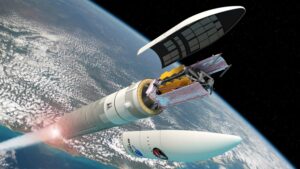
WASHINGTON — The James Webb Space Telescope is one step closer to launch after a review of its Ariane launch vehicle, while NASA continues a separate review of the name of the spacecraft itself.
Published in
News
Tuesday, 06 July 2021 08:00
Space Tugs as a Service: In-orbit service providers are bracing for consolidation
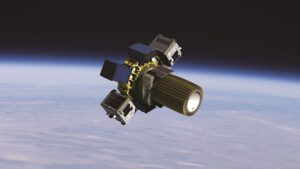
Orbital transfer and servicing providers are bracing for a space tug of war as they jostle for position in an increasingly crowded market.
Newcomers are flooding into a space tug industry that has only emerged in recent years, pushing their own ideas to give operators greater flexibility for deploying and maintaining satellites.
Published in
News


