

Leah Harris Joins SpaceNews as Marketing, Advertising Operations, and Audience Development Manager


China is taking a keen interest in lava tubes as possible lunar habitats


NASA charts path toward commercial services for Mars

Ensuring military resilience: spacecraft must integrate alternative PNT solutions

NASA scientific balloon takes flight with student-built payloads
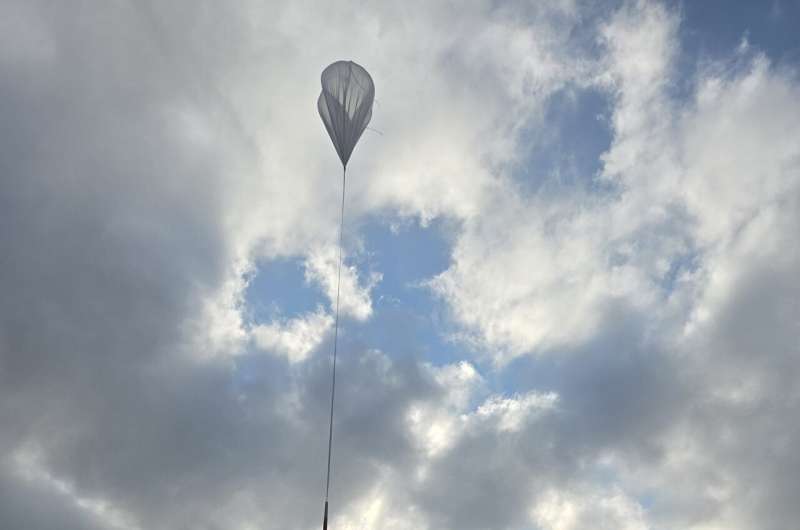
NASA's Scientific Balloon Program's fifth balloon mission of the 2024 fall campaign took flight Wednesday, Sept. 4, 2024, from the agency's Columbia Scientific Balloon Facility in Fort Sumner, New Mexico. The HASP 1.0 (High-Altitude Student Platform) mission remained in flight over 11 hours before it safely touched down. Recovery is underway.
HASP is a partnership among the Louisiana Space Grant Consortium, the Astrophysics Division of NASA's Science Mission Directorate, and the agency's Balloon Program Office and Columbia Scientific Balloon Facility. The HASP platform supports up to 12 student-built payloads and is designed to flight test compact satellites, prototypes, and other small experiments. Since 2006, HASP has engaged more than 1,600 undergraduate and graduate students involved in the missions.
Lynk Global shakes up leadership amid ongoing funding talks


U.S. GPS modernization faces delays, technical challenges: GAO report

Like a diamond in the sky: How to spot NASA's solar sail demo in orbit
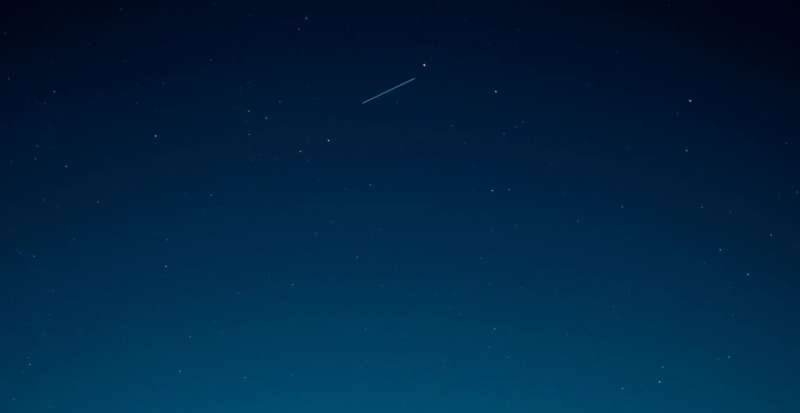
Now that its reflective sail has deployed fully open in orbit, the Advanced Composite Solar Sail System can be seen in the night sky from many locations across the world!
Stargazers can join NASA's #SpotTheSail campaign by using the NASA app on mobile platforms to find out when the spacecraft will be visible at their location. The app, which is free to use and available on iOS and Android, provides a location-specific schedule of upcoming sighting opportunities. A built-in augmented reality tool points users to the location of the spacecraft in real time.
Can you spot the solar sail? Share your viewing experience online using the hashtag #SpotTheSail for a chance to be featured on NASA's website and social media channels.
Artemis III landing sites identified using mapping and algorithm techniques
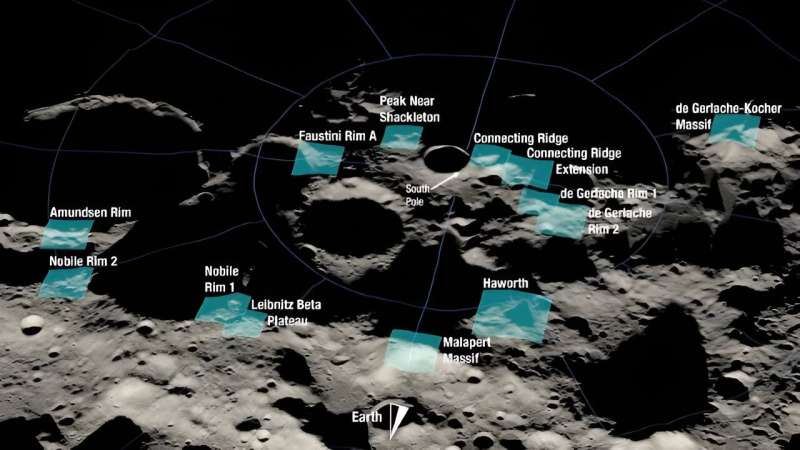
Where would be the most ideal landing site for the Artemis III crew in SpaceX's Human Landing System (HLS)? This is what a recent study submitted to Acta Astronautica, and available on the arXiv preprint server, hopes to address as an international team of scientists investigated plausible landing sites within the lunar south pole region, which comes after NASA selected 13 candidate landing regions in August 2022 and holds the potential to enable new methods in determining landing sites for future missions, as well.
Video: Cluster reentry explained—world's first targeted reentry
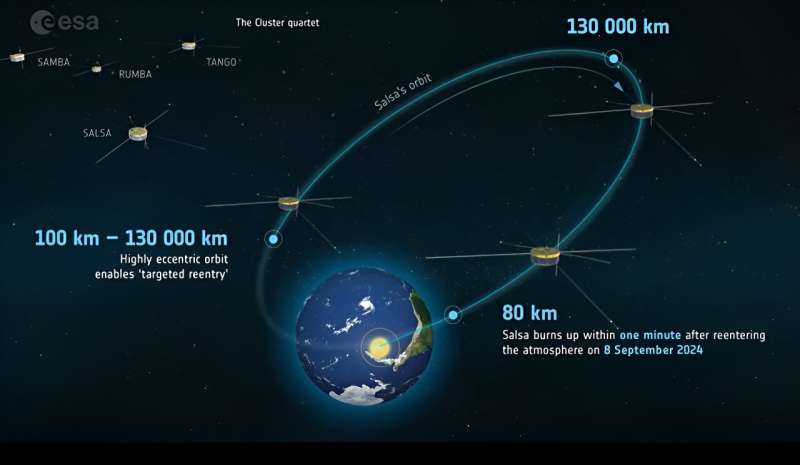
The first of four satellites that make up ESA's Cluster mission is coming safely back down to Earth, marking a brilliant end to this remarkable mission.
The satellite's orbit was tweaked back in January to target a region as far as possible from populated regions. This ensures that any spacecraft parts that survive the reentry will fall over open ocean.
During 24 years in space, Cluster has sent back precious data on how the sun interacts with Earth's magnetic field, helping us better understand and forecast potentially dangerous space weather.
With this first ever targeted reentry, Cluster goes down in history for a different reason, taking ESA well beyond international space safety standards and helping ensure the long-term sustainability of space activities.
Provided by European Space Agency


