
Australian startup develops quantum sensors for space applications
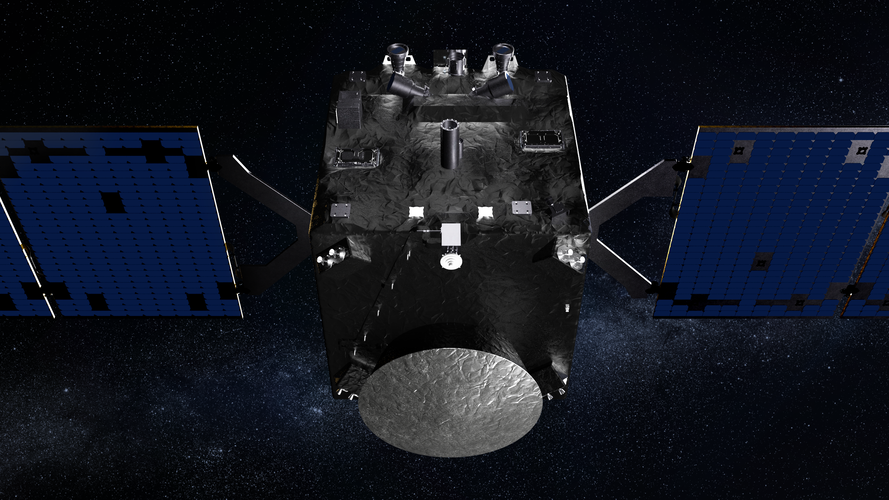
SAN FRANCISCO – Australian startup Q-Ctrl is developing quantum sensors to send to Earth orbit, the moon and eventually Mars.
“Our team members have built a variety of quantum sensors in the past with world-record performance,” Q-Ctrl CEO Michael Biercuk told SpaceNews.
Electronic Data Sheets: a common language for space
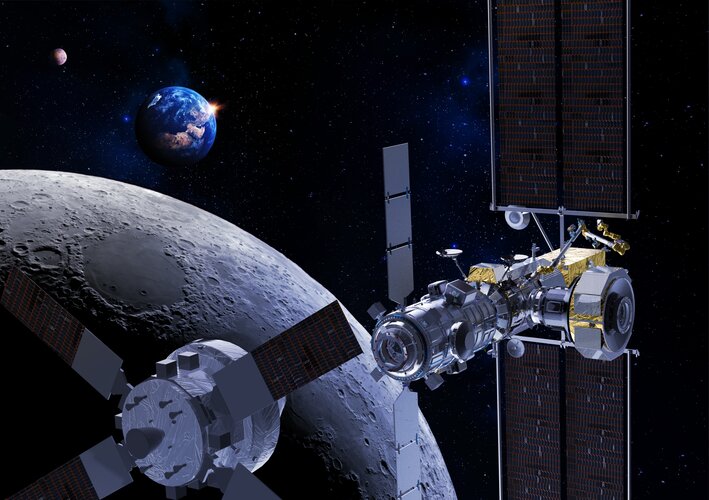
Designing and building equipment for space is hard enough; then comes the writing of its accompanying documentation. Creating a working space mission involves putting together a vast number of elements correctly, so such guidelines need to be clear and easy to understand. ESA is leading efforts to create standardised ‘Electronic Data Sheets’ for common use across the space industry.
Delayed Indonesian broadband satellite SATRIA fully funded
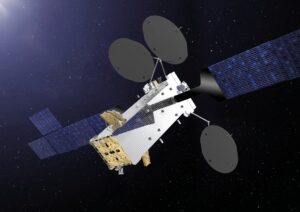
TAMPA, Fla. — Indonesia’s government has secured financing to continue manufacturing the SATRIA broadband satellite, although its intended orbital slot remains up in the air.
Thales Alenia Space started developing the Ka-band spacecraft in September after receiving partial financing, which spokesperson Sandrine Bielecki told SpaceNews covered work up until this point.
Foust Forward | Will Jeff Bezos kick-start Blue Origin? Does he need to?
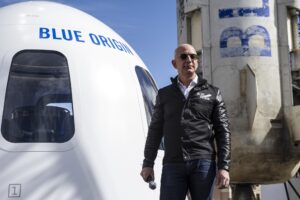
Back in the 1990s, space advocates had visions of reusable launch vehicles that would lower the cost of getting to orbit, opening the door to everything from space hotels to space solar power satellites. The problem, they argued at conferences as they showed viewgraphs of their designs, was not technical but financial: few were willing to invest in these ventures.
Raymond: Space Force ‘not a political issue’
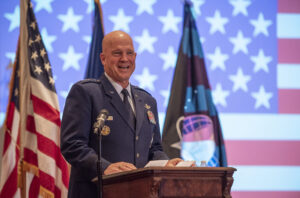
WASHINGTON — The White House unambiguous statement of support for the Space Force makes it “really clear that this is not a political issue, it’s an issue of national security,” Chief of Space Operations Gen.
China to develop two super-heavy launchers for moon missions
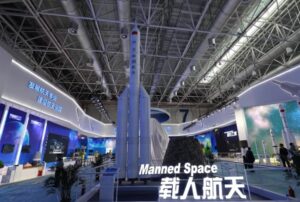
HELSINKI — China will work on development of two types of super-heavy launch vehicles for future lunar projects, a senior official said Wednesday.
Jiang Jie, chief designer of the Long March 3A series of hypergolic launchers, told press (Chinese) in Beijing March 3 that the China Academy of Launch Vehicle Technology (CALT) would continue development of both a heavy launch vehicle and a new generation crew launch vehicle over the next five years.
Source of hazardous high-energy particles located in the Sun
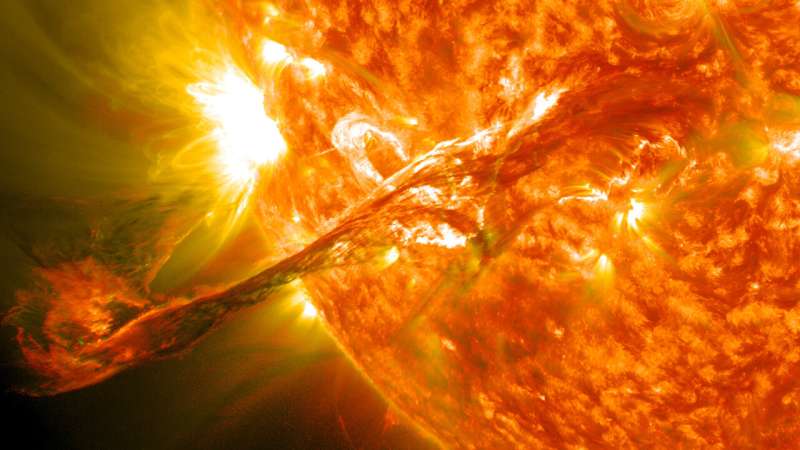
The source of potentially hazardous solar particles, released from the Sun at high speed during storms in its outer atmosphere, has been located for the first time by researchers at UCL and George Mason University, Virginia, U.S.
These particles are highly charged and, if they reach Earth's atmosphere, can potentially disrupt satellites and electronic infrastructure, as well as pose a radiation risk to astronauts and people in airplanes. In 1859, during what's known as the Carrington Event, a large solar storm caused telegraphic systems across Europe and America to fail.
Help is a long way away: The challenges of sending humans to Mars
On July 20, 1969, Apollo 11 astronaut Buzz Aldrin stepped out a lunar lander onto the surface of the moon. The landscape in front of him, which was made up of stark blacks and grays, resembled what he later called "magnificent desolation."
When it comes to desolation, however, the moon may have nothing on Mars.
The red planet circles the sun at an average distance of about 140 million miles from Earth. When people eventually visit this world—whether that's in 20 years or 50—they may face a journey lasting 1,000 days or longer. The entire Apollo 11 mission, in contrast, lasted just a little over eight days. If future Mars astronauts get lonely, or if something more serious goes wrong, help is a long way away.
For researchers who study how human bodies and minds respond to the rigors of space travel, the scenario poses a lot of unknowns.
Space Care
 Video:
00:01:50
Video:
00:01:50
Why does ESA send missions beyond our Earth? To explore unknown worlds, and better understand our place in the Universe. But that answer only gives part of the picture. The first thing people do when they first reach space is to turn back to see our homeworld. Looking down on our planet from above allows ESA with its global partners to monitor climate, disasters and environmental changes – to work together to protect our home.
And danger comes from above as well as below: a close eye on our stormy Sun is vital to gather early warning of
SpaceX Starship makes upright landing, but rocket explodes minutes later
 Elon Musk's SpaceX notched the first upright landing of the company's deep-space Starship rocket after a test flight early Wednesday evening in Boca Chica, Texas - but the rocket exploded minutes later.
A live feed showed the stainless steel rocket soaring above the South Texas shoreline, flipping over and decelerating to a gentle touchdown at a slight angle on the landing pad.
But a fire
Elon Musk's SpaceX notched the first upright landing of the company's deep-space Starship rocket after a test flight early Wednesday evening in Boca Chica, Texas - but the rocket exploded minutes later.
A live feed showed the stainless steel rocket soaring above the South Texas shoreline, flipping over and decelerating to a gentle touchdown at a slight angle on the landing pad.
But a fire