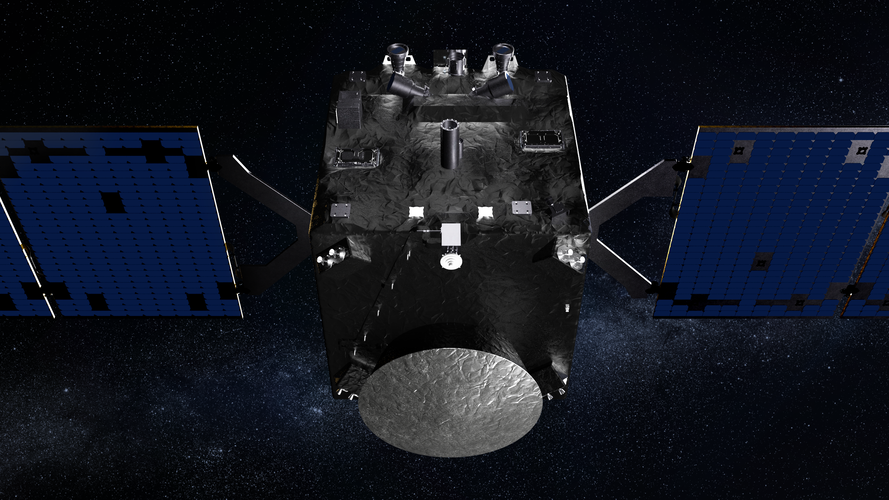
DARPA orders six satellites from Blue Canyon Technologies for Blackjack program
WASHINGTON — Blue Canyon Technologies has received a contract option worth $26.5 million to produce six satellites for the Defense Advanced Research Projects Agency, a company spokesman told SpaceNews.
DARPA has exercised the option to buy six more satellites in addition to four the agency ordered in June under a $14.1 million contract.
China launches trio of Yaogan-31 ocean reconnaissance satellites
HELSINKI — A Long March 4C rocket sent a latest series of three Yaogan-31 reconnaissance satellites into orbit late Tuesday.
Image: ISS Biolab facility
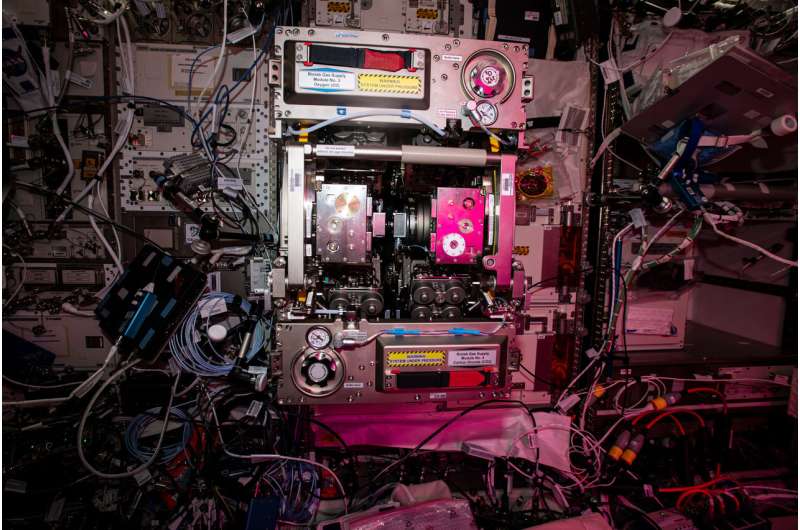
Does this image make you anxious or are you already tracking where all the wires go? If the latter, you might have what it takes to be an astronaut!
It is an exciting time for space. With NASA's latest rover safely on Mars and ESA's call for the next class of astronauts, the space industry is teeming with possibilities.
This image taken in ESA's Columbus laboratory on the International Space Station is a snapshot of the many opportunities in space research and exploration.
In the center is the Biolab facility, a fridge-sized unit that hosts biological experiments on micro-organisms, cells, tissue cultures, small plants and small invertebrates. Performing life science experiments in space identifies the role that weightlessness plays at all levels of an organism, from the effects on a single cell up to a complex organism—including humans.
The facility has enabled researchers to make some remarkable discoveries, most notably that mammalian immune cells required a mere 42 seconds to adapt to weightlessness, prompting more questions but also an overall positive outlook for long-duration human spaceflight.
The pink glow in the image is from the greenhouse that has enabled many studies on plant growth in space.
Inmarsat hires Nokia executive as new CEO

WASHINGTON — Satellite operator Inmarsat has hired the former president and chief executive of Nokia as its new chief executive, succeeding Rupert Pearce.
Inmarsat announced Feb.
ClimaCell to launch dozens of radar satellites to improve forecasts
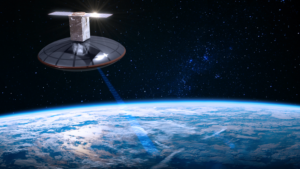
SAN FRANCISCO — Weather data company ClimaCell announced plans Feb. 24 to launch dozens of radar satellites.
“We are building the first of its kind proprietary satellites equipped with radar, and launching them into space to improve weather monitoring and forecasting capabilities,” Shimon Elkabetz, ClimaCell CEO and co-founder, said in a statement.
How were the Trojan asteroids discovered and named?
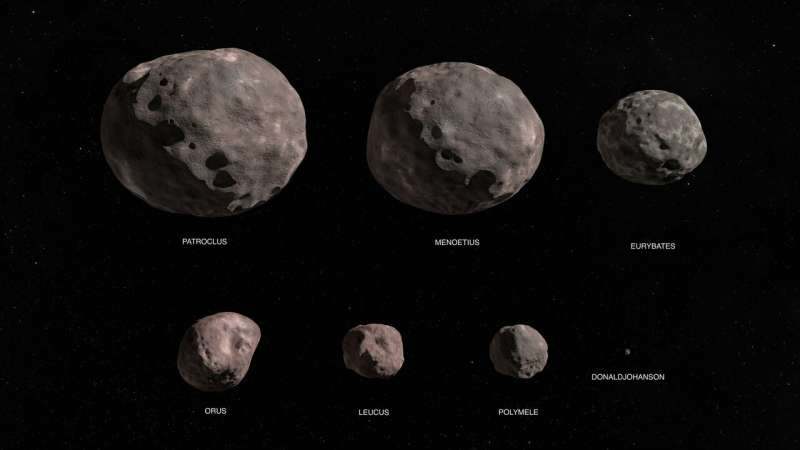
On Feb. 22, 1906, German astrophotographer Max Wolf helped reshape our understanding of the solar system. Again.
Born in 1863, Wolf had a habit of dramatically altering the astronomy landscape. Something of a prodigy, he discovered his first comet at only 21 years old. Then in 1890, he boldly declared that he planned to use wide-field photography in his quest to discover new asteroids, which would make him the first to do so. Two years later, Wolf had found 18 new asteroids. He later became the first person to use the "stereo comparator," a View-Master-like device that showed two photographs of the sky at once so that moving asteroids appeared to pop out from the starry background.
U.S. to support international effort to set rules of behavior in space
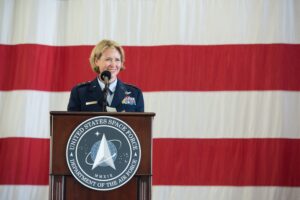
WASHINGTON — The United States and allies are drafting language in support of an international effort to adopt rules of behavior in space, U.S. Space Command’s Maj. Gen. DeAnna Burt told SpaceNews.
Burt is the commander of U.S.
Apollo rock samples capture key moments in the Moon's early history, study find
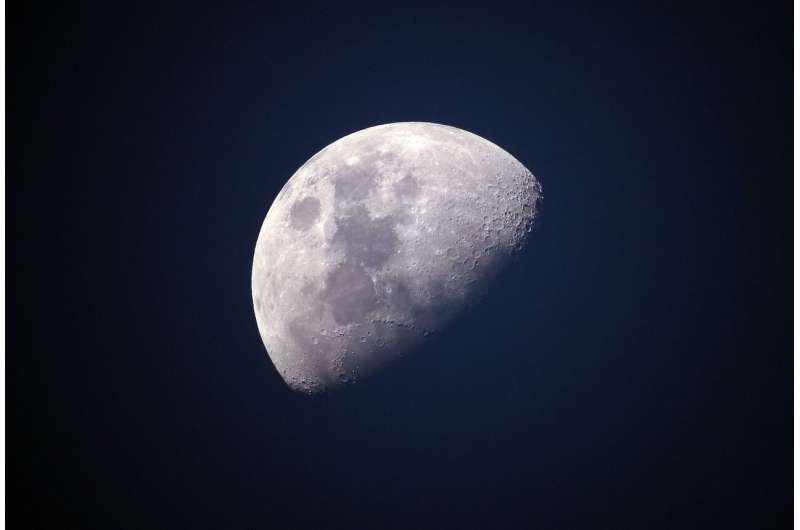
Volcanic rock samples collected during NASA's Apollo missions bear the isotopic signature of key events in the early evolution of the Moon, a new analysis found. Those events include the formation of the Moon's iron core, as well as the crystallization of the lunar magma ocean—the sea of molten rock thought to have covered the Moon for around 100 million years after the it formed.
The analysis, published in the journal Science Advances, used a technique called secondary ion mass spectrometry (SIMS) to study volcanic glasses returned from the Apollo 15 and 17 missions, which are thought to represent some of the most primitive volcanic material on the Moon. The study looked specifically at sulfur isotope composition, which can reveal details about the chemical evolution of lavas from generation, transport and eruption.
"For many years it appeared as though the lunar basaltic rock samples analyzed had a very limited variation in sulfur isotope ratios," said Alberto Saal, a geology professor at Brown University and study co-author. "That would suggest that the interior of the Moon has a basically homogeneous sulfur isotopic composition.
Mastcam-Z's First 360-Degree Panorama
 NASA's Mars 2020 Perseverance rover got its first high-definition look around its new home in Jezero Crater on Feb. 21, after rotating its mast, or "head," 360 degrees, allowing the rover's Mastcam-Z instrument to capture its first panorama after touching down on the Red Planet on Feb 18. It was the rover's second panorama ever, as the rover's Navigation Cameras, or Navcams, also located on the