FAA closes investigation into second Starship test flight


Investors inject $92 million into French maritime surveillance constellation


Intuitive Machines expects early end to IM-1 lunar lander mission


China’s 2024 space plans include 100 launches and moon sample return mission

To the moon and back: NASA's Artemis II crew rehearses splashdown
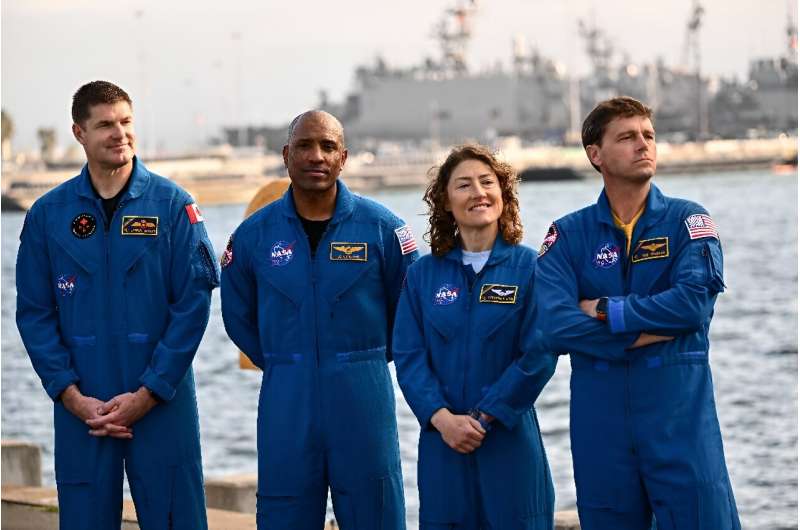
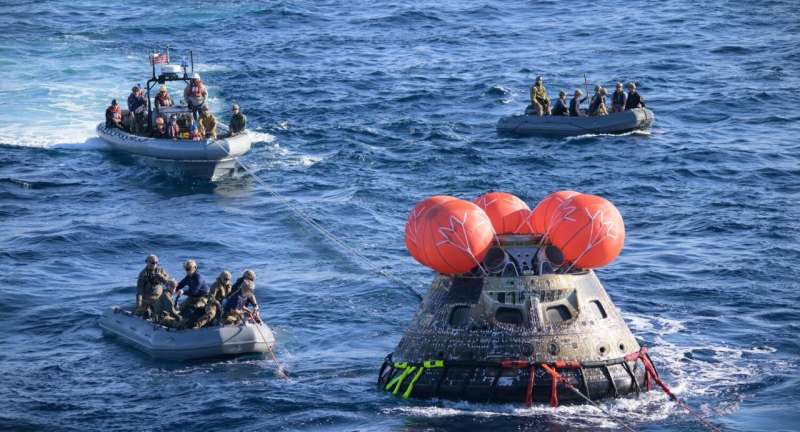
Their mission around the moon is not expected until September 2025 at the earliest, but the four astronauts on NASA's Artemis II mission are already preparing for their splashdown return.
Over the past week, the three Americans and one Canadian chosen for the historic moon mission have been training at sea with the US Navy off the coast of California.
"This is crazy. This is the stuff of movies, and we're living it every day," said veteran NASA astronaut Reid Wiseman, the mission's commander, Wednesday at the San Diego Naval Base.
SpaceX delays Crew-8 launch, but lines up Starlink launch instead
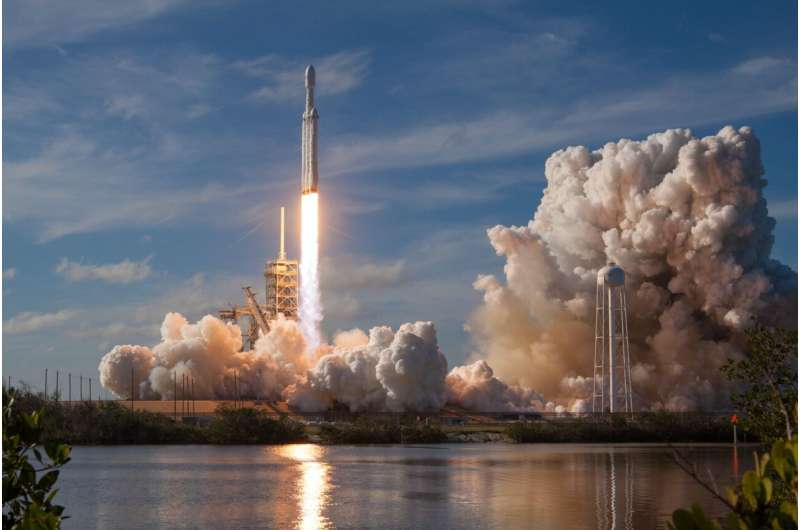
Bad weather conditions on the launch corridor for a human spaceflight from Kennedy Space Center have prompted a two-day delay, so SpaceX took the opportunity to roll out and try and shoehorn a launch without humans from nearby Cape Canaveral Space Force Station on Thursday.
The Crew-8 mission set to take up three NASA astronauts and a Russian cosmonaut to the International Space Station was originally targeting a liftoff just after midnight early Friday, but because of poor offshore conditions for the flight track of the Crew Dragon Endeavour including high winds and waves along the eastern seaboard, SpaceX and NASA opted to delay the launch attempt until Saturday night.
Now the Falcon 9 with the four crew of NASA's Matthew Dominick, Michael Barratt and Jeanette Epps, and Roscosmos's Alexander Grebenkin is targeting 11:16 p.m. Saturday to lift off from KSC's Launch Pad 39-A.
"In the unlikely case of an abort during launch or the flight of Dragon, the wind and wave conditions must be within acceptable conditions for the safe recovery of the crew and spacecraft," reads an update posted to NASA's website.
With space travel comes motion sickness. These engineers want to help
In a corner room of the Aerospace Engineering Sciences Building at CU Boulder, Torin Clark is about to go for a ride.
The associate professor straps himself into what looks like an intimidating dentist's chair perched on metal scaffolding, which, in turn, rests on a circular base. The whole set up resembles a carnival attraction.
Which, in a way, it is.
"Torin, are you ready to start?" calls out graduate student Taylor Lonner from in front of a monitor displaying several views of Clark. "I'm going to go to 5 r.p.m.
Could fiber optic cable help scientists probe the deep layers of the moon?