

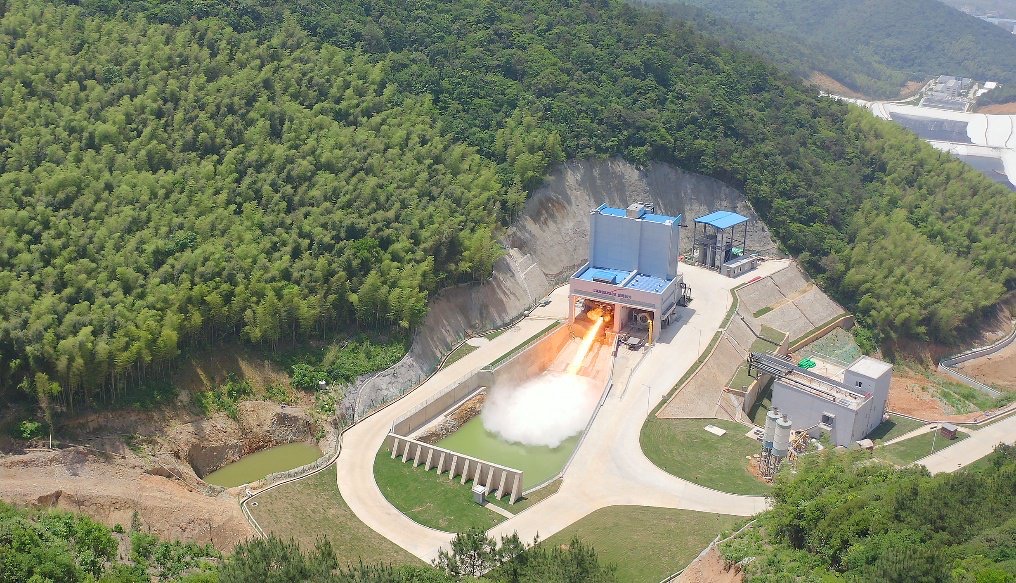
China makes progress on Raptor-like engines for super heavy rocket


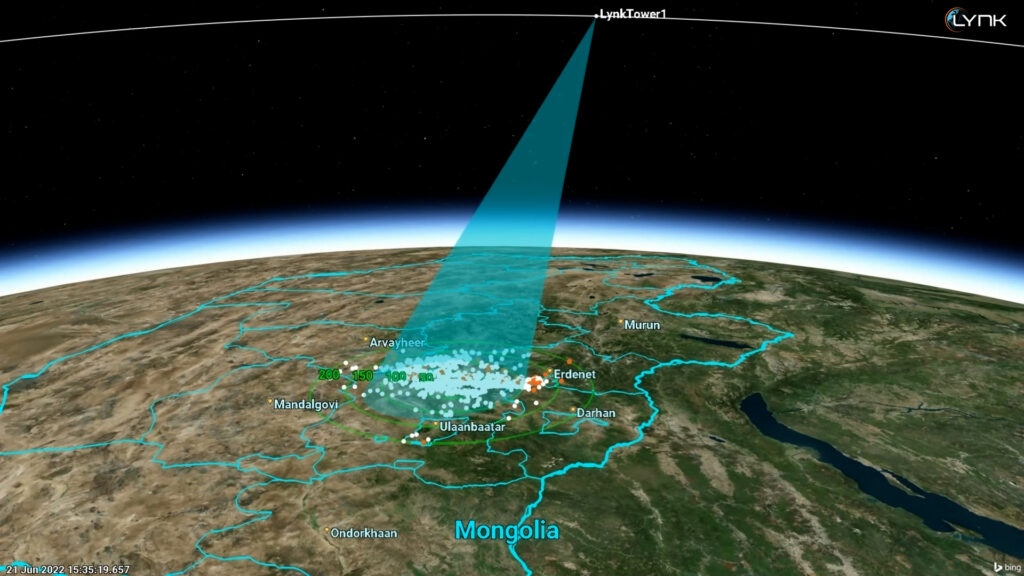
Additional vendors selected for DoD’s low Earth orbit satellite services contract
PUNCH mission advances toward 2025 launch
Spacelab to Gateway: 40 years of modules for people in space
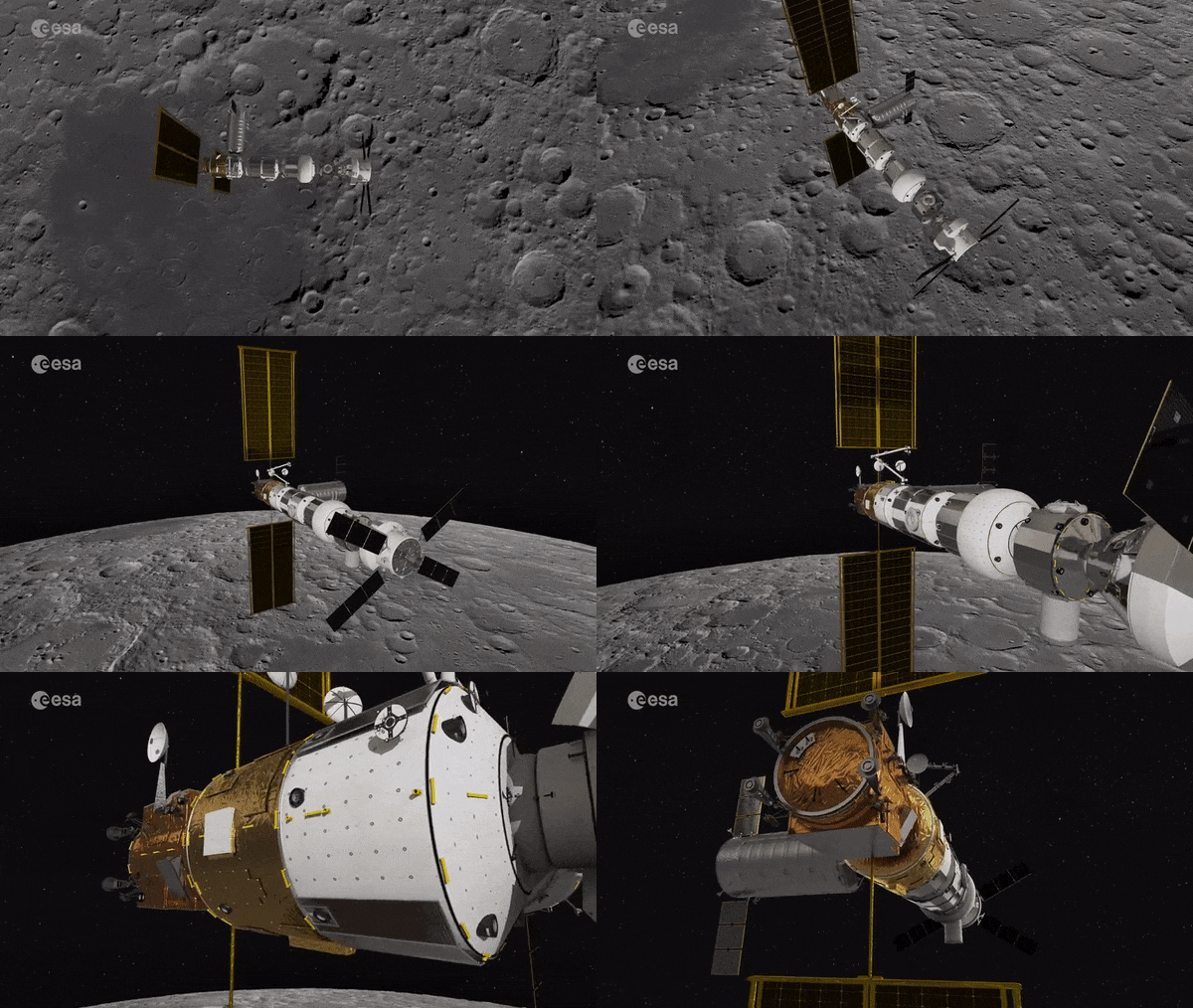
ESA’s first human spaceflight mission lifted off 40 years ago today. Accompanied by the first ESA astronaut, Ulf Merbold, the Spacelab module took flight inside the Space Shuttle’s cargo bay, turning NASA’s ‘space truck’ into a mini-space station for scientific research. Europe continues to be highly active in the crewed module business to this day.
How we made Spacelab
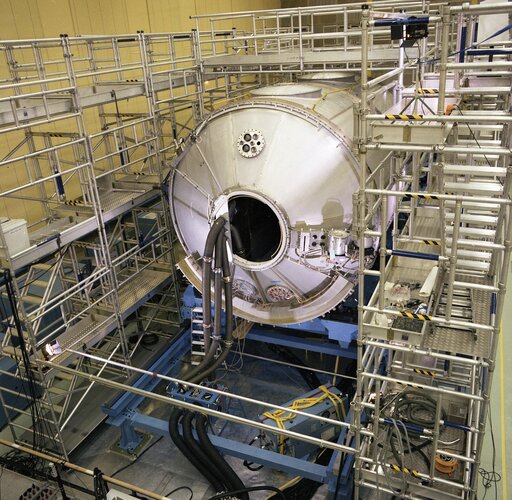
On 28 November 1983 European human spaceflight took a giant leap forward. Not only did German Ulf Merbold become the first ESA astronaut in space, but along with him travelled the European-made Spacelab. Carried in the Space Shuttle’s cargo bay, Spacelab converted the Shuttle into a highly productive orbital laboratory.
Space Team Europe for Euclid: Henk Hoekstra
 Video:
00:03:08
Video:
00:03:08
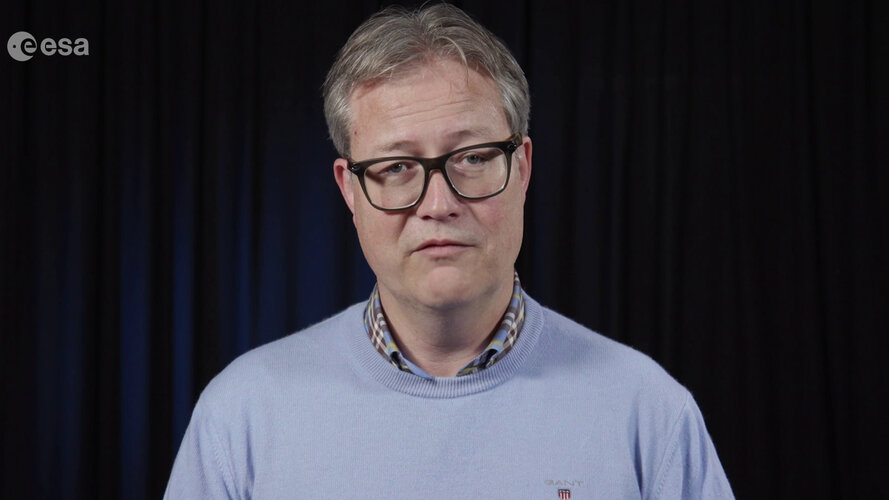
Henk Hoekstra, professor of observational cosmology at Leiden University, the Netherlands, shares his professional trajectory linked to weak gravitational lensing, a technique used by ESA’s Euclid mission.
Henk explains how Euclid will reveal the dark side of the Universe. He uses enlightening examples involving a swimming pool and other terrestrial objects. Listen to Henk Hoekstra to understand how Euclid can make the invisible visible.
Space Team Europe is an ESA space community engagement initiative to gather European space actors under the same umbrella sharing values of leadership, autonomy, and responsibility.
A prominent protostar in Perseus
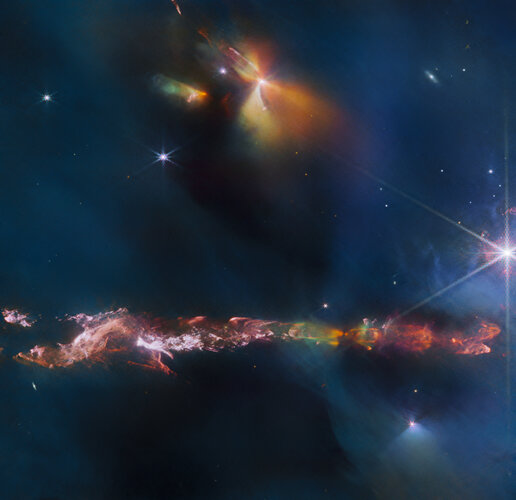 Image:
This new Picture of the Month from the NASA/ESA/CSA James Webb Space Telescope reveals intricate details of the Herbig Haro object 797 (HH 797). Herbig-Haro objects are luminous regions surrounding newborn stars (known as protostars), and are formed when stellar winds or jets of gas spewing from these newborn stars form shockwaves colliding with nearby gas and dust at high speeds. HH 797, which dominates the lower half of this image, is located close to the young open star cluster IC 348, which is located near the eastern edge of the Perseus dark cloud complex. The bright infrared objects
Lockheed Martin aims for rapid on-orbit operations with Electronically Steerable Antenna
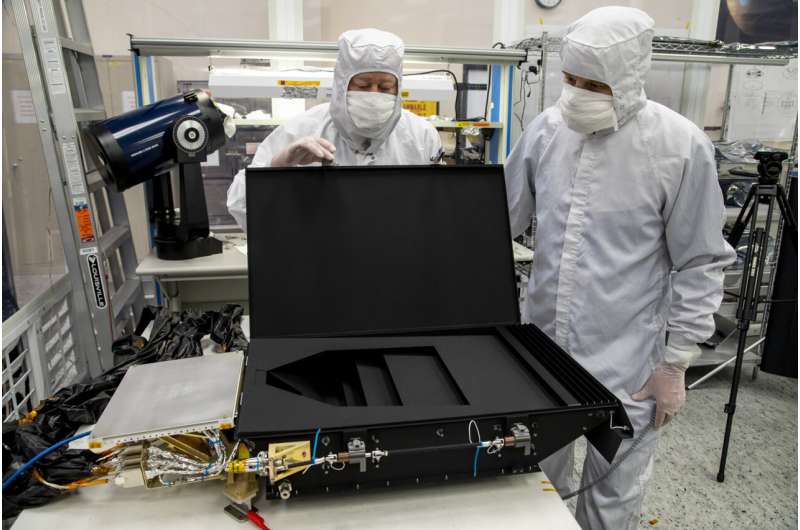
 Lockheed Martin (NYSE: LMT), a renowned leader in the aerospace and defense sector, recently announced a significant step forward in space technology with the upcoming launch of a wideband Electronically Steerable Antenna (ESA) payload demonstrator. This initiative is a testament to Lockheed Martin's dedication to enhancing space capabilities for quick operational readiness once in orbit.
 Archimedes Platform Successfully Tested by Above: Space and Electric Sky
 In a significant advancement for space technology, Above: Space Development, in collaboration with Electric Sky, has successfully tested the Archimedes platform, a novel, rapidly deployable, free-flying on-orbit system. This platform marks a new era in space infrastructure, encompassing a wide range of functions including solar panels, beamed power, and electronically steerable antenna arrays fo


