

Webb sees Crab Nebula in new light

Although the Crab Nebula is one of the best-studied supernova remnants, questions about its progenitor, the nature of the explosion, and the composition of its ejecta still remain unanswered. The NASA/ESA/CSA James Webb Space Telescope is on the case as it sleuths for any clues that remain within the supernova remnant. Webb’s infrared sensitivity, combined with data previously collected by other telescopes, is offering astronomers a more comprehensive understanding of the still-expanding scene.
ESA explores cultivated meat for space food
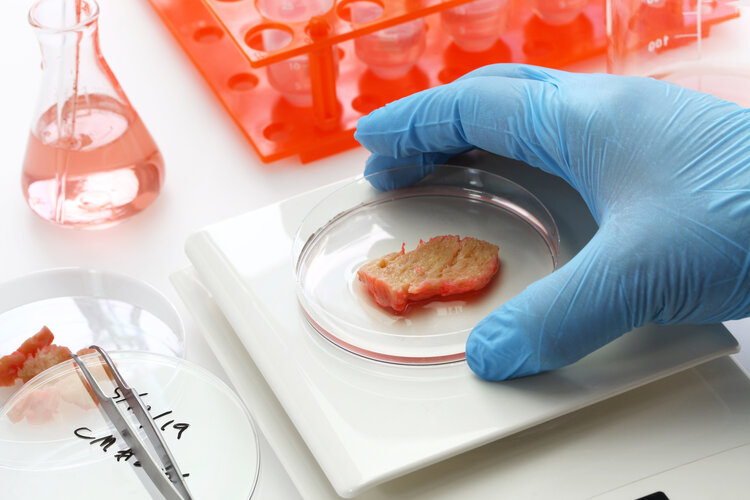
As we look ahead to long-term space missions, one of the big challenges is figuring out how to provide healthy and sustainable food for astronauts. To tackle this, ESA supported two research teams to investigate the possibility of cultivating meat in space.
ESA's new dimension in printed circuit design
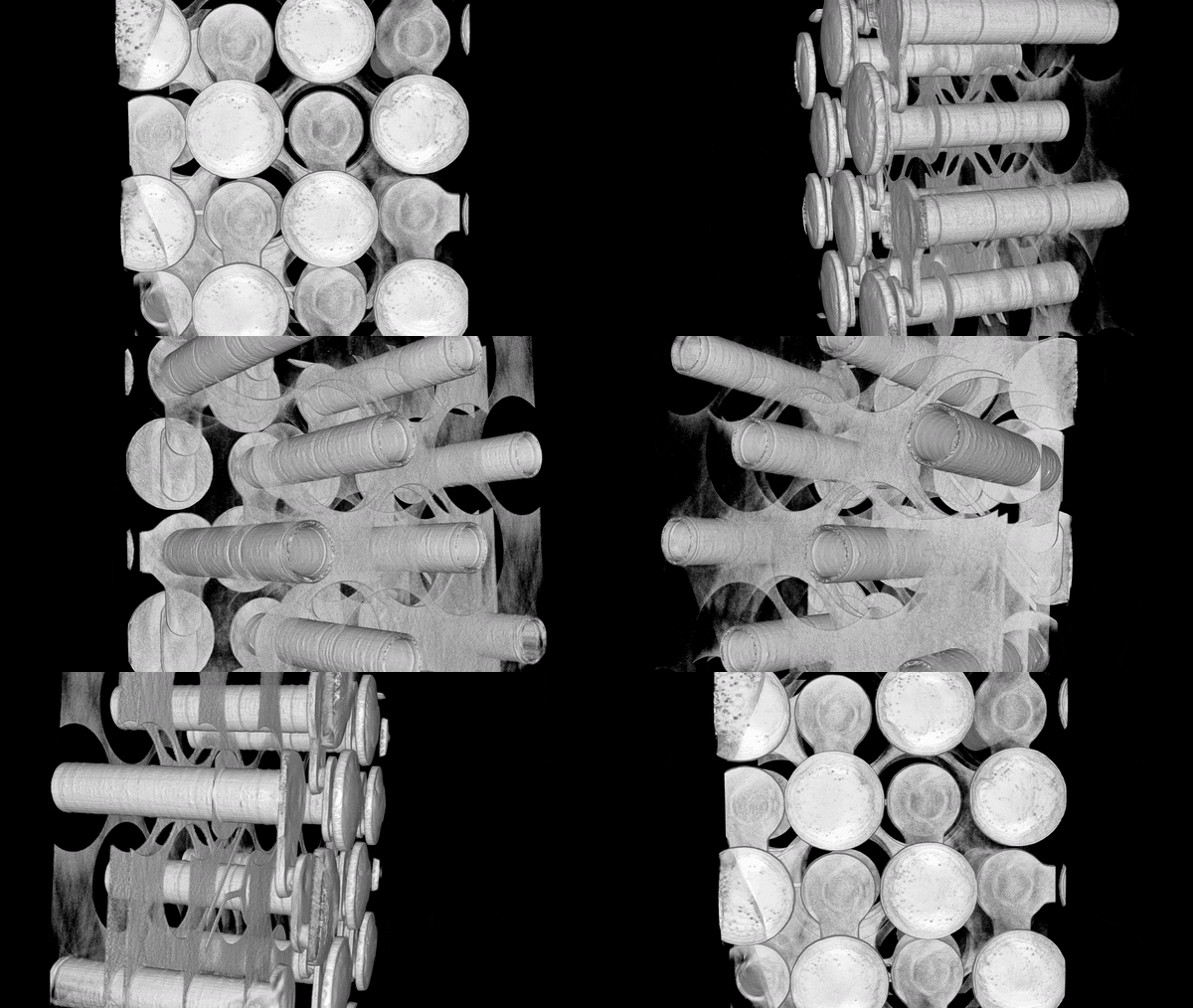
This microscopic X-ray animation shows one of the key technologies allowing advanced computer functionality to fit within the smartphone in your pocket: ‘microvias’ are laser drilled holes a small fraction of a millimetre in diameter. A typical high-density interconnect printed circuit board might possess thousands of microvias, which serve to connect multiple functional layers.
ESA space transportation accelerates disruptive innovation with FIRST!
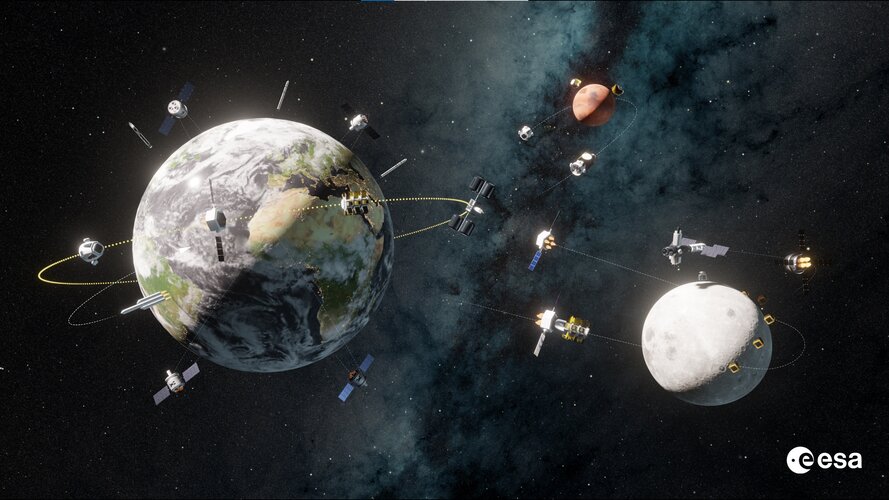
An ESA initiative to speed the development of disruptive space technologies took a step forward this month, when a cohort of European innovators presented concepts which they hope will help Europe build commercially competitive, high-performance space transportation systems.
Space Development Agency awards Northrop Grumman $732 million contract for 38 satellites and support services
Maxar Intelligence announces new executive appointments
Space Force Col. Richard Kniseley to keynote SpaceNews 2023 Icon Awards


Webinar Replay | We’re Hiring: Attracting and Retaining Space Talent


To advance space colonization, team explores 3D printing in microgravity
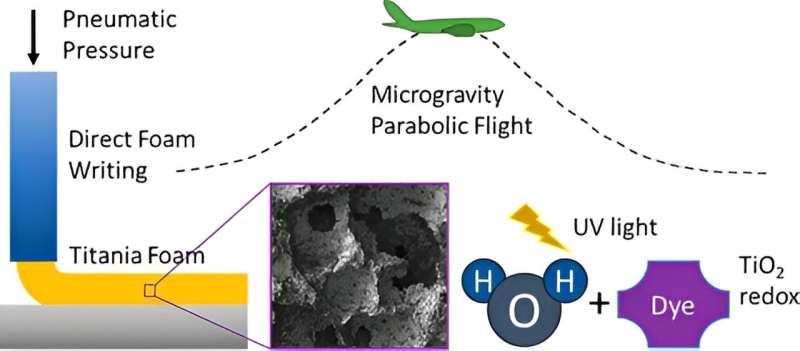
Research from West Virginia University students and faculty into how 3D printing works in a weightless environment aims to support long-term exploration and habitation on spaceships, the moon or Mars.
Extended missions in outer space require the manufacture of crucial materials and equipment onsite, rather than transporting those items from Earth. Members of the Microgravity Research Team said they believe 3D printing is the way to make that happen.
The team's recent experiments focused on how a weightless microgravity environment affects 3D printing using titania foam, a material with potential applications ranging from UV blocking to water purification. ACS Applied Materials and Interfaces published their findings.
"A spacecraft can't carry infinite resources, so you have to maintain and recycle what you have and 3D printing enables that," said lead author Jacob Cordonier, a doctoral student in mechanical and aerospace engineering at the WVU Benjamin M. Statler College of Engineering and Mineral Resources.


