

Webb finds carbon source on surface of Jupiter’s moon Europa

Jupiter’s moon Europa is one of a handful of worlds in our Solar System that could potentially harbour conditions suitable for life. Previous research has shown that beneath its water-ice crust lies a salty ocean of liquid water with a rocky seafloor. However, planetary scientists had not confirmed whether or not that ocean contained the chemicals needed for life, particularly carbon.
Researchers ready NASA's SPHEREX space telescope for 2025 launch
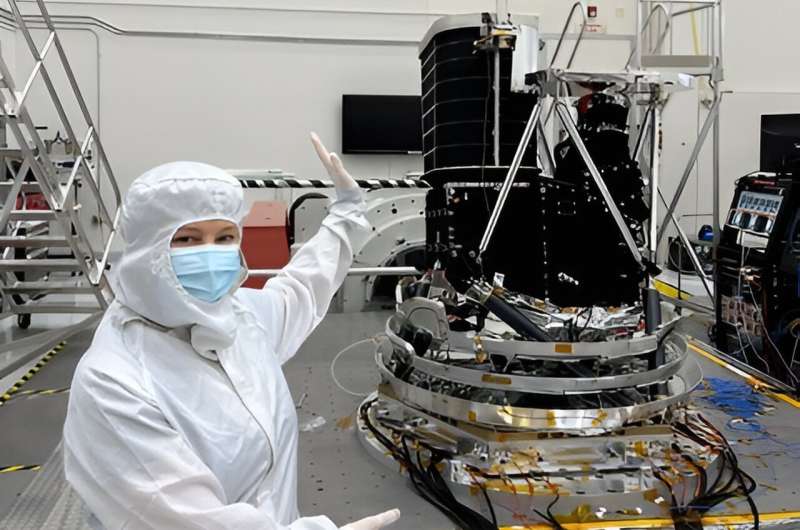
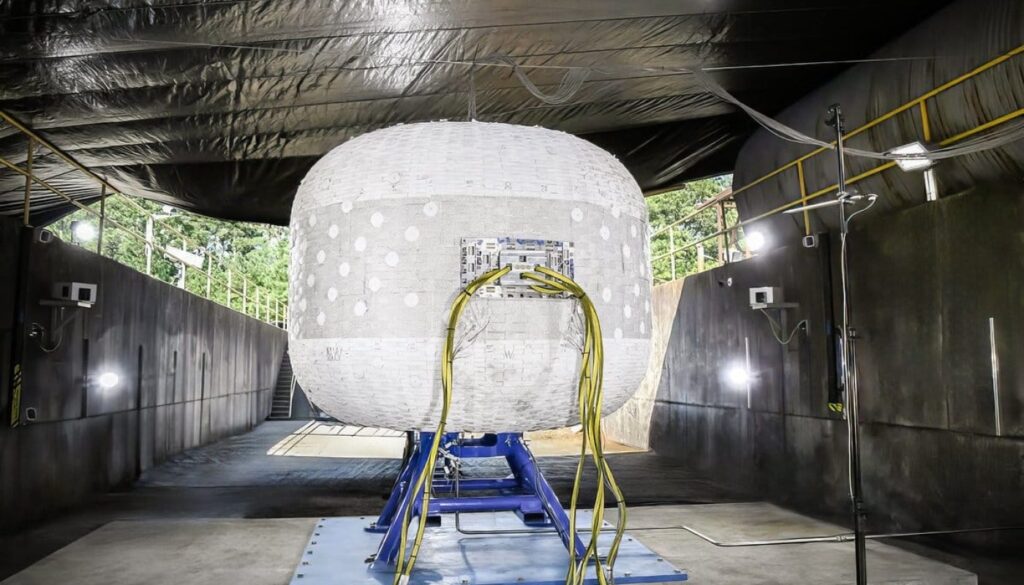
NASA's SPHEREx space telescope has been tucked inside a custom-built chamber on and off for the past two months undergoing tests to prepare it for its two-year mission in space. SPHEREx, which stands for Spectro-Photometer for the History of the universe, Epoch of Reionization and Ices Explorer, is set to launch into orbit around Earth no later than April 2025.
It will map the entire sky in infrared wavelengths of light, capturing not only images of hundreds of millions of stars and galaxies but spectra for these objects as well. Spectra are created by instruments that break apart light into a rainbow of wavelengths, revealing new details about a cosmic object's composition, distance, and more.
NASA's Atmospheric Waves Experiment completes space environment tests
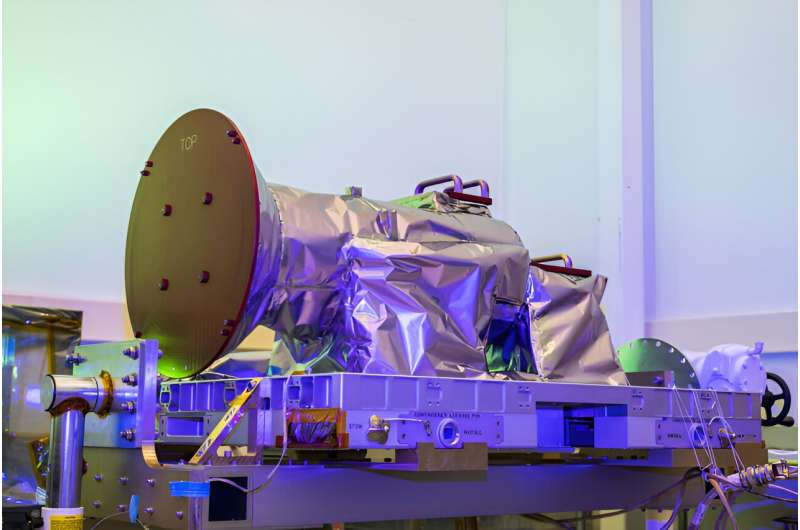
NASA's Atmospheric Waves Experiment (AWE) has successfully completed critical space environment tests. Planned for launch to the International Space Station in November 2023, AWE will study atmospheric gravity waves in Earth's atmosphere to help us better understand the connections between terrestrial weather and space.
"AWE is a highly sensitive, precise science instrument designed to be fitted on the International Space Station and operate in the harsh space environment," said Burt Lamborn, AWE project manager at Utah State University's Space Dynamics Laboratory (SDL), which is building the instrument for NASA. "To ensure that AWE will survive launch turbulence and operate as designed once in space, SDL put the instrument through its paces on the ground.
Autonomous systems help NASA's Perseverance do more science on Mars
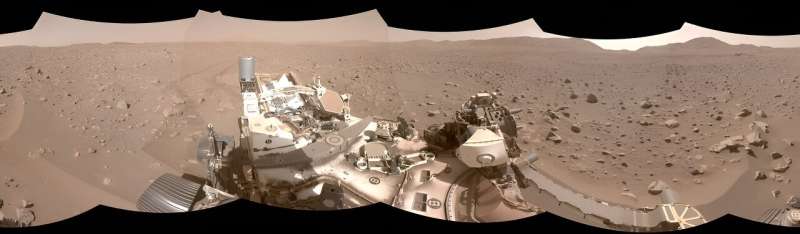
A computer pilot helps NASA's six-wheeled geologist as it searches for rock samples that could be brought to Earth for deeper investigation.
In about a third of the time it would have taken other NASA Mars rovers, Perseverance recently navigated its way through a field of boulders more than 1,700 feet wide (about a half-kilometer).
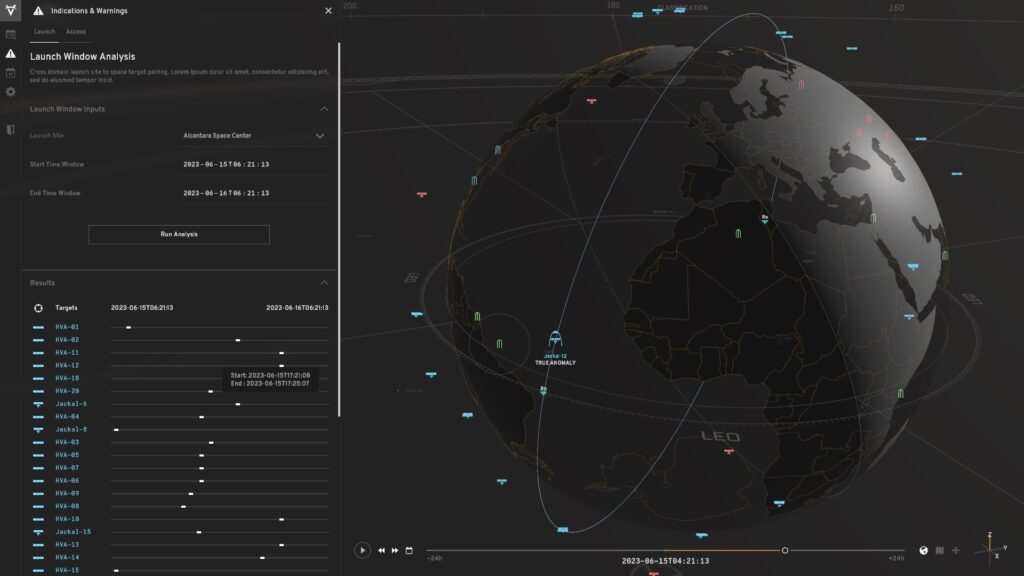
True Anomaly gets $17 million Space Force contract for space domain awareness software
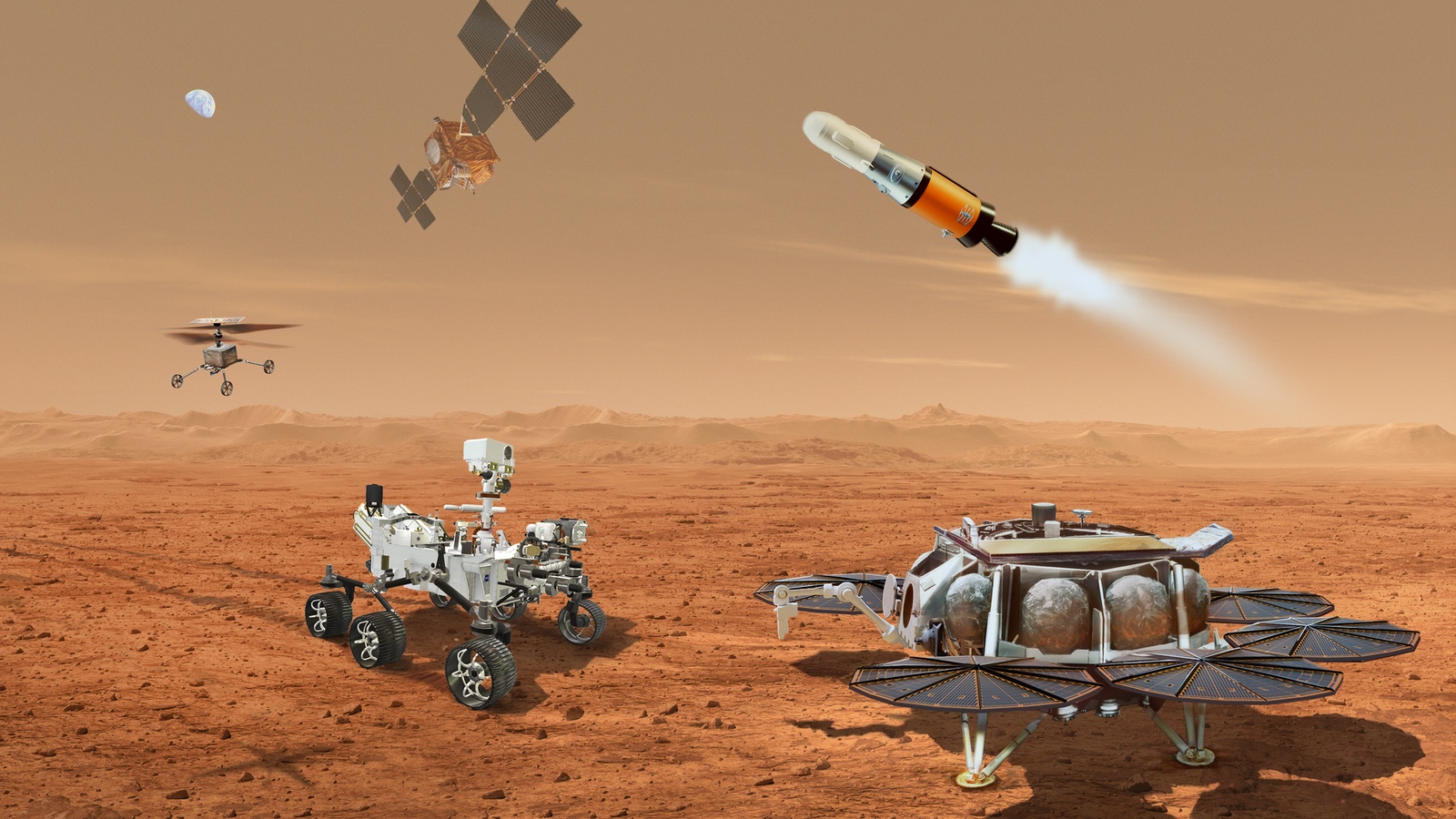
NASA Mars Sample Return budget and schedule “unrealistic,” independent review concludes
New Mars gravity analysis improves understanding of possible ancient ocean
 The first use of a novel method of analyzing Mars' gravitational force supports the idea that the planet once had an extensive northern ocean. In doing so, the method defines the scope of what scientists refer to as the northern Martian paleo-ocean in more detail. The work was published in July in the journal Icarus, which is affiliated with the American Astronomical Society's Division for Plane
 NASA Releases Independent Review's Mars Sample Return Report
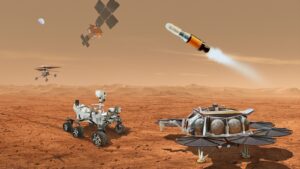
 An Independent Review Board (IRB) looked at NASA's current plans and goals of the first mission to return samples from Mars, and NASA is establishing a team to respond.
In addition to bringing home the first sample collected from Mars, this highly complex mission would include the first launch from the surface of another planet, as well as the first in orbit rendezvous at another planet. M
An Independent Review Board (IRB) looked at NASA's current plans and goals of the first mission to return samples from Mars, and NASA is establishing a team to respond.
In addition to bringing home the first sample collected from Mars, this highly complex mission would include the first launch from the surface of another planet, as well as the first in orbit rendezvous at another planet. M China releases first image captured by new wide-field survey telescope
 A wide-field telescope capable of surveying the entire Northern Hemisphere sky was put into operation on Sunday in northwest China's Qinghai Province, and its first image - the Andromeda Galaxy, located over 2 million light-years away - has already been released.
Developed by the University of Science and Technology of China and the Purple Mountain Observatory under the Chinese Academy of
A wide-field telescope capable of surveying the entire Northern Hemisphere sky was put into operation on Sunday in northwest China's Qinghai Province, and its first image - the Andromeda Galaxy, located over 2 million light-years away - has already been released.
Developed by the University of Science and Technology of China and the Purple Mountain Observatory under the Chinese Academy of 


