

A method for traction ability research of rover wheels on mixed planet terrain with movable stones
The Chang'e-6/7/8 exploration mission has been announced officially by China recently, and the international lunar and Mars research station plans will be carried out within the 2030s. It can be predicted that China's future lunar and Mars surface exploration activities will last longer, have a larger exploration range, and have a more complex terrain to traverse and explore, which will pose severe challenges to the working performance of the planet rover and its adaptability to the planet surface environment.
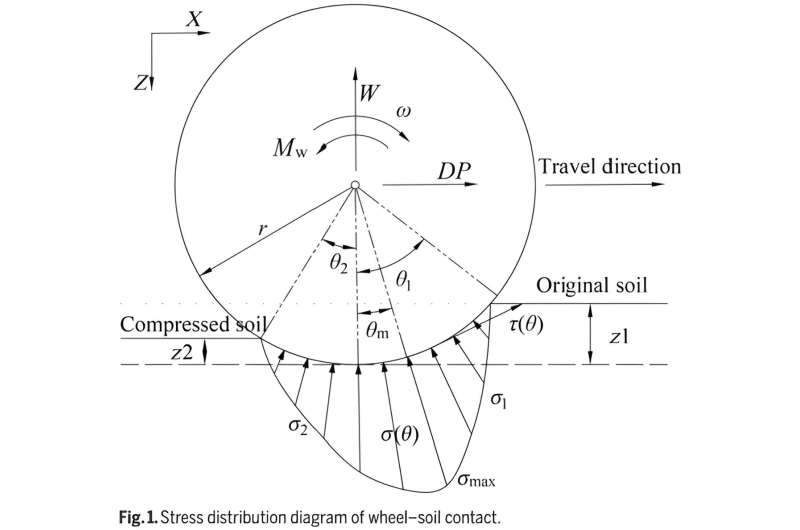
One of the key problems will be to study the relationship between the mechanical properties of planet soil and the traction performance of the planet rover's wheels. The mixed terrains of terramechanics research are mainly composed of static stones and loose soil.
Whereas, the movement behavior of stones is often ignored while analyzing the influence of the wheel's traction performance caused by mixed terrain.
An artificial star for testing the optical performance of startrackers
Like mariners of old, spacecraft steer by the stars—using combinations of telescopes, cameras and computers called startrackers to recognize stellar constellations to calculate their own position in space.
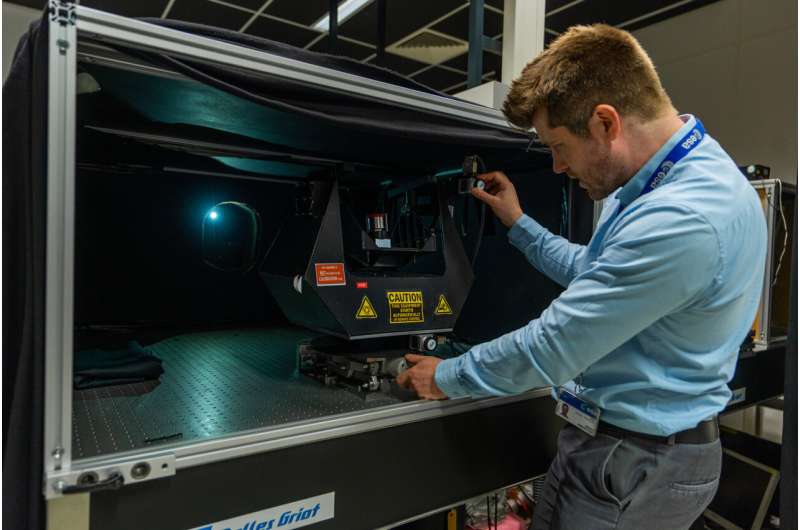
The test bench seen here generates an artificial star-like light source to test the optical performance of startrackers.
Part of the Guidance and Navigation Control (GNC) Attitude and Orbit Control (AOCS), and Pointing Laboratory, based at ESA's ESTEC technical center in the Netherlands, this test bench combines a two-axis precise rotating table with a single star simulator—simulating the light coming from infinity from a star of a given brightness and color.
Produced in house by the lab team, the purpose of this facility is to characterize or calibrate a startracker in terms of distortion, chromatic aberration and other optical variables.
The GNC, AOCS and Pointing Lab works on manner of technologies related to a spacecraft's ability to derive its orientation and location in space. It is one of a suite of ESA technical labs addressing all aspects of spaceflight.
Provided by European Space Agency

New report recommends Space Force change how it buys commercial satellite services

Thumbs up for training
 Image:
ESA project astronaut Sławosz Uznański from Poland inside the Columbus mockup at EAC.
Image:
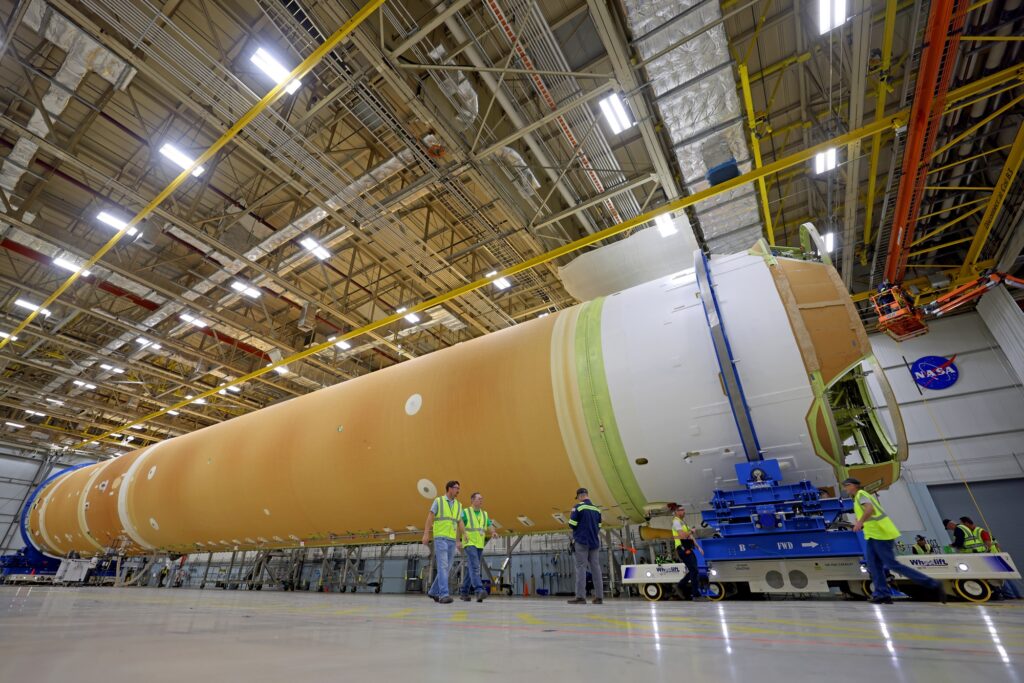
ESA project astronaut Sławosz Uznański from Poland inside the Columbus mockup at EAC. GAO report calls for more transparency on SLS costs
Week in images: 04-08 September 2023

Week in images: 04-08 September 2023
Discover our week through the lens
Psyche on track for liftoff next month
 Bound for a metal-rich asteroid of the same name, the Psyche mission is targeting Oct. 5 to launch from NASA's Kennedy Space Center in Florida.
The spacecraft's solar arrays are folded like an envelope into their stowed position. Xenon gas - fuel for the journey to the asteroid belt - is loaded. All four thrusters have passed their final tests. Engineers have confirmed the massive high-gai
Bound for a metal-rich asteroid of the same name, the Psyche mission is targeting Oct. 5 to launch from NASA's Kennedy Space Center in Florida.
The spacecraft's solar arrays are folded like an envelope into their stowed position. Xenon gas - fuel for the journey to the asteroid belt - is loaded. All four thrusters have passed their final tests. Engineers have confirmed the massive high-gai NASA's completes Oxygen-Generating Experiment MOXIE
 Riding with the Perseverance rover, the instrument has proved to be a viable technology for astronauts on Mars to produce oxygen for fuel and breathing. When the first astronauts land on Mars, they may have the descendants of a microwave-oven-size device to thank for the air they breathe and the rocket propellant that gets them home. That device, called MOXIE (Mars Oxygen In-Situ Resource Utiliz
 On the road to spotting alien life
 In early August, scientists and engineers gathered in a small auditorium at Caltech to discuss how to build the first space telescope capable of detecting life on planets like Earth. The proposed mission concept, called the Habitable Worlds Observatory (HWO), would be the next powerful astrophysics observatory after NASA's James Webb Space Telescope (JWST). It would have the ability to study sta


