

Russia's Luna-25 probe crashes on the Moon: Roscosmos
 The Luna-25 probe, Russia's first Moon mission in almost 50 years, has crashed on the Moon after an incident during pre-landing manoeuvres, Russian space agency Roscosmos said on Sunday.
Communication with Luna-25 was lost at 2:57 pm (1157 GMT) on Saturday, Roscosmos said.
According to preliminary findings, the lander "has ceased to exist following a collision with the Moon's surface".
The Luna-25 probe, Russia's first Moon mission in almost 50 years, has crashed on the Moon after an incident during pre-landing manoeuvres, Russian space agency Roscosmos said on Sunday.
Communication with Luna-25 was lost at 2:57 pm (1157 GMT) on Saturday, Roscosmos said.
According to preliminary findings, the lander "has ceased to exist following a collision with the Moon's surface". Could artificially dimming the sun prevent ice melt
 With methods of so-called geoengineering, the climate could theoretically be artificially influenced and cooled. Bernese researchers have now investigated whether it would be possible to prevent the melting of the West Antarctic ice sheet by artificially "dimming the sun". The results show that artificial influence does not work without decarbonization and entails high risks.
Is there an e
With methods of so-called geoengineering, the climate could theoretically be artificially influenced and cooled. Bernese researchers have now investigated whether it would be possible to prevent the melting of the West Antarctic ice sheet by artificially "dimming the sun". The results show that artificial influence does not work without decarbonization and entails high risks.
Is there an e 

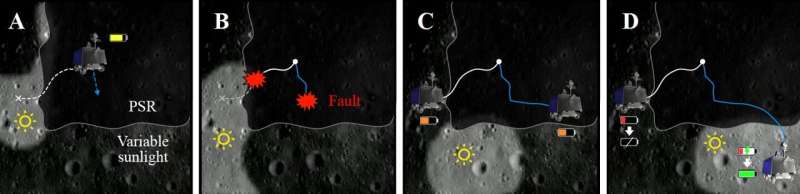
A new approach to reduce the risk of losing solar-powered rovers on the moon
Russia's Luna-25 probe crashes on the Moon
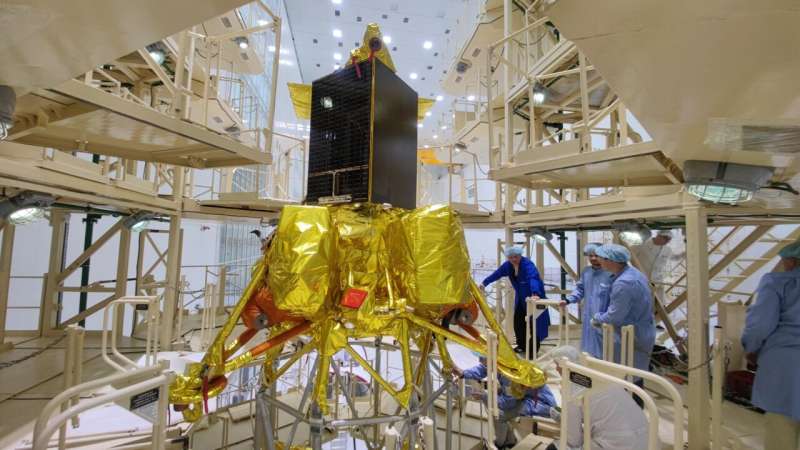
The Luna-25 probe, Russia's first Moon mission in almost 50 years, has crashed on the Moon after an incident during pre-landing maneuvers, Russian space agency Roscosmos said on Sunday.
Communication with Luna-25 was lost at 2:57 pm (1157 GMT) on Saturday, Roscosmos said.
According to preliminary findings, the lander "has ceased to exist following a collision with the Moon's surface", Roscosmos said.
"Measures taken on August 19 and 20 to locate the craft and make contact with it were unsuccessful."
The space agency said an investigation would be launched into the causes of the crash, without giving any indication of what technical problems might have occurred.
With Luna-25, Moscow had hoped to build on the legacy of its Soviet-era Luna program, marking a return to independent lunar exploration in the face of growing isolation from the West.
The 800-kilogram Luna-25 probe was to have made a soft landing on the lunar south pole, the first in history.
Russia has not attempted to land on a celestial body since 1989, when the Soviet Union's ill-fated Phobos 2 probe to explore the moons of Mars failed due to an onboard computer malfunction.
One giant step: Moon race heats up
 The crash landing on the Moon of Russia's Luna-25 probe is the latest twist in an international push to return to the Earth's natural satellite that has drawn in the world's top powers and new players.
Technology, science and politics are all essential factors in the Moon race.
Here is the latest on various missions:
- Russia's Luna -
The launch of Luna-25 on August 11 was the fi
The crash landing on the Moon of Russia's Luna-25 probe is the latest twist in an international push to return to the Earth's natural satellite that has drawn in the world's top powers and new players.
Technology, science and politics are all essential factors in the Moon race.
Here is the latest on various missions:
- Russia's Luna -
The launch of Luna-25 on August 11 was the fi Next major X-ray mission set to launch on Saturday
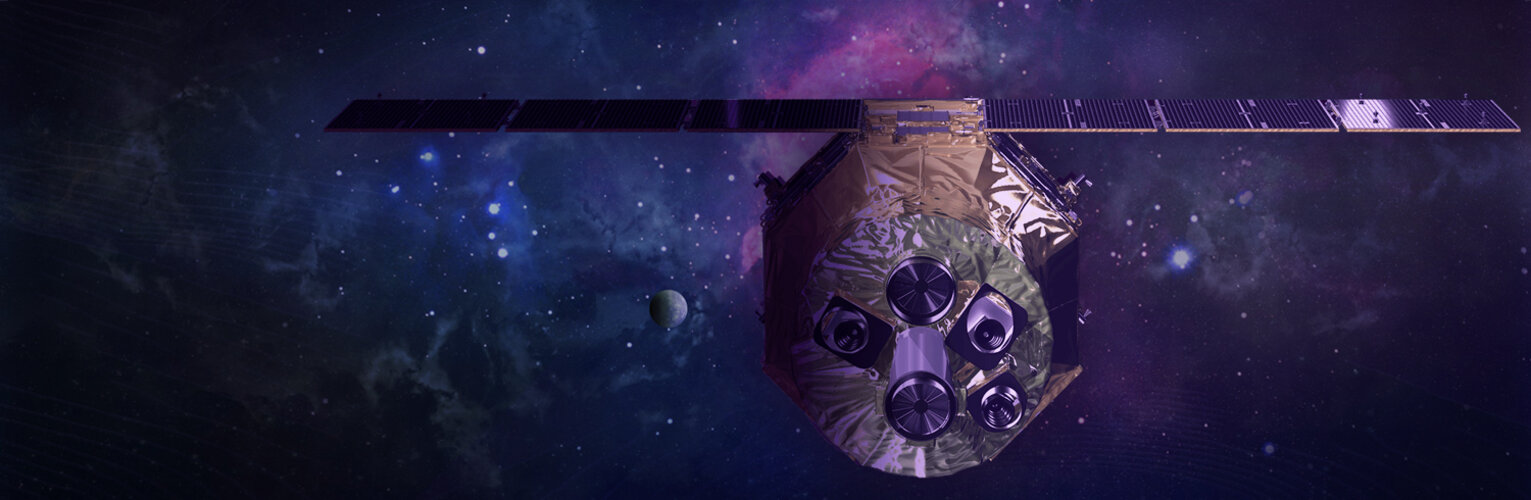
The X-Ray Imaging and Spectroscopy Mission (XRISM) is ready to launch on 26 August 2023 to observe the most energetic objects and events in the cosmos. In doing so, it will unveil the evolution of the Universe and the structure of spacetime.
XRISM is a collaboration between the Japan Aerospace Exploration Agency (JAXA) and NASA, with significant participation from ESA. The launch will be streamed live in Japanese and English on JAXA’s YouTube channel.
Redwire and Sierra Space partner on commercial space station biotech research platform


Webb captures detailed beauty of Ring Nebula
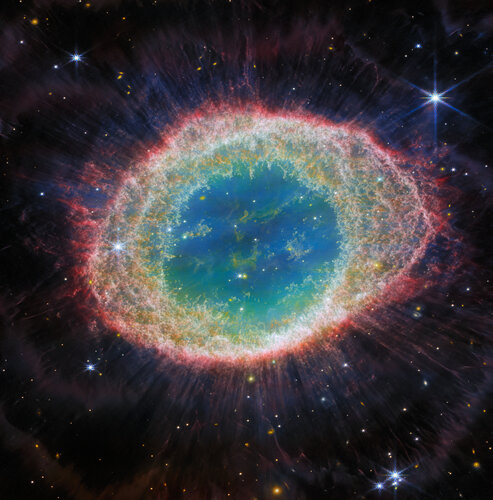
The NASA/ESA/CSA James Webb Space Telescope has observed the well-known Ring Nebula with unprecedented detail. Formed by a star throwing off its outer layers as it runs out of fuel, the Ring Nebula is an archetypal planetary nebula. The object is also known as M57 and NGC 6720, and is relatively close to Earth at roughly 2,500 light-years away.
Space Development Agency awards contracts to Lockheed Martin, Northrop Grumman for 72 satellites


