

Astronomers reveal new features of galactic black holes
 Black holes are the most mysterious objects in the universe, with features that sound like they come straight from a sci-fi movie. Stellar-mass black holes with masses of roughly 10 suns, for example, reveal their existence by eating materials from their companion stars. And in some instances, supermassive black holes accumulate at the center of some galaxies to form bright compact regions known
 Mawrth Vallis region - the deepest clay deposits on Mars
 New images, created using data acquired by the German Aerospace Center (Deutsches Zentrum fur Luft- und Raumfahrt; DLR) High Resolution Stereo Camera (HRSC) on board ESA's Mars Express spacecraft, show part of the dried-up Mawrth Vallis river valley. This is one of the largest and oldest valleys on Mars, where light-coloured clay deposits up to 200 metres deep can be found in numerous places. Cl
 Better SAFER than sorry
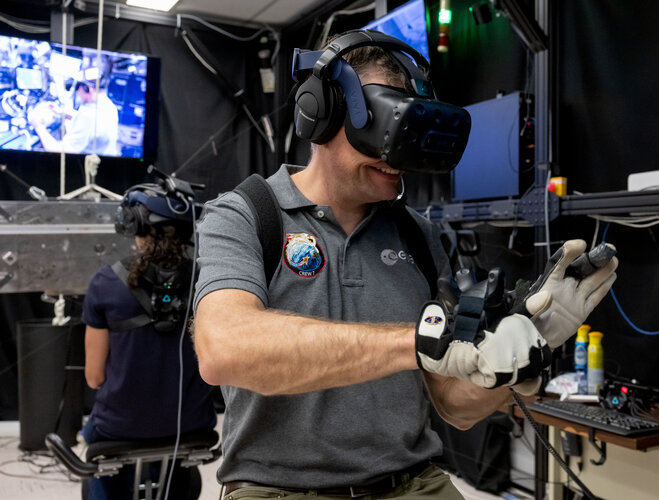 Image:
Astronaut Andreas Mogensen undergoing VR training for EVA emergencies
Image:
Astronaut Andreas Mogensen undergoing VR training for EVA emergencies Keeping your underwear clean on the Moon
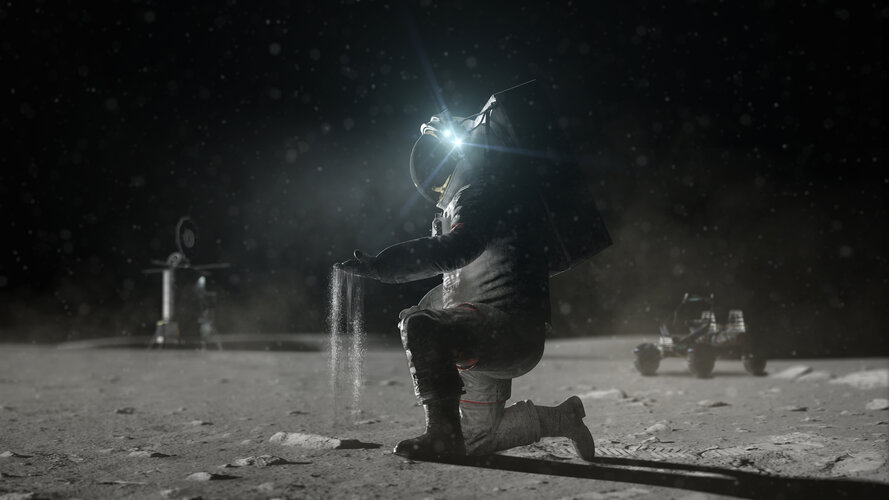
When astronauts return to the Moon they will be bringing along a new generation of spacesuits, designed to withstand the harsh conditions of the lunar surface. But in keeping their human occupants safe and comfortable, these suits might also become a fertile environment for harmful microbial life – especially as astronauts will potentially be sharing suits with one another.
Pair of Chinese launches put flat-panel satellite, new spy sats in orbit

China has conducted a pair of orbital missions to launch a commercially developed flat-panel communications satellite and a new batch of spy satellites.
NASA's OSIRIS-REx spacecraft adjusts course to get closer to Earth
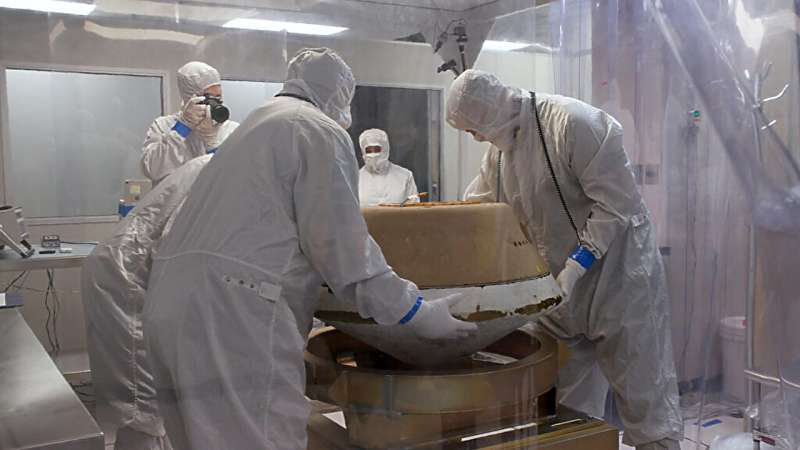
On July 26, NASA's OSIRIS-REx spacecraft fired its engines for about 63 seconds to slightly thrust itself onto a course closer to Earth.
Preliminary tracking data indicates OSIRIS-REx changed its velocity, which includes speed and direction, by 1.3 miles, or 2 kilometers, per hour.
Starlink may account for up to 40% of SpaceX’s 2023 revenues

SpaceX has told investors that it expects to roughly double its revenues in 2023 to upwards of $8 billion (from $4 billion in 2022) as reported earlier in July by […]
Northrop Grumman takes $36 million charge on NASA Gateway module

Northrop Grumman said it took a $36 million charge on its contract to build a module for NASA’s lunar Gateway, citing changing mission requirements and broader economic issues.
Need to image an asteroid close up? There's an AMIGO for that
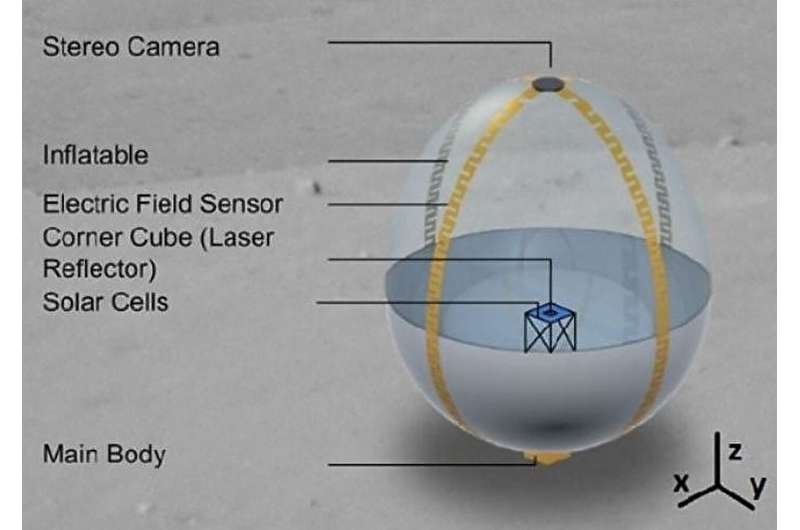
There are so many asteroids. Just in our own backyard, we've found over 30,000 Near Earth asteroids. Exploring them using traditional methods and launching a custom-made mission, like Hayabusa or OSIRIS-REx, would almost certainly be cost-prohibitive. So how can we assess whether they would make good targets for early asteroid mining missions? Ground imaging can help, but there's nothing like being on-site on one of these asteroids to get a sense of what they are made of. Those visits would be much easier if we mass-produced the Asteroid Mobile Imager and Geologic Observer (AMIGO).
AMIGO is a concept developed at the University of Arizona. It is a standard design that fits into a 1U CubeSat package of 10 x 10 x 10 cm and carries an array of scientific equipment with it. These include a magnetometer, an electric field sensor, a microscope, a laser range finder, an inertial measurement unit (IMU), and, of course, a camera.
Meteor showers—it's worth looking out for 'shooting stars' all year round
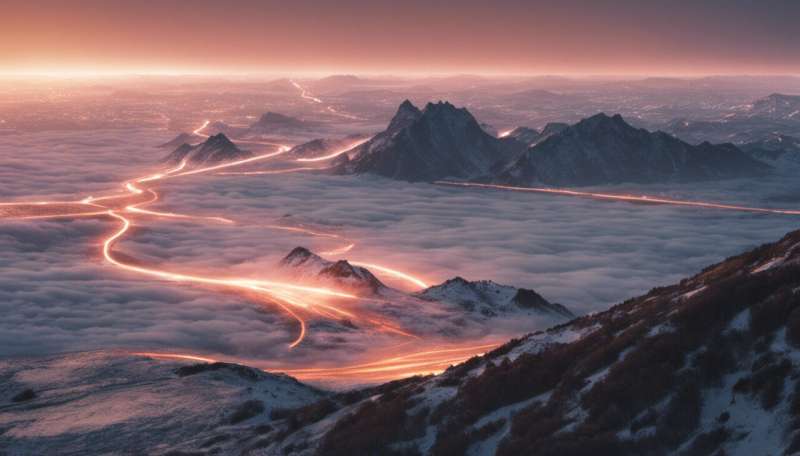
If you have ever seen a shooting star on a clear night, surely someone has invited you to make a wish. Nevertheless, this is a natural phenomenon without any magical connotation—beyond its great beauty, of course.
What is a shooting star, really? Where do these glowing, moving bodies come from? How and when can we observe this astronomical phenomenon?
Meteor shower or shooting stars?
Although we popularly call them shooting stars, they are not really stars but glowing dust particles. To understand why, it is a good idea to first distinguish between a meteoroid, meteor, and meteorite.
The word "meteor" refers to the astronomical phenomenon that occurs when one or more particles of matter (meteoroids) enter the atmosphere at high speed. These meteoroids, which are usually very small (between a tenth of a millimeter and a few centimeters in size), are fragments of dust, ice, or rock that wander through space.


