

Australia says mystery beach object may come from space launch
 A bulky barnacle-encrusted cylinder has baffled authorities since washing up on an Australian beach, with the country's space agency suggesting Tuesday it could be debris from a foreign rocket launch.
The object, which measures some two metres (six feet) high with cables dangling from the top, was recently spotted near remote Jurien Bay, a coastal region two hours' drive north of state capi
A bulky barnacle-encrusted cylinder has baffled authorities since washing up on an Australian beach, with the country's space agency suggesting Tuesday it could be debris from a foreign rocket launch.
The object, which measures some two metres (six feet) high with cables dangling from the top, was recently spotted near remote Jurien Bay, a coastal region two hours' drive north of state capi China's Shenzhou XVI astronauts conduct fluid physics experiments
 China's Shenzhou XVI astronauts recently worked with researchers on the ground in a number of in-orbit experiments including fluid physics experiments and cold atom interferometer set-up, according to the China Aerospace Science and Technology Corporation.
In the microgravity environment of space, fluid physics research has a wide range of applications, such as spacecraft thermal managemen
China's Shenzhou XVI astronauts recently worked with researchers on the ground in a number of in-orbit experiments including fluid physics experiments and cold atom interferometer set-up, according to the China Aerospace Science and Technology Corporation.
In the microgravity environment of space, fluid physics research has a wide range of applications, such as spacecraft thermal managemen Electron launches seven smallsats in latest step towards reusability

A Rocket Lab Electron rocket placed seven smallsats for three customers into orbit July 17 on a launch that also brought the company a step closer to reusing the rocket’s booster.
Mystery object that washed up on the Australian coast could be space junk, officials say
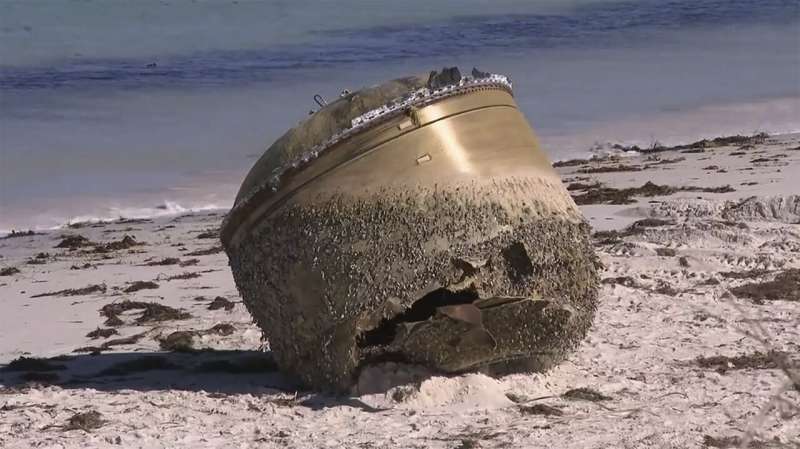
Authorities were investigating on Tuesday whether a cylindrical object about the size of a small car that washed up on a remote Australian beach is space junk from a foreign rocket.
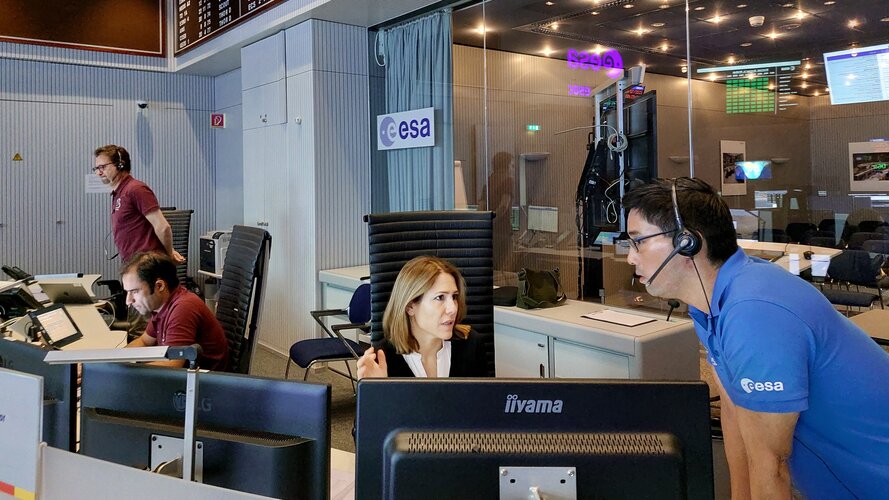
Simulating Aeolus’s return: mission control feels the heat
New strategy to keep pace with our changing world

Fuelled largely by climate change, our planet is being subjected to environmental changes that are having an unprecedented global impact on humans, animals and plants. Shockingly, in certain locations these changes are occurring at a rate never before witnessed.
To keep pace with the challenges we face, ESA is embarking on a new Earth observation science strategy – and has reached out to the scientific community at this early stage in the process to help guide the Agency’s scientific agenda for the coming years.
Rocket Lab launch enables Telesat to restart LEO demonstrations

Telesat is preparing to resume demonstrations for its delayed low Earth orbit broadband constellation after Rocket Lab successfully launched the Canadian operator’s latest prototype satellite.
Venezuela signs up to China’s moon base initiative

Venezuela has formally joined the China-led International Lunar Research Station project.
The post Venezuela signs up to China’s moon base initiative appeared first on SpaceNews.
NASA's Psyche mission enters home stretch before launch
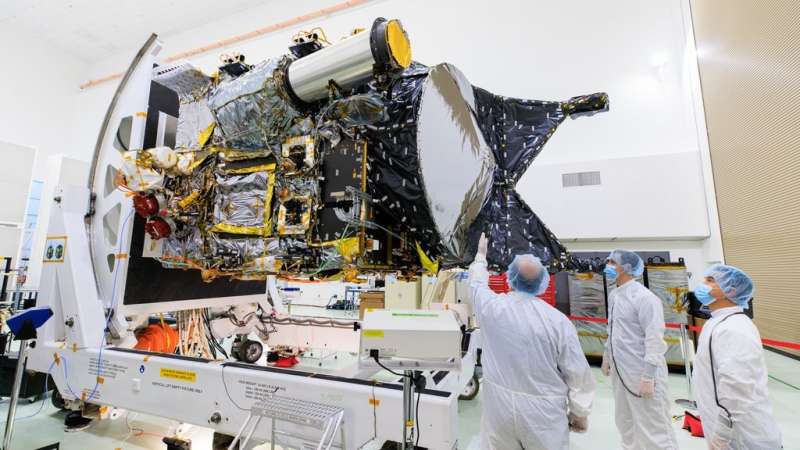
Engineers and technicians at Cape Canaveral are preparing the Psyche spacecraft for liftoff, which is slated for Oct. 5.
With less than 100 days to go before its Oct. 5 launch, NASA's Psyche spacecraft is undergoing final preparations at Cape Canaveral, Florida. Teams of engineers and technicians are working almost around the clock to ensure the orbiter is ready to journey 2.5 billion miles (4 billion kilometers) to a metal-rich asteroid that may tell us more about planetary cores and how planets form.
The mission team recently completed a comprehensive test campaign of the flight software and installed it on the spacecraft, clearing the hurdle that kept Psyche from making its original 2022 launch date.
First BepiColombo flyby of Mercury finds electron rain triggers X-ray auroras
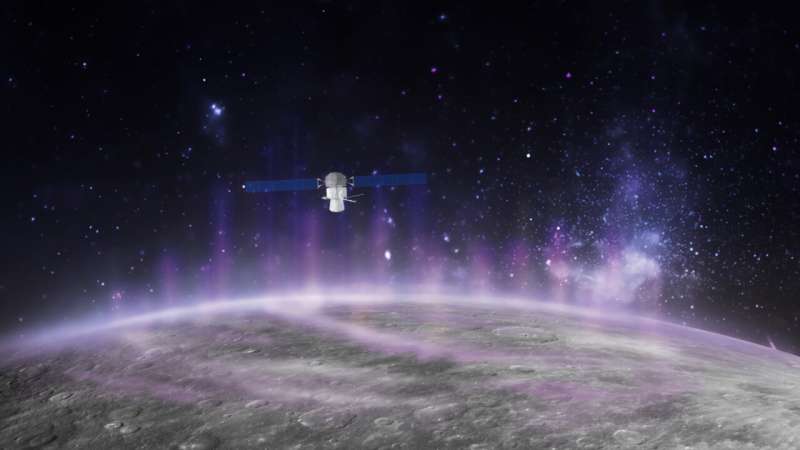
BepiColombo, the joint European Space Agency (ESA) and Japanese Aerospace Exploration Agency (JAXA) mission, has revealed how electrons raining down onto the surface of Mercury can trigger high-energy auroras.
The mission, which has been enroute to the solar system's innermost planet since 2018, successfully carried out its first Mercury flyby on October 1, 2021. An international team of researchers analyzed data from three of BepiColombo's instruments during the encounter. The outcomes of this study have been published in Nature Communications.
Terrestrial auroras are generated by interactions between the solar wind, a stream of charged particles emitted by the sun, and an electrically charged upper layer of Earth's atmosphere, called the ionosphere.


