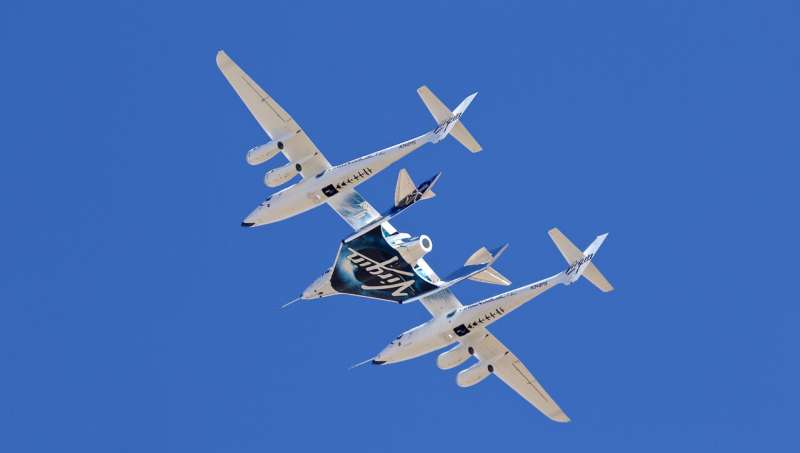

Orbital Composites wins $1.7 million Space Force contract

The Small Business Innovation Research contract, awarded through the SpaceWERX Orbital Prime program, gives an important boost to the startup’s plans for in-space servicing, assembly and manufacturing.
Hanwha registers as South Korean satellite communications provider

South Korea’s Hanwha Systems, the OneWeb investor with plans for its own low Earth orbit (LEO) broadband constellation, has secured regulatory permission to operate as a satellite communications provider in the country.
ViaSat-3 Americas’ antenna problem impacts rollout

The problem with ViaSat-3 Americas' main antenna does not affect current services provided by Viasat but does impact plans for new broadband services in North America that the spacecraft would have offered.
HawkEye 360 announces $58 million funding round

HawkEye 360, a commercial operator of remote-sensing satellites, announced July 13 it has raised $58 million in new funding.
The post HawkEye 360 announces $58 million funding round appeared first on SpaceNews.
Decoding the impact flash created by high-velocity impacts
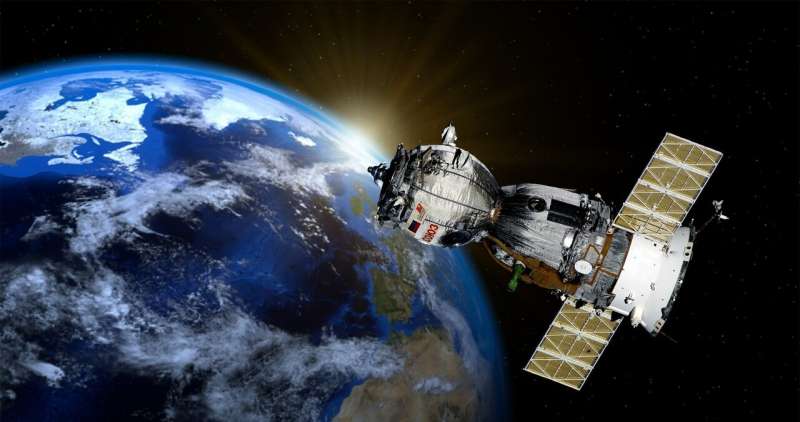
In an experimental study published in PNAS Nexus, researchers explore the visible impact flash that is created by high-velocity impacts.
Impacts by debris and meteoroids pose a significant threat to satellites, space probes, and hypersonic craft. Such high-velocity impacts create a brief, intense burst of light, known as an impact flash, which contains information about both the target and the impactor.
Gary Simpson, K.T. Ramesh, and colleagues explored the impact flash by shooting stainless steel spheres into an aluminum alloy plate, at a speed of three kilometers per second—about 6,700 miles per hour, or more than nine times the speed of sound.
The resulting impact flashes were photographed using ultra-high-speed cameras and high-speed spectroscopy, which measures the color and brightness of the light. Immediately after impact, a luminous disk is seen expanding around the impacting sphere. Only a few millionths of a second later, the disk takes on an almost floral shape, as fragments ejected from the impact crater form an ejecta cone, with petal-like projections at the outer edge.
Plasma spectrometer delivered for moon mission
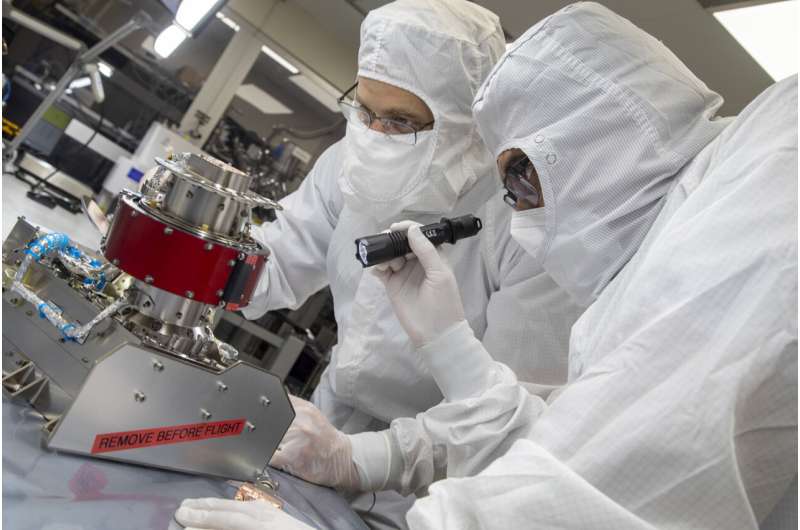
Southwest Research Institute has delivered a plasma spectrometer for integration into a lunar lander as part of NASA's Lunar Vertex investigation, scheduled to commence next year.
Centaur modifications push first Vulcan launch to fourth quarter

United Launch Alliance is now planning a first launch of its Vulcan Centaur rocket in the fourth quarter after the company completes modifications to and testing of the upper stage.
Senate defense panel leaves National Security Space Launch unsecured

Congress should listen to the Space Force and reject the Senate Armed Services Committee’s changes to the U.S. Space Force's National Security Space Launch procurement plans.
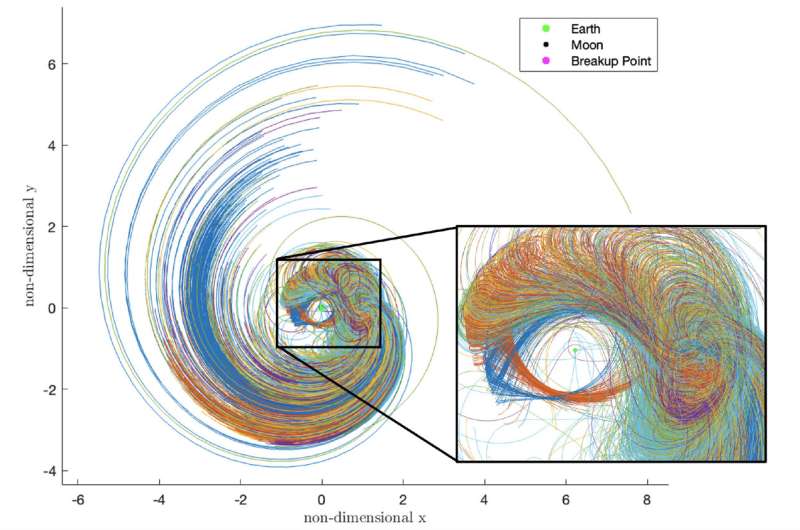
Virgin Galactic plans its next commercial flight to the edge of space for August