

U.K. joins U.S. Space Command’s commercial space-tracking cell

The United Kingdom will participate in a U.S. Space Command initiative focused on purchasing commercial space domain awareness data.
Agile raises $13 million to expand production

The seed funding round, announced June 23, was led by Caruso Ventures. Participants included Lockheed Martin Ventures, Greater Colorado Venture Fund, CORI Innovation Fund and Greenline Ventures.
NASA identifies potential major cost growth in Mars Sample Return

NASA has confirmed that one scenario for the cost of its Mars Sample Return (MSR) program is far higher than previous estimates, heightening concerns among scientists about its impacts on other missions.
China conducts parachute tests for asteroid sample return mission

China’s main space contractor has conducted several successful high-altitude parachute deployment tests as part of plans to collect asteroid samples and deliver them safely to Earth.
Researchers model and test ground conditions on the moon
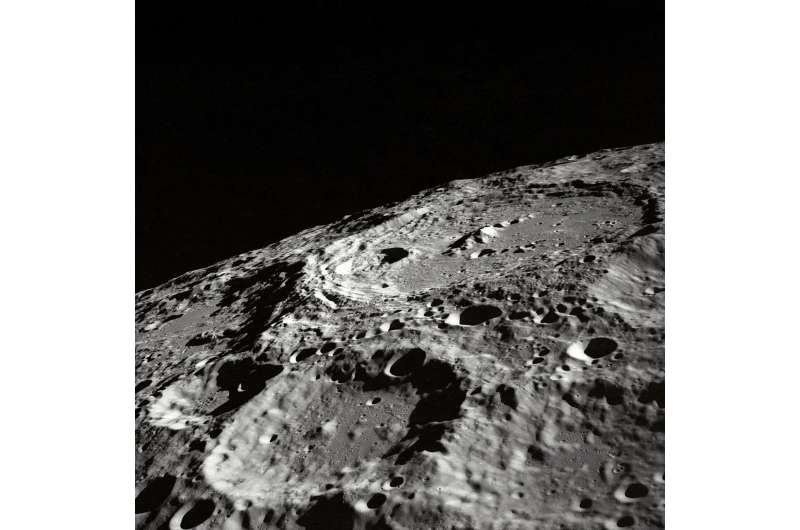
From 1967 to 1972, the American space agency NASA conducted a series of space missions to the moon. Nearly 400 kilograms of soil samples were transported back to Earth. NGI—The Norwegian Geotechnical Institute is now using CT-scans of 10,000 lunar particles from the Apollo expeditions to study how lunar soils will behave when humans start engineering structures for the lunar surface.
In the near future, NASA's Artemis missions plan to send humans to the moon again for the first time in 50 years. This time, astronauts will potentially work and live on the moon for extended periods. But how to build a habitable base on the moon? What forces can the ground on the moon withstand? And with the conditions that are on the moon, how do materials, like a grain of lunar soil, behave?
Research proposes extending Earth's internet to Mars with orbital data servers
You've done it. After years of effort and training, sacrifice, and pain, you become an astronaut and have finally set foot on Mars. Time to post your triumph on TikTok for that sweet social media cred. If only you can get a signal.
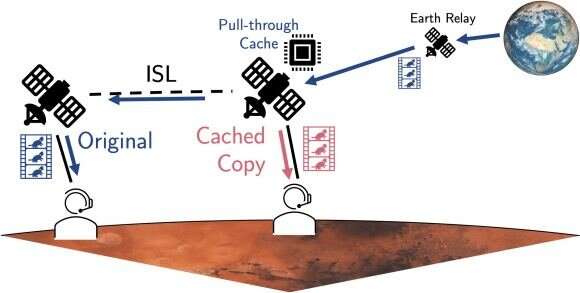
While that might seem like a silly scenario, the need for internet connectivity on Mars is real. It's not just a matter of allowing astronauts to doomscroll and post on Reddit. Landing humans on Mars will require a tremendous amount of data transfer with Earth, which is not easy. So how can we create an information network on Mars that is robust enough for both logistic and personal needs? A paper posted on the arXiv pre-print server proposes an idea.
The idea for an interplanetary internet isn't new. Astronauts on the International Space Station already have web access, though they often complain about its dialup-level speeds.
D-Orbit wins contracts to test optical links and fly mini space lab

D-Orbit will supply a small orbiting lab and test optical intersatellite links under the latest contracts awarded through Italy’s billion-euro National Recovery and Resilience Plan.
ESA, European companies back “zero debris” agreement

ESA and three European satellite manufacturers have announced plans to work together to develop “ambitious and meaningful targets” for dealing with orbital debris.
SES bid for equal split of C-band proceeds back in play

Satellite operator SES has another shot at getting a larger share of Intelsat's C-band clearing cash after an appeals court made a judgment in its favor.
Astroscale's ELSA-d Prepares for Controlled De-orbit in Final Mission Phase
 In a recent announcement, Astroscale, a pioneering leader in space sustainability, has disclosed detailed plans for the final phase of its groundbreaking End-of-Life Services by Astroscale-demonstration (ELSA-d) mission. This heralds a new milestone in the ongoing global effort to effectively manage space debris and ensure orbital sustainability.
The ELSA-d mission has been dedicated to te
In a recent announcement, Astroscale, a pioneering leader in space sustainability, has disclosed detailed plans for the final phase of its groundbreaking End-of-Life Services by Astroscale-demonstration (ELSA-d) mission. This heralds a new milestone in the ongoing global effort to effectively manage space debris and ensure orbital sustainability.
The ELSA-d mission has been dedicated to te 


